- BGG-Rang
- BGG #12.971
- BGG-Bewertung
- 7,4
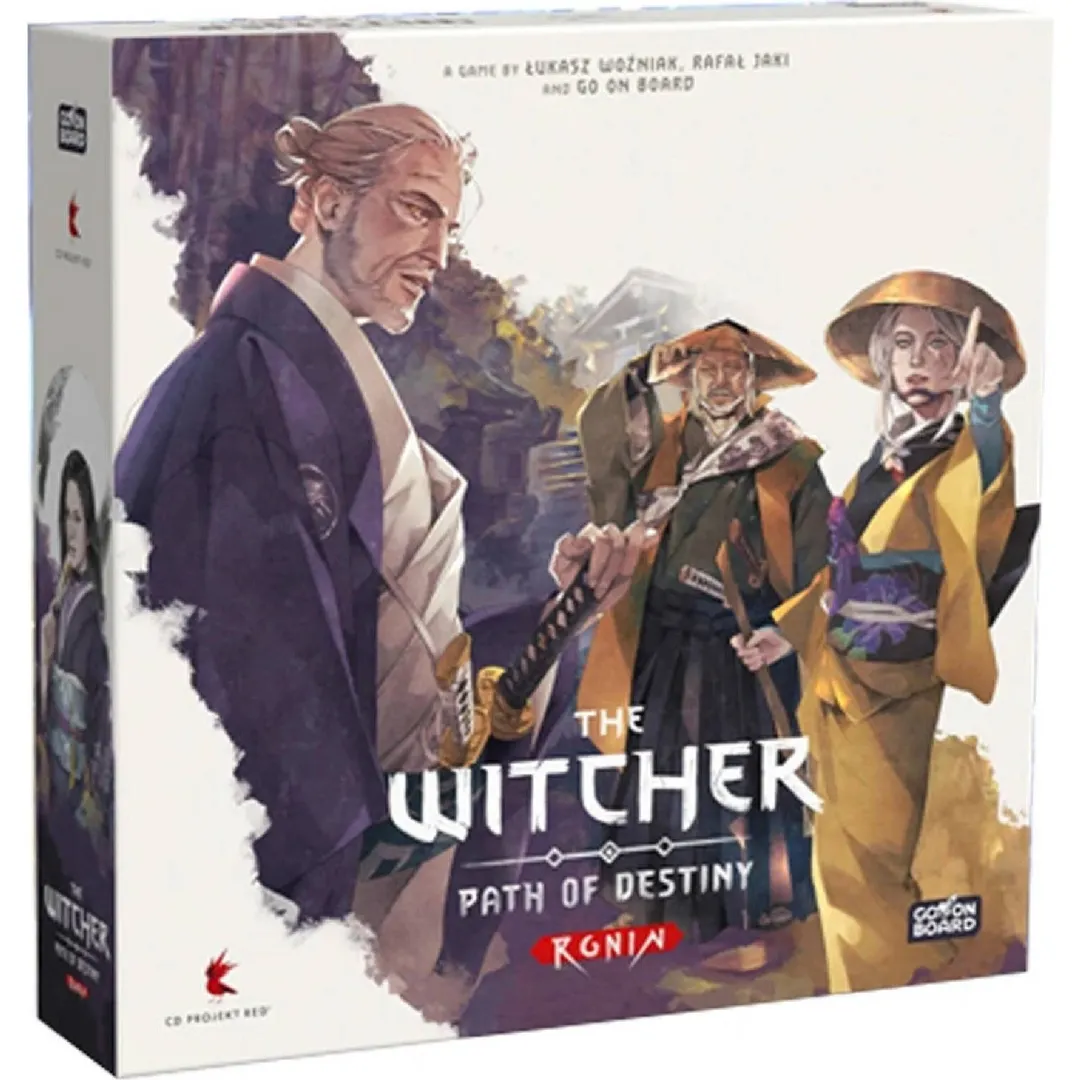
The Witcher: Path of Destiny – Ronin
2025
Regelhilfe für The Witcher: Path of Destiny – Ronin
Verständliche Erklärungen zu Spielzügen, Karteneffekten und strittigen Situationen mit Verweisen auf offizielle Quellen und gespeichertem Fragenverlauf.
- 1–5 Spieler
- 45–90 Min.
- 14+
- Komplexität 3,0/5

Für 1 Person
Regelassistent für The Witcher: Path of Destiny – Ronin
Was möchtest du wissen?
Antworten stammen aus dem offiziellen Regelheft, mit Seitenangabe zum Nachprüfen.
The Witcher: Path of Destiny – Ronin ist ein Brettspiel aus dem Jahr 2025 für 1–5 Personen, mit 45–90 Minuten pro Partie und ab 14 Jahren. Entwickelt wurde es von Łukasz Woźniak und Rafał Jaki; die wichtigsten Mechaniken sind Solo / Solitaire Game und Card Play Conflict Resolution.
Über das Spiel
Auf Englisch
Explore a different take on the world of The Witcher, and discover the rich tradition of Japanese folklore! The Witcher: Path of Destiny: Ronin takes you to this alternative world. It is an independent, stand-alone game based on the Path of Destiny. You will be able to take on the role of 7 characters - Geralt, Yennefer, Ciri, Yaskra, Vesemir, and Triss in a brand-new installment. Geralt, Vesemir, and Ciri will be equipped with katanas, Jaskier will move crowds of geisha with the help of a biwa, and Triss and Yennefer will charm many of samurai on their way. Story cards are replaced by illustrated Round cards. At the end of a round, contrary to the basic version of the game, players earn Victory Points for the symbol they jointly collected less of, and Experience Points for the symbol they collected more of. This new way of scoring forces players to constantly find balance in their tableau. This means they need to make strategic decisions and blend them with constant interaction with their neighbors at the table. The variety of characters, Partnership Tracks, as well as the new large deck of Action cards will make each visit to the Japanese Witcher universe a unique and equally engaging one. In the box, you will find 5 double-sided Partnership Tracks, which are to be placed between the neighboring players. New symbols and effects on Action cards often require neighbors to determine common tactics for playing cards. New effects allow players to climb up on their tracks, gaining additional bonuses together. Another component that enhances the feeling of building relationships are special Character Ability cards. Some effects from the Partnership track allow you to use the special abilities of your companions sitting next to you. Trust your Partners, but focus on achieving your own goals! Ronin offers a competitive mode, but the new expansion puts quite a big emphasis on cooperation. In Ronin, players not only try their best to draft and play cards, but also to cooperate with each neighboring player to get the best shared bonuses. When playing with two players, you will use the help of Automa - an additional player, managed by the game. In solo mode, we will play with two Automa. Automa plays cards and allows players to use cooperation tracks, but does not collect points by itself. In the Solo variant, the player chooses a character, neighboring characters and the difficulty level. The goal of the game is to collect Victory Points and achieve a special Victory Condition. The characters, as well as the difficulty level, give you a huge variability in this variant (hundreds of different starting layouts of the game). —description from the Gamefound campaign
Autoren
Verlage
- Rebel Sp. z o.o.
- Matagot
- Geekach LLC
- CD Projekt RED
- HIT Games
- Go On Board
- CD Projekt SA
Fragen und Antworten
Laut Katalog unterstützt The Witcher: Path of Destiny – Ronin 1–5 Personen. Diese Spanne entspricht der vom Verlag angegebenen Spielerzahl, das Spiel lässt sich also für jede Gruppengröße innerhalb dieser Spanne aufbauen. Aufbau, einzelne Regeln und Wertungsdetails können je nach Personenzahl trotzdem abweichen; prüfe daher die genaue Konfiguration in der Anleitung deiner Ausgabe.
Die angegebene Spieldauer für The Witcher: Path of Destiny – Ronin beträgt 45–90 Minuten. Das ist die Schätzung des Verlags für eine vollständige Partie. Die tatsächliche Dauer hängt von der Gruppe, der Personenzahl und der Regelkenntnis ab: Erste Partien dauern meist länger, erfahrene Gruppen sind oft schneller fertig. Aufbau und Regelerklärung sind in dieser Schätzung nicht enthalten.
Im Katalog wird The Witcher: Path of Destiny – Ronin ab 14 Jahren empfohlen. Das ist die Empfehlung des Verlags und berücksichtigt Leseanforderungen, Regelkomplexität und Kleinteile, nicht nur das Thema. Jüngere Kinder können oft mit Hilfe eines Erwachsenen mitspielen; beachte die Altersangabe deiner Ausgabe und die Brettspielerfahrung deiner Gruppe.
The Witcher: Path of Destiny – Ronin hat bei BoardGameGeek eine Komplexitätswertung von 3,0 von 5 und gilt damit als mittelschweres Spiel. Die Wertung zeigt, wie viel Regelwissen, Planung und Entscheidungen eine typische Partie verlangt. Schwerere Spiele brauchen bei der ersten Erklärung mehr Zeit, daher hilft vor dem Spieleabend eine Vorbereitungsanleitung.
The Witcher: Path of Destiny – Ronin gehört zu diesen Kategorien: Fantasy, Adventure und Mythology. Die wichtigsten Mechaniken sind Solo / Solitaire Game und Card Play Conflict Resolution. Kategorien beschreiben Thema und Setting eines Spiels, Mechaniken dagegen, was die Spielenden in ihrem Zug tatsächlich tun. Jede Mechanik führt zu einer Katalogseite mit ähnlichen Spielen, falls du etwas Vergleichbares suchst.
Als Autoren von The Witcher: Path of Destiny – Ronin sind angegeben: Łukasz Woźniak und Rafał Jaki. Diese Angaben stammen aus den veröffentlichten Spieldaten und nennen die für das Spieldesign verantwortlichen Personen, nicht die Illustratoren oder Verlage. Die Autorenseiten auf MeepleRules sammeln weitere Titel derselben Autoren – praktisch, wenn dir ein Spiel gefällt und du ähnliche Spiele suchst.
Im Katalog ist The Witcher: Path of Destiny – Ronin als Grundspiel aufgeführt. Es lässt sich eigenständig mit dem Material aus der Schachtel spielen und benötigt keinen weiteren Titel. Erweiterungen, sofern es welche gibt, ergänzen neues Material oder neue Regeln und sind im Katalog separat mit einem Verweis auf dieses Grundspiel aufgeführt.