
- BGG-Bewertung
- 7,5
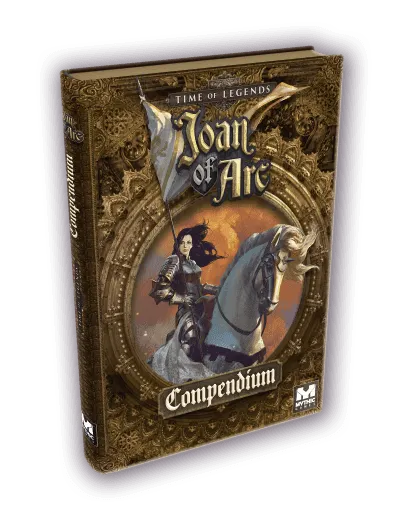
Time of Legends: Joan of Arc – Compendium
- 2–4 Spieler
- Komplexität 4,0/5
- 2018
2019
Regelhilfe für Time of Legends: Joan of Arc
Verständliche Erklärungen zu Spielzügen, Karteneffekten und strittigen Situationen mit Verweisen auf offizielle Quellen und gespeichertem Fragenverlauf.
Für 2 Personen
Was möchtest du wissen?
Antworten stammen aus dem offiziellen Regelheft, mit Seitenangabe zum Nachprüfen.
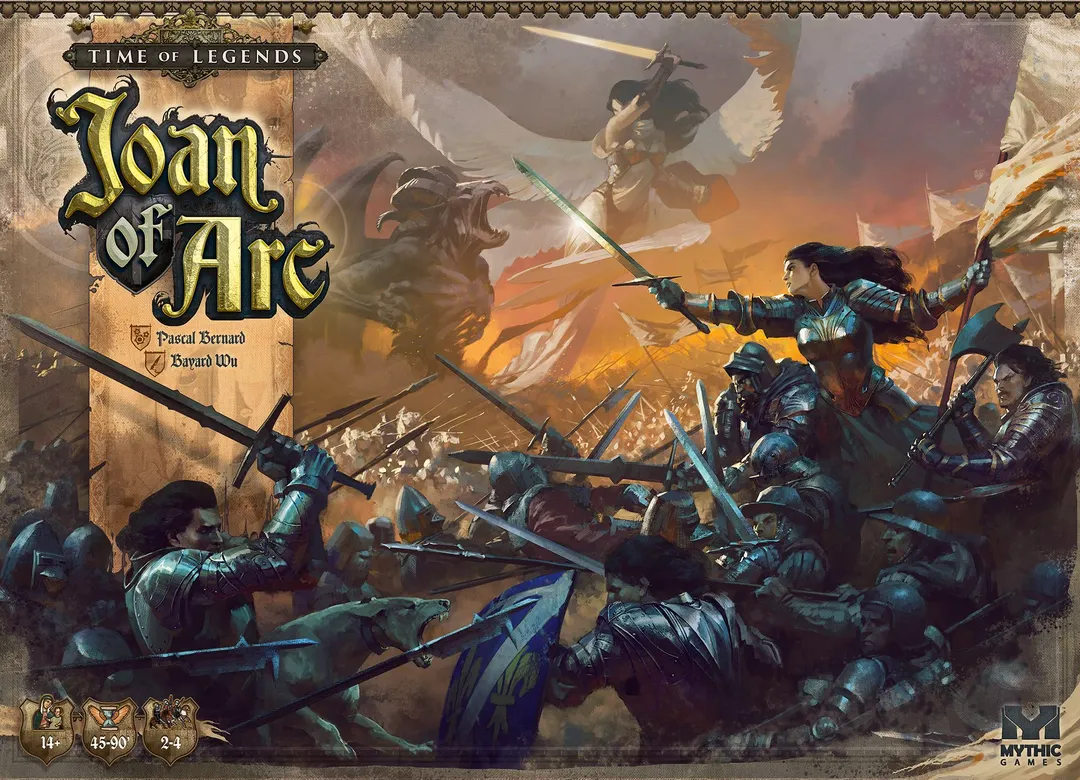
Time of Legends: Joan of Arc ist ein Brettspiel aus dem Jahr 2019 für 2–4 Personen, mit 45–90 Minuten pro Partie und ab 14 Jahren. Entwickelt wurde es von Pascal Bernard; die wichtigsten Mechaniken sind Variable Player Powers, Area Movement und Dice Rolling.






Auf Englisch
Time of Legends: Joan of Arc is set amid the tumult of the 100 Years War, when kings and princes struggle for the throne of France. This is the age of knights and squires, where chivalry is often spoken of, but rarely practiced. It is a time of both religion and superstition. Educated clerics fervently believe that angels guard the pious, and demons scourge the wicked, while the simpler folk watch the night for signs of werewolves and dragons. The game assumes that all of these are real. Joan of Arc is a story-driven board game that uses finely-sculpted miniatures and 3D scenery to set the scene for a game of cunning and skill (and a little luck). The game is a combination of interwoven card play, resource management, and position on the board. You will need to master all three to beat the best opponents. Getting your men into the right position, and heading off your enemy, will be no use if you cannot muster the cards and other resources to make the most of it. Joan of Arc allows a huge amount of freedom in your actions. In every turn, you can choose to spend or save resources, and when you come to activate a unit you can choose between combat, interrogation, search, exploration, prayers, and other actions. So, this turn, should you level up a hero, or spend that resource to buy a re-roll? Take extra actions now, or save them for later? Double-move that cavalry, or question the old woman in the woods? When and how to act are decisions you must make based on your objectives, and the situation on the board. And, what is the best decision one turn may be very different in the next. Players take the role of the various factions in the war, or of some of the supernatural creatures that have emerged from the shadows. The most famous heroes and heroines of the war are all here: the Black Prince, the Dauphin, Falstaff, and, of course, Joan of Arc herself. Each game is a unique scenario with its own map assembled from the gaming tiles, and a specified set of heroes and followers to achieve the scenario’s objectives. Each scenario has its own victory conditions, often different for each side. In one game you may be an inquisitor, seeking out a werewolf hidden among the peasantry; in another you may be a victorious raiding party, desperately fighting your way through an ambush so you can return to the safety of your castle. Scenarios range from small affairs with a few models and simplified role-play elements, to full battles with dozens of knights, archers and men-at-arms. All scenarios typically play in under an hour. The game also includes a battle mode, to fight out conflicts between armies of your choosing. —description from the publisher
Laut Katalog unterstützt Time of Legends: Joan of Arc 2–4 Personen. Diese Spanne entspricht der vom Verlag angegebenen Spielerzahl, das Spiel lässt sich also für jede Gruppengröße innerhalb dieser Spanne aufbauen. Aufbau, einzelne Regeln und Wertungsdetails können je nach Personenzahl trotzdem abweichen; prüfe daher die genaue Konfiguration in der Anleitung deiner Ausgabe.
Die angegebene Spieldauer für Time of Legends: Joan of Arc beträgt 45–90 Minuten. Das ist die Schätzung des Verlags für eine vollständige Partie. Die tatsächliche Dauer hängt von der Gruppe, der Personenzahl und der Regelkenntnis ab: Erste Partien dauern meist länger, erfahrene Gruppen sind oft schneller fertig. Aufbau und Regelerklärung sind in dieser Schätzung nicht enthalten.
Im Katalog wird Time of Legends: Joan of Arc ab 14 Jahren empfohlen. Das ist die Empfehlung des Verlags und berücksichtigt Leseanforderungen, Regelkomplexität und Kleinteile, nicht nur das Thema. Jüngere Kinder können oft mit Hilfe eines Erwachsenen mitspielen; beachte die Altersangabe deiner Ausgabe und die Brettspielerfahrung deiner Gruppe.
Time of Legends: Joan of Arc hat bei BoardGameGeek eine Komplexitätswertung von 3,5 von 5 und gilt damit als mittelschweres Spiel. Die Wertung zeigt, wie viel Regelwissen, Planung und Entscheidungen eine typische Partie verlangt. Schwerere Spiele brauchen bei der ersten Erklärung mehr Zeit, daher hilft vor dem Spieleabend eine Vorbereitungsanleitung.
Time of Legends: Joan of Arc gehört zu diesen Kategorien: Fantasy, Fighting und Wargame. Die wichtigsten Mechaniken sind Variable Player Powers, Area Movement und Dice Rolling. Kategorien beschreiben Thema und Setting eines Spiels, Mechaniken dagegen, was die Spielenden in ihrem Zug tatsächlich tun. Jede Mechanik führt zu einer Katalogseite mit ähnlichen Spielen, falls du etwas Vergleichbares suchst.
Als Autoren von Time of Legends: Joan of Arc sind angegeben: Pascal Bernard. Diese Angaben stammen aus den veröffentlichten Spieldaten und nennen die für das Spieldesign verantwortlichen Personen, nicht die Illustratoren oder Verlage. Die Autorenseiten auf MeepleRules sammeln weitere Titel derselben Autoren – praktisch, wenn dir ein Spiel gefällt und du ähnliche Spiele suchst.
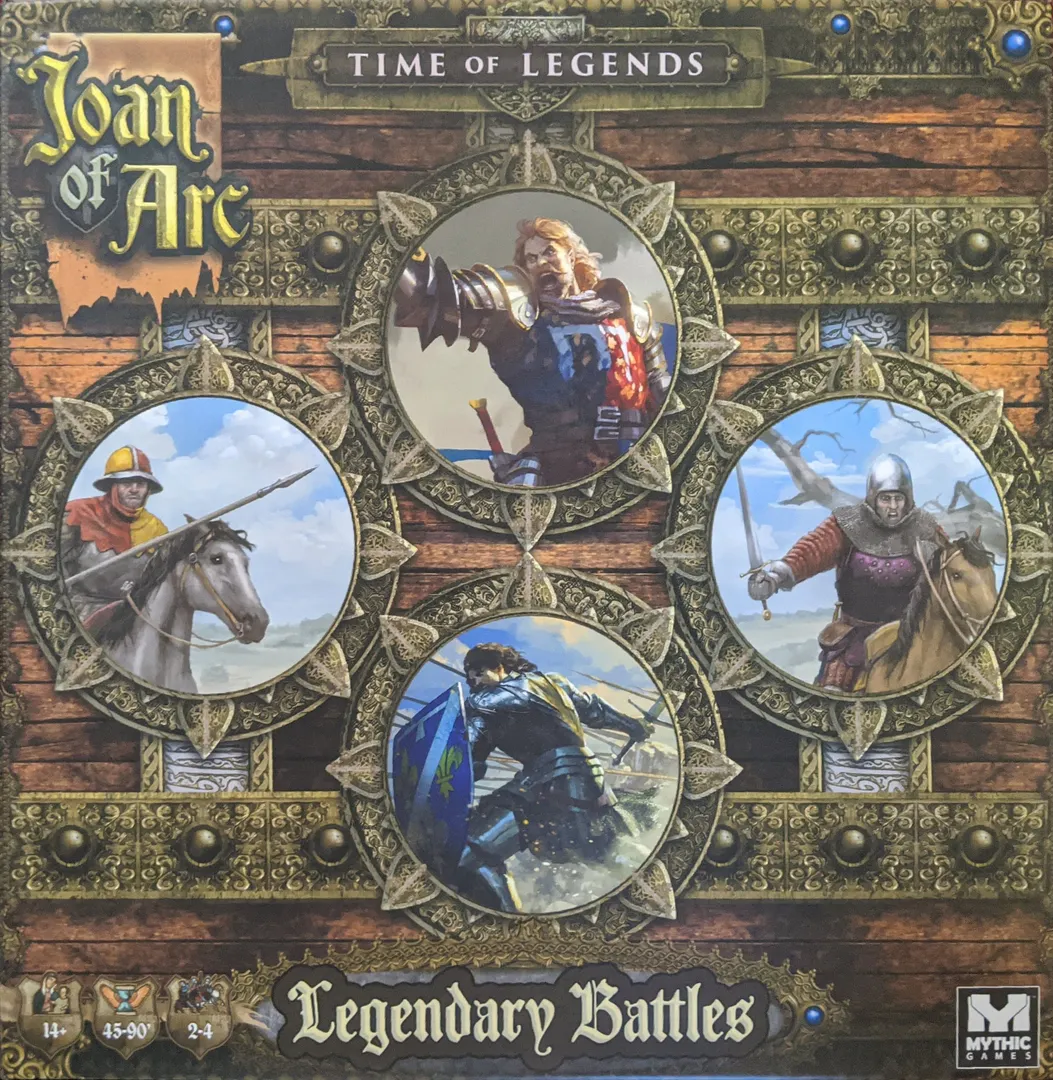
Im Katalog ist Time of Legends: Joan of Arc als Grundspiel aufgeführt. Es lässt sich eigenständig mit dem Material aus der Schachtel spielen und benötigt keinen weiteren Titel. Erweiterungen, sofern es welche gibt, ergänzen neues Material oder neue Regeln und sind im Katalog separat mit einem Verweis auf dieses Grundspiel aufgeführt.