
- BGG-Bewertung
- 8,3
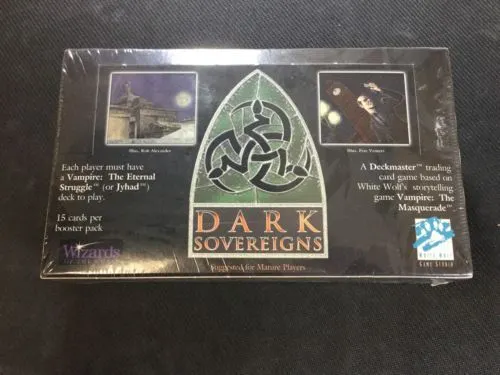
Vampire: The Eternal Struggle – Dark Sovereigns
- 2–5 Spieler
- 30–120 Min.
- 1995
1994
Regelhilfe für Vampire: The Eternal Struggle
Verständliche Erklärungen zu Spielzügen, Karteneffekten und strittigen Situationen mit Verweisen auf offizielle Quellen und gespeichertem Fragenverlauf.
Für 2 Personen
Was möchtest du wissen?
Antworten stammen aus dem offiziellen Regelheft, mit Seitenangabe zum Nachprüfen.
Vampire: The Eternal Struggle ist ein Brettspiel aus dem Jahr 1994 für 2–5 Personen, mit 120 Minuten pro Partie und ab 13 Jahren. Entwickelt wurde es von Richard Garfield, L. Scott Johnson und Robert Goudie; die wichtigsten Mechaniken sind Hand Management, Player Elimination und Negotiation.








Auf Englisch
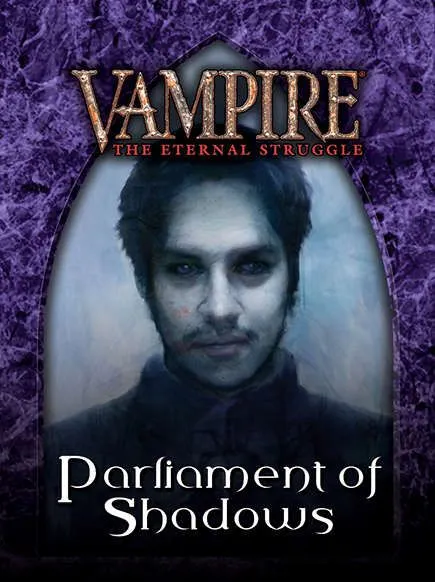
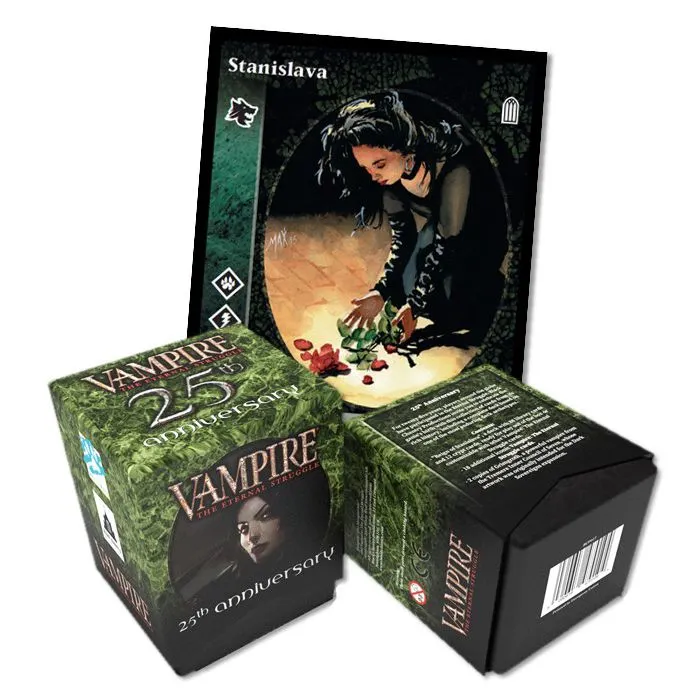
Vampire: the Eternal Struggle (or VTES for short) is a multi-player collectable card game based on the award-winning Vampire: the Masquerade role playing game in which players take on the role of ancient vampires known as a Methuselahs. Considered mere legend by many, Methuselahs rule everything from the shadows, engaging in a eons-long Machiavellian conflict that encompasses political, social, and even physical warfare. The struggle is won or lost based on the actions taken by your minions – younger vampires who unknowingly do your bidding. In this way, the game can allow for deep and immersive storytelling as your minions purchase equipment, hire retainers, even suggest legislative changes to vampiric society, all in the service of your dark plots. VTES was the second card game designed by Richard Garfield (designer of Magic the Gathering, Netrunner, and other games). It was designed to avoid some of the flaws that Garfield found in Magic: VTES does not require you to include resource or mana cards in your deck, and cards are instantly replaced when played, meaning that card draw isn’t as important as knowing when to discard a card to sculpt a better hand. It also has a gameplay experience more in keeping with a boardgame than a traditional card game – VTES is usually played by 4 or 5 players and games can last up to 2 hours. Unlike most multi-player games, players in VTES do not engage in a free-for-all. Each player directs their attacks to the player on their left (their “prey”) and defends against the player on their right (their “predator”). You gain victory points by eliminating or “ousting” your prey from the game, in which case the next player to the left becomes your new prey. The player with the most victory points at the end of the game wins (even if they have been ousted!). This arrangement makes the game a very social one – you and the player two seats to the left and right have common enemies. But if you help these allies too much, you may find that you’ve made one of them too strong, and when they suddenly become your new predator, your help has transformed that ally into a deadly threat. VTES is also a resource management game. Each player begins with 30 points of influence called “pool” that Methuselahs hold dearer than unlife itself. If you run out of pool, you are ousted from the game. But this pool is also the way that you sway vampires to your cause. Each turn you have the opportunity to spend your pool to seduce a vampire. Weak fledgling vampire are easily swayed, but the older more powerful ones require convincing, which may require multiple turns to accomplish. Once a vampire is converted to your side, all the pool you spent on them becomes blood possessed by this vampire, which can be spent to play cards that allow them to activate their unique vampiric powers. Each minion must manage their blood and you must manage your pool – spending more provides you with additional minions, but brings you one step closer to being ousted. Under- or over- investing in your minions may well cost you the game. Vampire: The Eternal Struggle has risen once again from torpor! White Wolf has granted Black Chantry Productions license to print new cards! Details are still forthcoming as to what to expect. Go to http://www.blackchantry.com for the latest details. The game is also supported by Vampire: Elder Kindred Network™, the official player organization responsible for sanctioning and regulating VTES tournaments, recording V:TES players’ ratings (and rankings), as well as designing and releasing new digital expansions featuring profession artwork. Go to their site at www.vekn.net to check out what's new with the game!
Laut Katalog unterstützt Vampire: The Eternal Struggle 2–5 Personen. Diese Spanne entspricht der vom Verlag angegebenen Spielerzahl, das Spiel lässt sich also für jede Gruppengröße innerhalb dieser Spanne aufbauen. Aufbau, einzelne Regeln und Wertungsdetails können je nach Personenzahl trotzdem abweichen; prüfe daher die genaue Konfiguration in der Anleitung deiner Ausgabe.
Die angegebene Spieldauer für Vampire: The Eternal Struggle beträgt 120 Minuten. Das ist die Schätzung des Verlags für eine vollständige Partie. Die tatsächliche Dauer hängt von der Gruppe, der Personenzahl und der Regelkenntnis ab: Erste Partien dauern meist länger, erfahrene Gruppen sind oft schneller fertig. Aufbau und Regelerklärung sind in dieser Schätzung nicht enthalten.
Im Katalog wird Vampire: The Eternal Struggle ab 13 Jahren empfohlen. Das ist die Empfehlung des Verlags und berücksichtigt Leseanforderungen, Regelkomplexität und Kleinteile, nicht nur das Thema. Jüngere Kinder können oft mit Hilfe eines Erwachsenen mitspielen; beachte die Altersangabe deiner Ausgabe und die Brettspielerfahrung deiner Gruppe.
Vampire: The Eternal Struggle hat bei BoardGameGeek eine Komplexitätswertung von 3,4 von 5 und gilt damit als mittelschweres Spiel. Die Wertung zeigt, wie viel Regelwissen, Planung und Entscheidungen eine typische Partie verlangt. Schwerere Spiele brauchen bei der ersten Erklärung mehr Zeit, daher hilft vor dem Spieleabend eine Vorbereitungsanleitung.
Vampire: The Eternal Struggle gehört zu diesen Kategorien: Card Game, Fighting und Horror. Die wichtigsten Mechaniken sind Hand Management, Player Elimination und Negotiation. Kategorien beschreiben Thema und Setting eines Spiels, Mechaniken dagegen, was die Spielenden in ihrem Zug tatsächlich tun. Jede Mechanik führt zu einer Katalogseite mit ähnlichen Spielen, falls du etwas Vergleichbares suchst.
Als Autoren von Vampire: The Eternal Struggle sind angegeben: Richard Garfield, L. Scott Johnson und Robert Goudie. Diese Angaben stammen aus den veröffentlichten Spieldaten und nennen die für das Spieldesign verantwortlichen Personen, nicht die Illustratoren oder Verlage. Die Autorenseiten auf MeepleRules sammeln weitere Titel derselben Autoren – praktisch, wenn dir ein Spiel gefällt und du ähnliche Spiele suchst.
Im Katalog ist Vampire: The Eternal Struggle als Grundspiel aufgeführt. Es lässt sich eigenständig mit dem Material aus der Schachtel spielen und benötigt keinen weiteren Titel. Erweiterungen, sofern es welche gibt, ergänzen neues Material oder neue Regeln und sind im Katalog separat mit einem Verweis auf dieses Grundspiel aufgeführt.