

- BGG-Rang
- BGG #11.796
- BGG-Bewertung
- 8,4
SEEKRIEG 5
- 2–10 Spieler
- 120 Min.
- Komplexität 4,1/5
- 2004
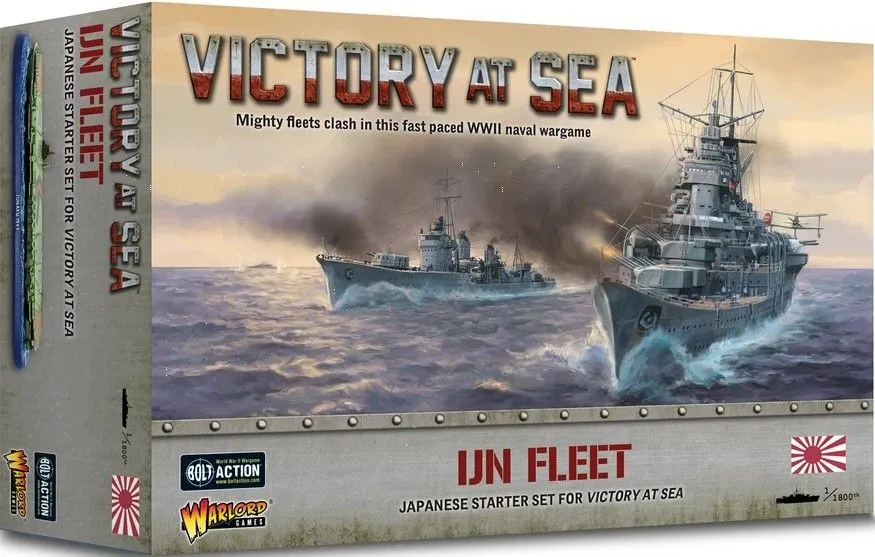
Regelhilfe für Victory at Sea: IJN fleet
Verständliche Erklärungen zu Spielzügen, Karteneffekten und strittigen Situationen mit Verweisen auf offizielle Quellen und gespeichertem Fragenverlauf.
Was möchtest du wissen?
Antworten stammen aus dem offiziellen Regelheft, mit Seitenangabe zum Nachprüfen.
Victory at Sea: IJN fleet ist eine Erweiterung für Victory at Sea: Battle for the Pacific aus dem Jahr 2020 für 2 Personen und ab 10 Jahren. Die wichtigsten Mechaniken sind Dice Rolling, Simulation und Measurement Movement.



Auf Englisch
For centuries, Japan's policy of seclusion (sakoku) saw it concentrate on coastal defences in order to repel foreign vessels. However, with the advances other maritime nations were making, it eventually became obvious that no longer would Japan be able to ignore the rest of the world. As an island power, it needed a modern navy. Turning to Britain for assistance, Japan quickly created a powerful modern fleet. It was this capable and confident navy that came out to fight the American Pacific Fleet. The Japanese understood the potential of air power early and created an effective carrier arm. In addition to the carriers, the Imperial Japanese Navy possessed a powerful battleship force, which included the largest and most powerful battleships in the world, the Yamato and the Musashi. The Imperial Japanese Navy's potential was demonstrated in the attack on Pearl Harbor in 1941. Using armour-piercing bombs and torpedoes, Japanese aircraft inflicted tremendous damage on the American Pacific fleet as it lay at anchor. Midway was the turning point of naval war in the Pacific and, from then on, the Imperial Japanese Navy was unable to make any headway against the increasing carrier strength of the US Navy. With the victorious Allies pushing towards the Japanese islands, the Imperial Japanese Navy fought desperately to keep them at bay. Kamikaze aircraft and other suicide weapons were deployed, and eventually warships of the Imperial Japanese Navy made death-rides against US forces. Contents: 8 Model Ships ‣ 1 Kongō 1941 ‣ 1 Zuikaku 1944 ‣ 1 Suzuya 1944 ‣ 1 Mikuma 1942 ‣ 1 Yahagi 1943 ‣ 3 Kagerō-class Destroyers 4 Mitsubishi A6M2 Zero Flights Ship Cards Damage Sliders —description from the publisher
Laut Katalog unterstützt Victory at Sea: IJN fleet 2 Personen. Das ist die vom Verlag angegebene Spielerzahl, das Spiel ist also genau für diese Anzahl von Mitspielenden ausgelegt. Varianten für andere Gruppengrößen sind, sofern vorhanden, in der Anleitung deiner Ausgabe beschrieben; prüfe sie, bevor du eine andere Konfiguration aufbaust.
Im Katalog wird Victory at Sea: IJN fleet ab 10 Jahren empfohlen. Das ist die Empfehlung des Verlags und berücksichtigt Leseanforderungen, Regelkomplexität und Kleinteile, nicht nur das Thema. Jüngere Kinder können oft mit Hilfe eines Erwachsenen mitspielen; beachte die Altersangabe deiner Ausgabe und die Brettspielerfahrung deiner Gruppe.
Victory at Sea: IJN fleet gehört zu diesen Kategorien: Wargame, Miniatures und Nautical. Die wichtigsten Mechaniken sind Dice Rolling, Simulation und Measurement Movement. Kategorien beschreiben Thema und Setting eines Spiels, Mechaniken dagegen, was die Spielenden in ihrem Zug tatsächlich tun. Jede Mechanik führt zu einer Katalogseite mit ähnlichen Spielen, falls du etwas Vergleichbares suchst.
Im Katalog ist Victory at Sea: IJN fleet als Erweiterung zu Victory at Sea: Battle for the Pacific aufgeführt. Erweiterungen ergänzen das Grundspiel um neues Material, neue Regeln oder Szenarien und sind meist nicht eigenständig spielbar; du brauchst also Victory at Sea: Battle for the Pacific, um sie zu nutzen. Prüfe, ob deine Ausgabe von Victory at Sea: Battle for the Pacific kompatibel ist, da manche Erweiterungen zwischen den Auflagen überarbeitet wurden.