
- BGG-Bewertung
- 8,3
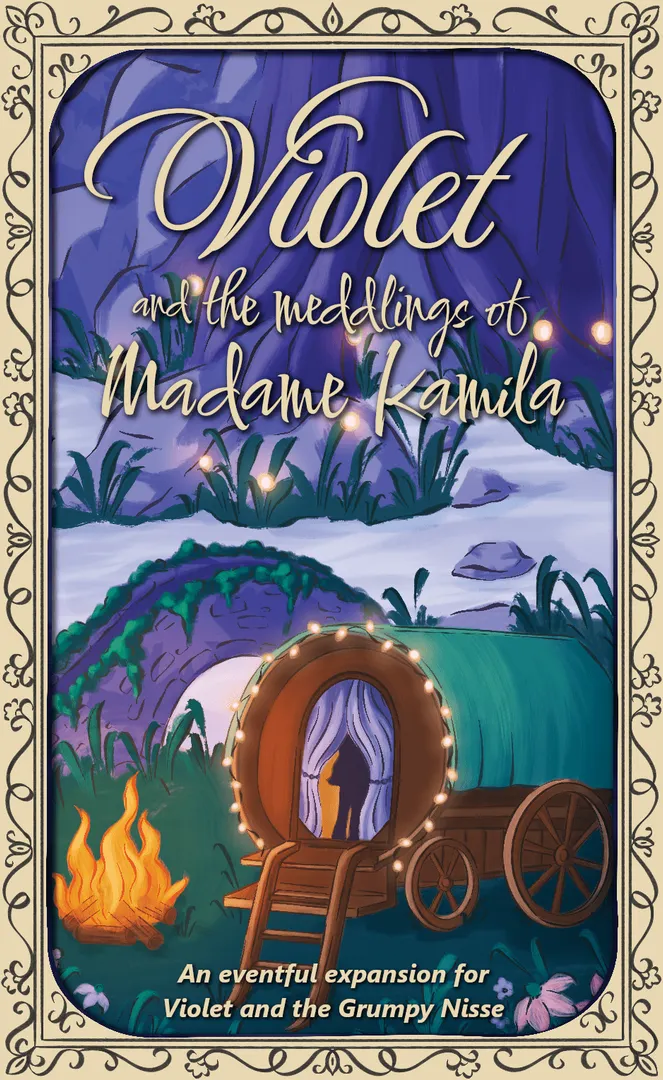
Violet and the meddlings of Madame Kamila
- 2 Spieler
- 20–30 Min.
- Komplexität 2,0/5
- 2025
2022
Regelhilfe für Violet and the Grumpy Nisse
Verständliche Erklärungen zu Spielzügen, Karteneffekten und strittigen Situationen mit Verweisen auf offizielle Quellen und gespeichertem Fragenverlauf.
Für 2 Personen
Was möchtest du wissen?
Antworten stammen aus dem offiziellen Regelheft, mit Seitenangabe zum Nachprüfen.
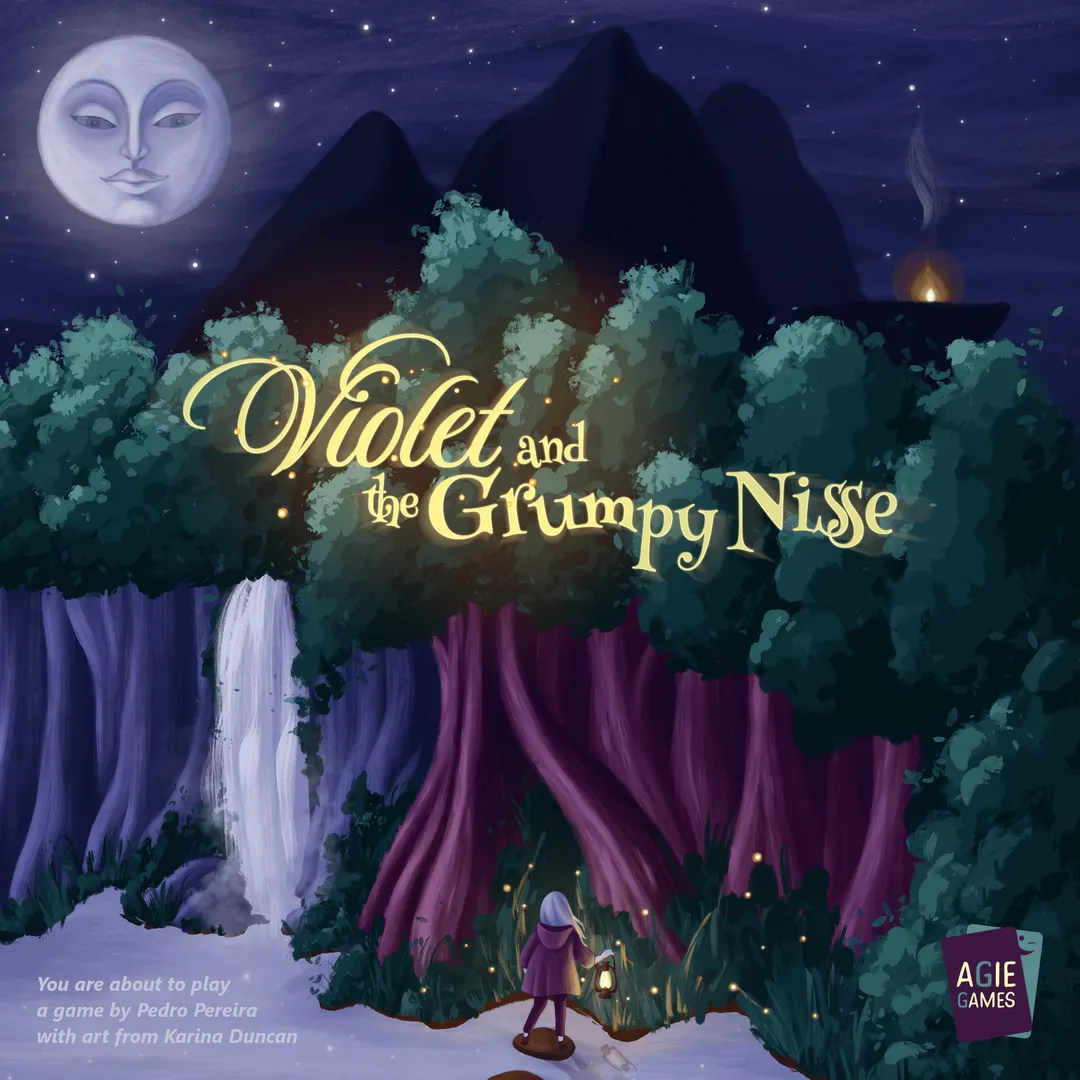
Violet and the Grumpy Nisse ist ein Brettspiel aus dem Jahr 2022 für 2 Personen, mit 20–30 Minuten pro Partie und ab 12 Jahren. Entwickelt wurde es von Pedro Pereira; die wichtigsten Mechaniken sind Variable Player Powers, Open Drafting und Trick-taking.


Auf Englisch
In Violet and the Grumpy Nisse, one player is Violet and the other is Torech, the very grumpy nisse (a creature from Nordic folklore similar to a gnome) who has been kicked out of every single household in the village and taken shelter in the woods, which he claimed as his own domain. Now, Violet is setting out to meet with her friend Ordep, the friendly troll, a journey that takes her right through the woods that Torech has claimed for himself. After being kicked out of the village, Torech cannot stand the idea of a human invading his home, let alone a human who is friends with a troll! So he is out to make Violet's journey as unpleasant as he possibly can, playing all sorts of tricks on her. Violet and the Grumpy Nisse is a two-player trick-taking game. Players take different approaches on how to play this game depending on who they are playing as: Violet has control over the pacing of the game, but is also more vulnerable to losing tricks as she has to manage her lantern, making sure it's always fueled so that she doesn't get lost in the darkness of the woods at night. She also wasn't expecting a nisse to cross her path; this can be scary, and she has to manage her fear so not to be overwhelmed by her own paranoia. Torech has very little control over the pacing of the game, but he does has a few tricks up his sleeve. As Violet's fear of him increases, he becomes bolder and sets out more and more traps that make it harder for Violet to reach her friend. Also, unlike Violet, losing a trick is not nearly as bad for Torech as it is for Violet. He, after all, is the master of tricks! The game ends with a win for Violet if she reaches the end of her journey. Torech wins if Violet's lantern runs out of fuel, or if her fear sneaks up on her before she gets to Ordep. What's unique about this trick taking game: It's highly thematic and instead of keeping track of scores on a pad, you will have Violet's pawn advancing on a map, that displays her progress and how close/far she is from winning the game. Torech has two tracks on the board he will be focusing on and that display how close/far he is from winning the game: Violet's fear, which he threatens with each trick he successfully plays on her (wins), and Violet's Light track, which he wants to run out as quickly as possible so that she gets lost. Trump will change over the course of a game as Violet journeys through the different parts of the landscape. Because Violet controls the pacing, she will be able to speed through them, or stay for a little longer to take advantage of a certain suit. Most cards have a special ability, however, a card's ability is triggered only if it isn't used as a trump (trump is determined by Violet's location on the map). Thanks to the many different traps Torech can use, each game will have different events play out at different timings, depending on how early Violet becomes a victim of her own fears.
Laut Katalog unterstützt Violet and the Grumpy Nisse 2 Personen. Das ist die vom Verlag angegebene Spielerzahl, das Spiel ist also genau für diese Anzahl von Mitspielenden ausgelegt. Varianten für andere Gruppengrößen sind, sofern vorhanden, in der Anleitung deiner Ausgabe beschrieben; prüfe sie, bevor du eine andere Konfiguration aufbaust.
Die angegebene Spieldauer für Violet and the Grumpy Nisse beträgt 20–30 Minuten. Das ist die Schätzung des Verlags für eine vollständige Partie. Die tatsächliche Dauer hängt von der Gruppe, der Personenzahl und der Regelkenntnis ab: Erste Partien dauern meist länger, erfahrene Gruppen sind oft schneller fertig. Aufbau und Regelerklärung sind in dieser Schätzung nicht enthalten.
Im Katalog wird Violet and the Grumpy Nisse ab 12 Jahren empfohlen. Das ist die Empfehlung des Verlags und berücksichtigt Leseanforderungen, Regelkomplexität und Kleinteile, nicht nur das Thema. Jüngere Kinder können oft mit Hilfe eines Erwachsenen mitspielen; beachte die Altersangabe deiner Ausgabe und die Brettspielerfahrung deiner Gruppe.
Violet and the Grumpy Nisse hat bei BoardGameGeek eine Komplexitätswertung von 2,0 von 5 und gilt damit als eher leichtes Spiel. Die Wertung zeigt, wie viel Regelwissen, Planung und Entscheidungen eine typische Partie verlangt. Schwerere Spiele brauchen bei der ersten Erklärung mehr Zeit, daher hilft vor dem Spieleabend eine Vorbereitungsanleitung.
Violet and the Grumpy Nisse gehört zu diesen Kategorien: Card Game und Fantasy. Die wichtigsten Mechaniken sind Variable Player Powers, Open Drafting und Trick-taking. Kategorien beschreiben Thema und Setting eines Spiels, Mechaniken dagegen, was die Spielenden in ihrem Zug tatsächlich tun. Jede Mechanik führt zu einer Katalogseite mit ähnlichen Spielen, falls du etwas Vergleichbares suchst.
Als Autoren von Violet and the Grumpy Nisse sind angegeben: Pedro Pereira. Diese Angaben stammen aus den veröffentlichten Spieldaten und nennen die für das Spieldesign verantwortlichen Personen, nicht die Illustratoren oder Verlage. Die Autorenseiten auf MeepleRules sammeln weitere Titel derselben Autoren – praktisch, wenn dir ein Spiel gefällt und du ähnliche Spiele suchst.
Im Katalog ist Violet and the Grumpy Nisse als Grundspiel aufgeführt. Es lässt sich eigenständig mit dem Material aus der Schachtel spielen und benötigt keinen weiteren Titel. Erweiterungen, sofern es welche gibt, ergänzen neues Material oder neue Regeln und sind im Katalog separat mit einem Verweis auf dieses Grundspiel aufgeführt.