
- BGG-Bewertung
- 6,4
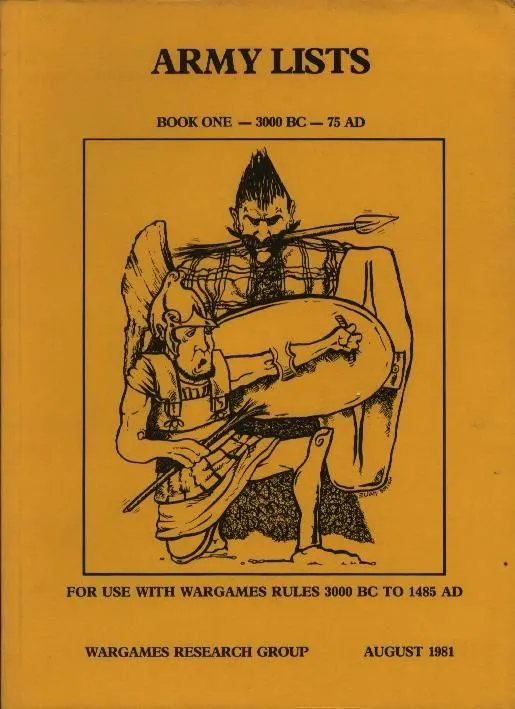
Army Lists Book One: 3000 BC – 75 AD
- 2 Spieler
- 120 Min.
- Komplexität 2,0/5
- 1981
1980
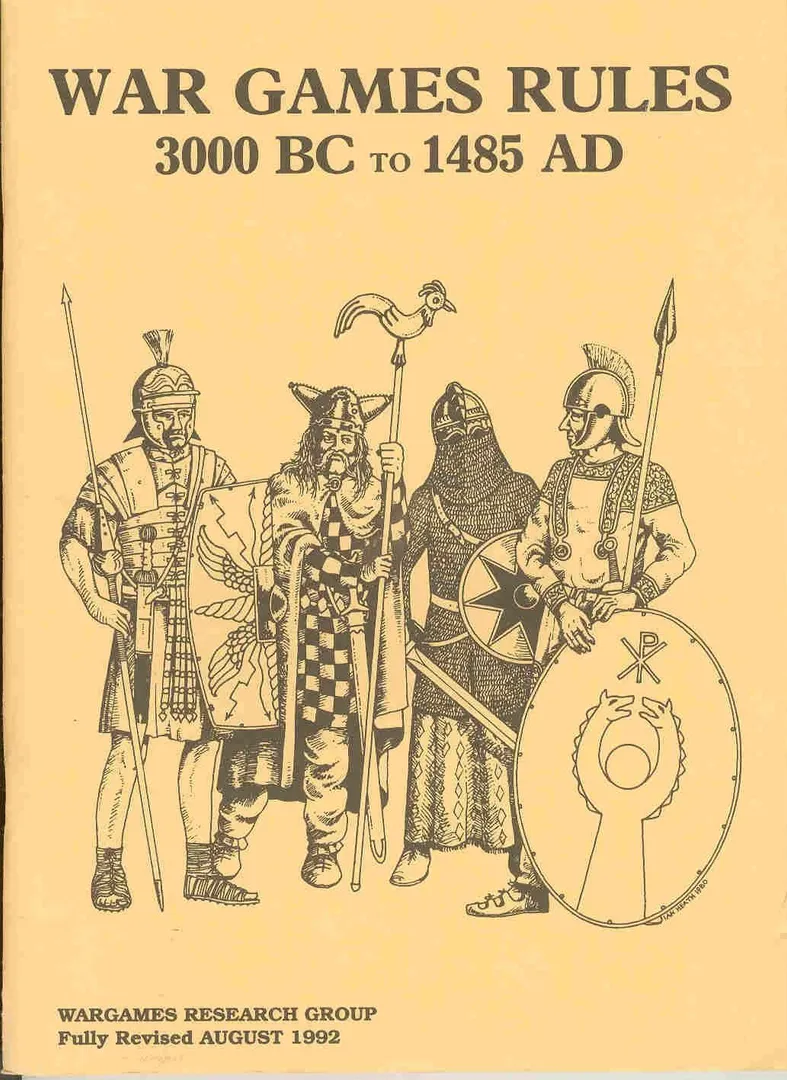
Regelhilfe für War Games Rules 3000 BC to 1485 AD
Verständliche Erklärungen zu Spielzügen, Karteneffekten und strittigen Situationen mit Verweisen auf offizielle Quellen und gespeichertem Fragenverlauf.
Für 2 Personen
Was möchtest du wissen?
Antworten stammen aus dem offiziellen Regelheft, mit Seitenangabe zum Nachprüfen.
War Games Rules 3000 BC to 1485 AD ist ein Brettspiel aus dem Jahr 1980 für 2 Personen, mit 120–180 Minuten pro Partie und ab 12 Jahren. Entwickelt wurde es von Philip C. Barker; die wichtigsten Mechaniken sind Dice Rolling, Paper-and-Pencil und Simulation.
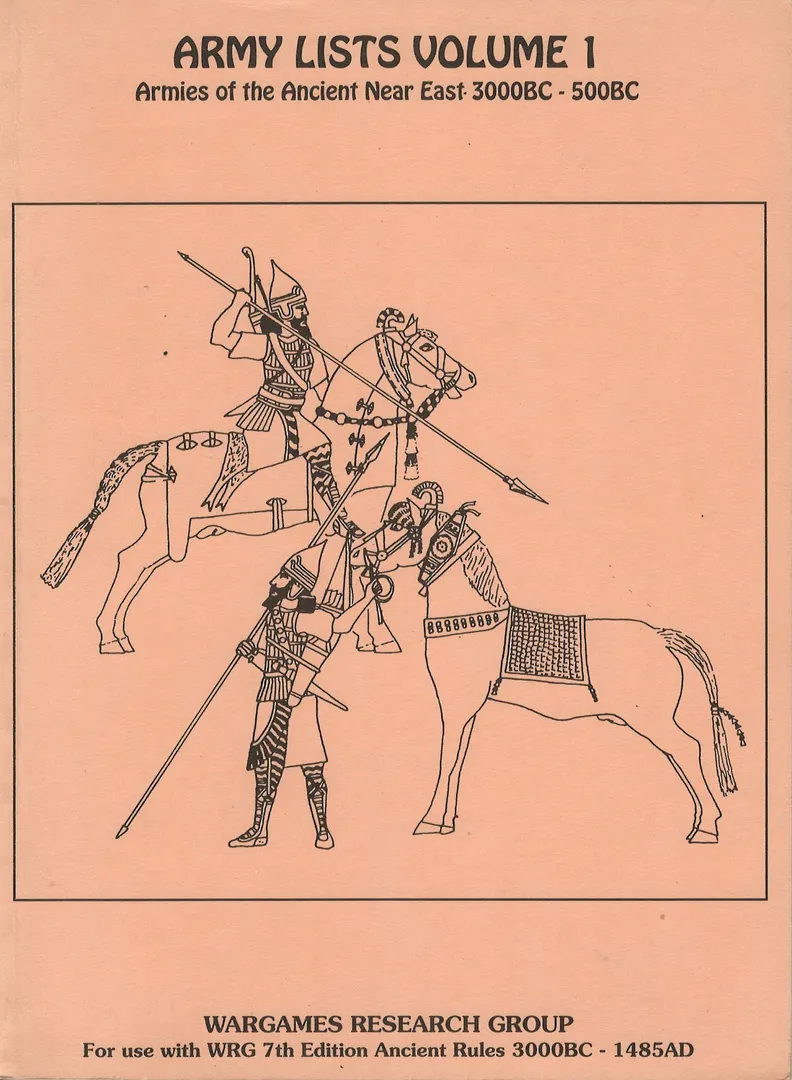
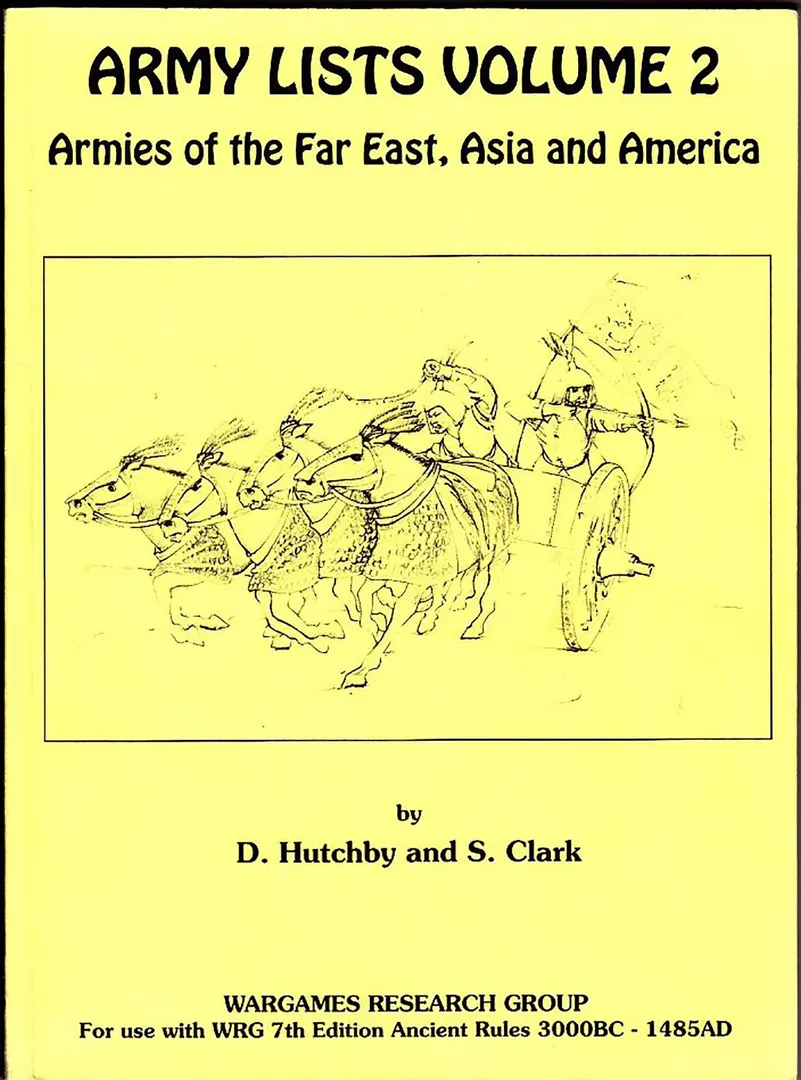

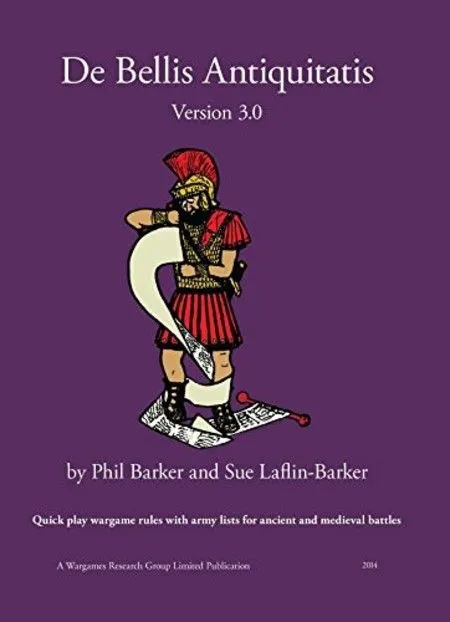
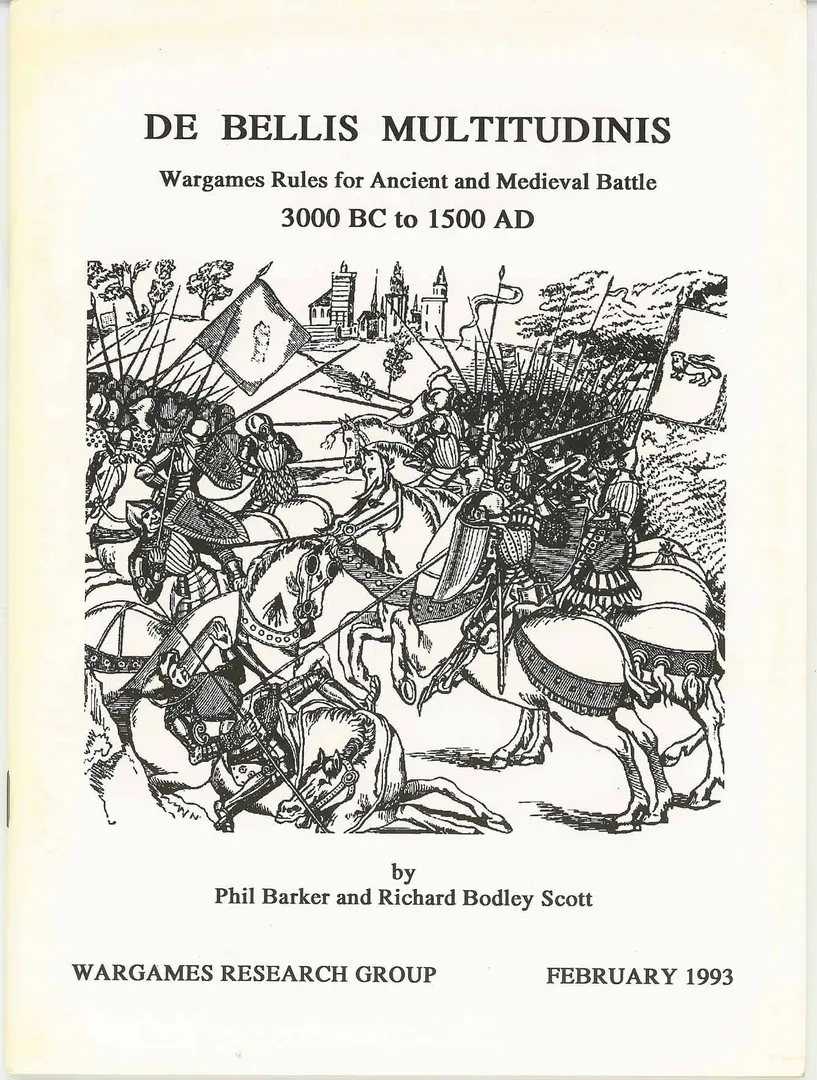
Auf Englisch
From the Intro to the 7th edition rules The first edition of our original ancient rules appeared in 1969, and their adopted for the British National Wargames Championships of that year. Despite competition from many would be rival sets, succeeding editions have been used in every important convention worldwide since then, and are used by an overwhelming majority of ancient wargamers. Their mechanisms have become a wargames standard used for every conceivable historical period, including some for which WE consider then unsuitable! The seventh edition went to the printers in late 1985, and in the seven years since has almost completely taken over from previous editions. Feedback from play by several thousand customers has made it possible to provide free update sheets available in return for a stamped addressed envelope or international reply coupon. A few of the amendments blocked minor loopholes, most clarify meanings and some incorporate goal ideas for improvements suggested and justified by players. All such changes to date are incorporated into the text of this printing of the rule book as Version 7.5. Seventh was a revolutionary, rather than evolutionary, change from previous editions. It places much more emphasis on realism, the problems of command, terrain and natural conditions, and seeks to distract players from excessive pre—occupation with weapon and amour differences important only if “all things are equal”. It is the function of the general to ensure that things are NEVER equal! We also take the view that a putative difference in weapon characteristics that cannot be shown to have influenced tactics in, or the result of, at least one historical battle is likely to be spurious. The tendency sung rule writers to show off their knowledge rather than produce the simplest realistic simulation is natural but unhelpful. The unanimous conclusion of the users is that seventh is far more realistic than other sets and greatly widens the gap between good and poor tacticians. They applaud the end of the "fire work display” with units whizzing off in all directions without getting in each other’s way the increased mobility out of and the reduced maneuverability in proximity to the enemy the need to take conditions, terrain and the chance of a surprise into account when planning, the way the fatigue rules force a proper use of reserves, the way rebased troops no longer fall over in the box, and not least, the discomfiture of rule lawyers. Since its introduction, seventh has been used in the great majority of tournaments around the world, and even passed the fearsome test of the Milton Keynes 36 hour sleepless marathon event. Tournaments normally use the full rules with terrain choice, weather, unusual deployments and unreliable generals without these causing any difficulty or complaint of unfairness. A public demonstration game at Northern Militaire with one player per side each using 3,600 points of 25mm figures on a 6 foot x 4 foot table with plenty of terrain finished with a decisive win in something over two hours. This implies that increased realism has not been achieved at the cost of “playability”. Gums now play ‘inch quicker. The major difficulty faced by players transferring from the previous editions is one of imagination. It DOES help to plan as if you wore commanding a real army rather than trying to analyze the rules to deduce goal tactics. Cannon mistakes are to leave cavalry at the rear of a marching column instead of scouting in front, keeping the general safe instead of in a position to see, letting an unreliable general continue disobedience instead of correcting him, ignoring terrain difficulties when deploying, with consequent traffic jams when moving out, accepting waver tests instead of avoiding then like the plague, deploying front and rear lines too close so that they became entangled, and leaving front line units to become exhausted or be overwhelmed instead of reinforcing or withdrawing then in goal tine. Victory with seventh edition goes to the player who has best learned the skills of real historical generals, not he with most grasp of the minutiae of the rules. Finally, although 7th is simpler than its predecessor and much simpler than its rivals, it is necessarily complex and needs large numbers of figures, a full sized table, and two or mare hours to play. For those occasions for which it will not suit, we recommend our other rule set for the period, the very successful “De Bellis Antiquitatis”. DBA allows much quicker games with far fewer figures on a 24” square terrain, incorporates a campaign systen and army lists, and is especially suitable for beginners, the young, jaded elders, large multi-player gases and odd moments
Laut Katalog unterstützt War Games Rules 3000 BC to 1485 AD 2 Personen. Das ist die vom Verlag angegebene Spielerzahl, das Spiel ist also genau für diese Anzahl von Mitspielenden ausgelegt. Varianten für andere Gruppengrößen sind, sofern vorhanden, in der Anleitung deiner Ausgabe beschrieben; prüfe sie, bevor du eine andere Konfiguration aufbaust.
Die angegebene Spieldauer für War Games Rules 3000 BC to 1485 AD beträgt 120–180 Minuten. Das ist die Schätzung des Verlags für eine vollständige Partie. Die tatsächliche Dauer hängt von der Gruppe, der Personenzahl und der Regelkenntnis ab: Erste Partien dauern meist länger, erfahrene Gruppen sind oft schneller fertig. Aufbau und Regelerklärung sind in dieser Schätzung nicht enthalten.
Im Katalog wird War Games Rules 3000 BC to 1485 AD ab 12 Jahren empfohlen. Das ist die Empfehlung des Verlags und berücksichtigt Leseanforderungen, Regelkomplexität und Kleinteile, nicht nur das Thema. Jüngere Kinder können oft mit Hilfe eines Erwachsenen mitspielen; beachte die Altersangabe deiner Ausgabe und die Brettspielerfahrung deiner Gruppe.
War Games Rules 3000 BC to 1485 AD hat bei BoardGameGeek eine Komplexitätswertung von 3,6 von 5 und gilt damit als mittelschweres Spiel. Die Wertung zeigt, wie viel Regelwissen, Planung und Entscheidungen eine typische Partie verlangt. Schwerere Spiele brauchen bei der ersten Erklärung mehr Zeit, daher hilft vor dem Spieleabend eine Vorbereitungsanleitung.
War Games Rules 3000 BC to 1485 AD gehört zu diesen Kategorien: Wargame, Miniatures und Medieval. Die wichtigsten Mechaniken sind Dice Rolling, Paper-and-Pencil und Simulation. Kategorien beschreiben Thema und Setting eines Spiels, Mechaniken dagegen, was die Spielenden in ihrem Zug tatsächlich tun. Jede Mechanik führt zu einer Katalogseite mit ähnlichen Spielen, falls du etwas Vergleichbares suchst.
Als Autoren von War Games Rules 3000 BC to 1485 AD sind angegeben: Philip C. Barker. Diese Angaben stammen aus den veröffentlichten Spieldaten und nennen die für das Spieldesign verantwortlichen Personen, nicht die Illustratoren oder Verlage. Die Autorenseiten auf MeepleRules sammeln weitere Titel derselben Autoren – praktisch, wenn dir ein Spiel gefällt und du ähnliche Spiele suchst.
Im Katalog ist War Games Rules 3000 BC to 1485 AD als Grundspiel aufgeführt. Es lässt sich eigenständig mit dem Material aus der Schachtel spielen und benötigt keinen weiteren Titel. Erweiterungen, sofern es welche gibt, ergänzen neues Material oder neue Regeln und sind im Katalog separat mit einem Verweis auf dieses Grundspiel aufgeführt.