
- BGG-Rang
- BGG #1.170
- BGG-Bewertung
- 7,5
Bridge
- 4 Spieler
- 60 Min.
- Komplexität 3,9/5
- 1925
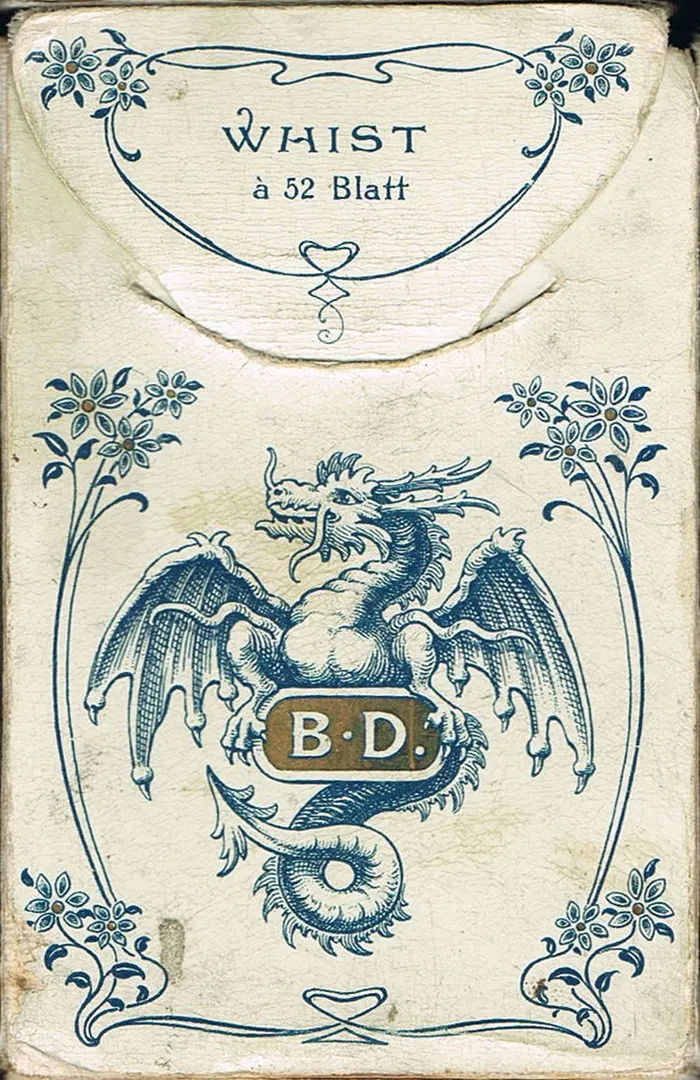
Whist1663
Regelhilfe für Whist Rommé Bridge Canasta
Verständliche Erklärungen zu Spielzügen, Karteneffekten und strittigen Situationen mit Verweisen auf offizielle Quellen und gespeichertem Fragenverlauf.
Was möchtest du wissen?
Antworten stammen aus dem offiziellen Regelheft, mit Seitenangabe zum Nachprüfen.
Whist Rommé Bridge Canasta ist ein Brettspiel aus dem Jahr 1663 für 2–4 Personen, mit 60 Minuten pro Partie und ab 12 Jahren. Die wichtigsten Mechaniken sind Team-Based Game und Trick-taking.






Auf Englisch
Whist is a trick taking standard deck playing card game that was played widely in the 18th and 19th centuries and is often mentioned in literature from that time period. The most basic version of the game features fixed partnerships with no bidding. The game uses a single deck, and follows the basic mechanics of most trick taking games: the starting player leads a suit, and then the other players are forced to follow unless they have none of that suit left, in which case they are allowed to either toss a useless card of another suit, or to play a trump. The object of Whist is to acquire tricks in excess of 6, each 1 of which scores 1 point. In this basic form the game usually goes to 5, though 7 and 9 point variations were also common. The trumps in standard Whist were determined by facing the last card to be dealt. In addition, like most card games, there are a large variety of variants. A common one involves pre-determing the trump suit, and running them in order from hand to hand. (For instance: Hearts first, then Diamonds, Spades, and finally Clubs, and then start over again) Another, less popular and luck oriented variant involves giving a 4 point bonus to a partnership if it held the 'Honours' run of A - K - Q - J in the suit that was trump for that hand or 2 points if it had 3 of the 4. As this is based on the cards as dealt it is a very luck based option, and as such has fallen out of common use though it was once considered a standard way to play the game. Other variants include bidding (quite common, and turn the game into something closely resembling Spades) and two player adaptations.
Laut Katalog unterstützt Whist Rommé Bridge Canasta 2–4 Personen. Diese Spanne entspricht der vom Verlag angegebenen Spielerzahl, das Spiel lässt sich also für jede Gruppengröße innerhalb dieser Spanne aufbauen. Aufbau, einzelne Regeln und Wertungsdetails können je nach Personenzahl trotzdem abweichen; prüfe daher die genaue Konfiguration in der Anleitung deiner Ausgabe.
Die angegebene Spieldauer für Whist Rommé Bridge Canasta beträgt 60 Minuten. Das ist die Schätzung des Verlags für eine vollständige Partie. Die tatsächliche Dauer hängt von der Gruppe, der Personenzahl und der Regelkenntnis ab: Erste Partien dauern meist länger, erfahrene Gruppen sind oft schneller fertig. Aufbau und Regelerklärung sind in dieser Schätzung nicht enthalten.
Im Katalog wird Whist Rommé Bridge Canasta ab 12 Jahren empfohlen. Das ist die Empfehlung des Verlags und berücksichtigt Leseanforderungen, Regelkomplexität und Kleinteile, nicht nur das Thema. Jüngere Kinder können oft mit Hilfe eines Erwachsenen mitspielen; beachte die Altersangabe deiner Ausgabe und die Brettspielerfahrung deiner Gruppe.
Whist Rommé Bridge Canasta hat bei BoardGameGeek eine Komplexitätswertung von 2,0 von 5 und gilt damit als leichtes Spiel. Die Wertung zeigt, wie viel Regelwissen, Planung und Entscheidungen eine typische Partie verlangt. Schwerere Spiele brauchen bei der ersten Erklärung mehr Zeit, daher hilft vor dem Spieleabend eine Vorbereitungsanleitung.
Whist Rommé Bridge Canasta gehört zu diesen Kategorien: Card Game. Die wichtigsten Mechaniken sind Team-Based Game und Trick-taking. Kategorien beschreiben Thema und Setting eines Spiels, Mechaniken dagegen, was die Spielenden in ihrem Zug tatsächlich tun. Jede Mechanik führt zu einer Katalogseite mit ähnlichen Spielen, falls du etwas Vergleichbares suchst.
Im Katalog ist Whist Rommé Bridge Canasta als Grundspiel aufgeführt. Es lässt sich eigenständig mit dem Material aus der Schachtel spielen und benötigt keinen weiteren Titel. Erweiterungen, sofern es welche gibt, ergänzen neues Material oder neue Regeln und sind im Katalog separat mit einem Verweis auf dieses Grundspiel aufgeführt.


