
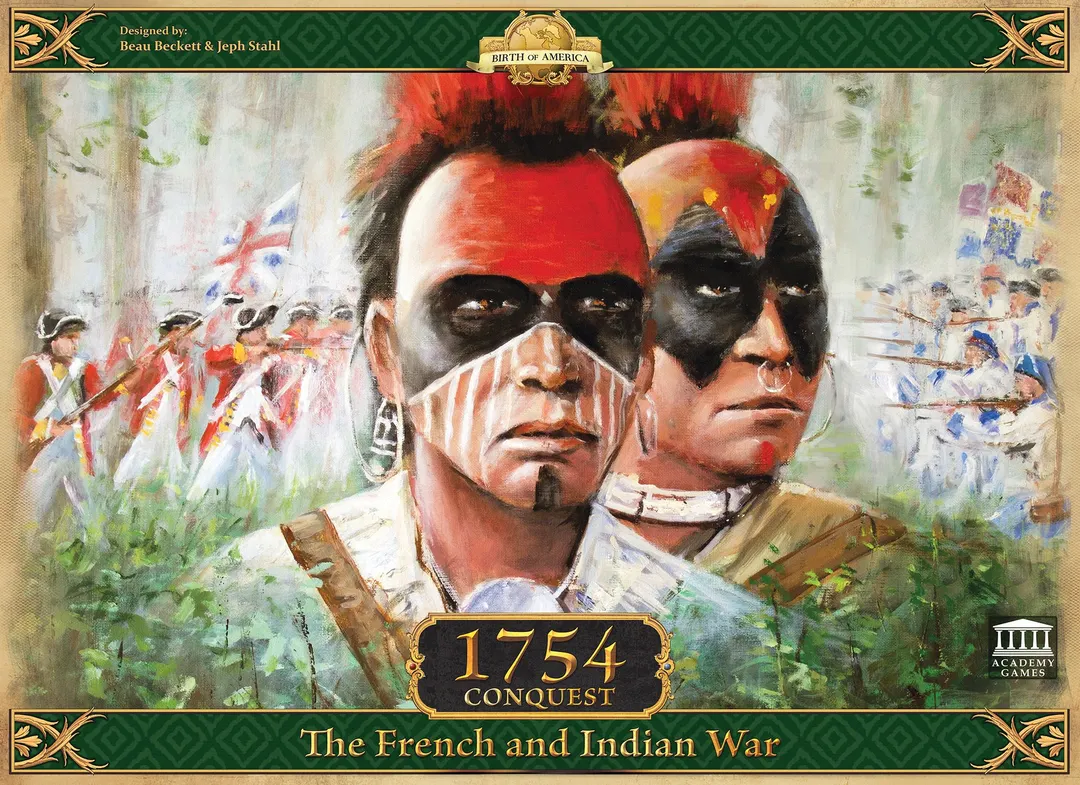
- BGG rank
- BGG #2,485
- BGG rating
- 7.7
1754: Conquest – The French and Indian War
- 2–4 players
- 60–120 min
- Complexity 2.3/5
- 2017
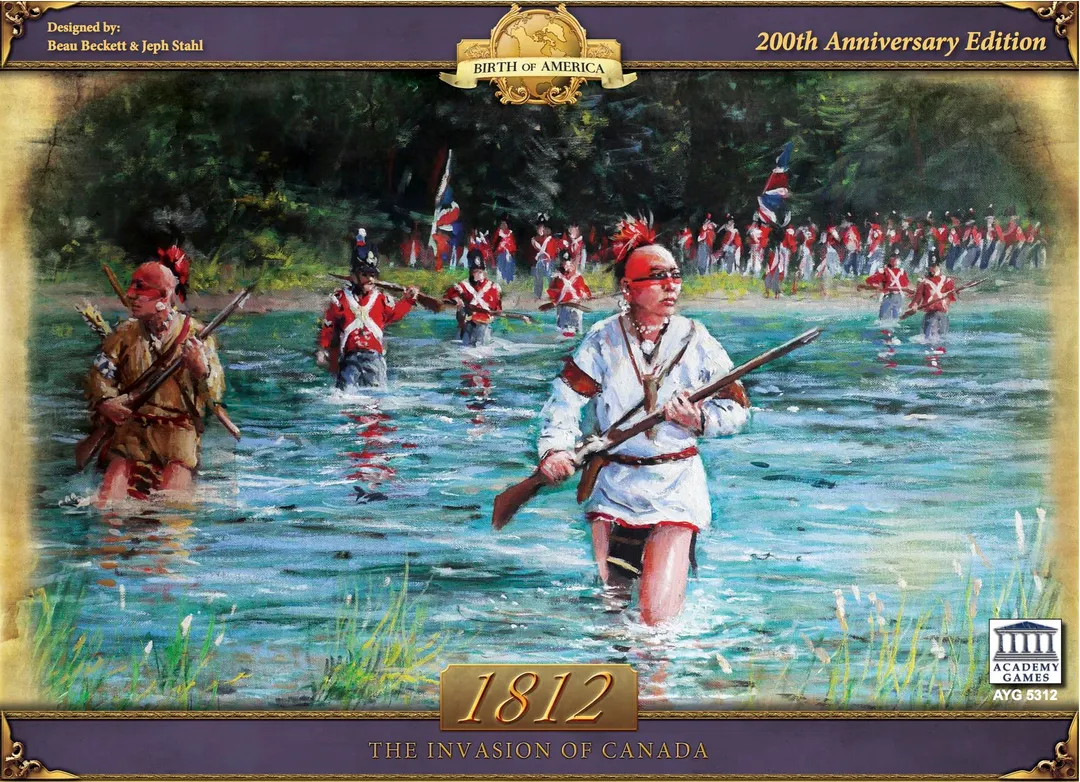
2012
Rules assistance for 1812: The Invasion of Canada
Plain-language explanations of turns, card effects and disputed situations, with official source references and saved question history.
For 2 players
What would you like to know?
Answers come from the official rulebook, with the page to check.
1812: The Invasion of Canada is a board game released in 2012 for 2–5 players and 60–120 minutes per game. It was designed by Beau Beckett and Jeph Stahl and its main mechanics are Variable Player Powers, Area Movement, and Dice Rolling.




1812 - The Invasion of Canada The year is 1812. War is raging across Europe and Russia. Napoleon, emperor of France, is seeking to dominate Europe through conquest. France’s enemies, led by England, are engaged in a desperate struggle to defeat Napoleon. England, in dire need of men, is impressing men to serve in its navy. Included are Americans who are pressed into service at gunpoint. The young American nation objects. Eager to defend its sovereign rights and to strengthen its position in North America, the United States declares war on Britain on June 18, 1812. Taking advantage of the British Army being occupied in its struggles against Napoleon, American forces invade Canada in order to drive the British from its last remaining colony on North American soil. Surprised, Britain reels from the attack and now has to face another enemy threat on another front. In 1812 - The Invasion of Canada, players take on one of the roles of the major factions that took part in the War of 1812. On the British side these are represented by the British Regulars (Redcoats), Canadian Militia and Native Americans; and the American Regular Army and American Militia comprise the American players. Players for each side will cooperate with each other in order to plan and conduct their campaigns. Each side will attempt to capture Objective Areas on the map. When a truce is called, the side that controls the most enemy Objective Areas wins.
1812: The Invasion of Canada supports 2–5 players according to the catalogue. This range comes from the publisher’s listed player count, so the game can be set up for any group size within it. Some setups, rules and scoring details may still vary by player count, so check your edition’s rulebook for the exact configuration.
The listed playing time for 1812: The Invasion of Canada is 60–120 minutes. This is the publisher’s estimate for a full game. The actual duration depends on the group, the player count and familiarity with the rules: first sessions usually run longer, while experienced groups often finish faster. Setup and teaching time are not included in this estimate.
1812: The Invasion of Canada has a complexity rating of 2.2 out of 5 from BoardGameGeek players, which makes it a medium-light game. The rating reflects how much rules knowledge, planning and decision-making a typical game demands. Expect a longer first teach for heavier games, and use a preparation guide before game night.
1812: The Invasion of Canada belongs to these categories: Wargame, Napoleonic, and American Indian Wars. Its main mechanics are Variable Player Powers, Area Movement, and Dice Rolling. Categories describe the theme and setting of a game, while mechanics describe what players actually do on their turns. Each mechanic links to a catalogue hub with similar games, which helps when you want something comparable.
The credited designers of 1812: The Invasion of Canada are: Beau Beckett and Jeph Stahl. These credits come from the published game data and name the people responsible for the game’s design, not its illustrators or publishers. Designer pages on MeepleRules collect other titles by the same designers, which helps when you enjoy a game and want to find similar ones.
The catalogue lists 1812: The Invasion of Canada as a base game. It can be played on its own with the components in the box and does not require any other title. Expansions, if any exist, add new content or rules on top of it and are listed separately in the catalogue with a link back to this base game.