- BGG rank
- BGG #2,148
- BGG rating
- 6.9
A Study in Emerald (Second Edition)
2015
Rules assistance for A Study in Emerald (Second Edition)
Plain-language explanations of turns, card effects and disputed situations, with official source references and saved question history.
- 2–5 players
- 60 min
- 13+
- Complexity 2.9/5

For 2 players
Rules assistant for A Study in Emerald (Second Edition)
What would you like to know?
Answers come from the official rulebook, with the page to check.
A Study in Emerald (Second Edition) is a board game released in 2015 for 2–5 players, 60 minutes per game, and ages 13 and up. It was designed by Martin Wallace and its main mechanics are Hand Management, Auction / Bidding, and Point to Point Movement.
About the game
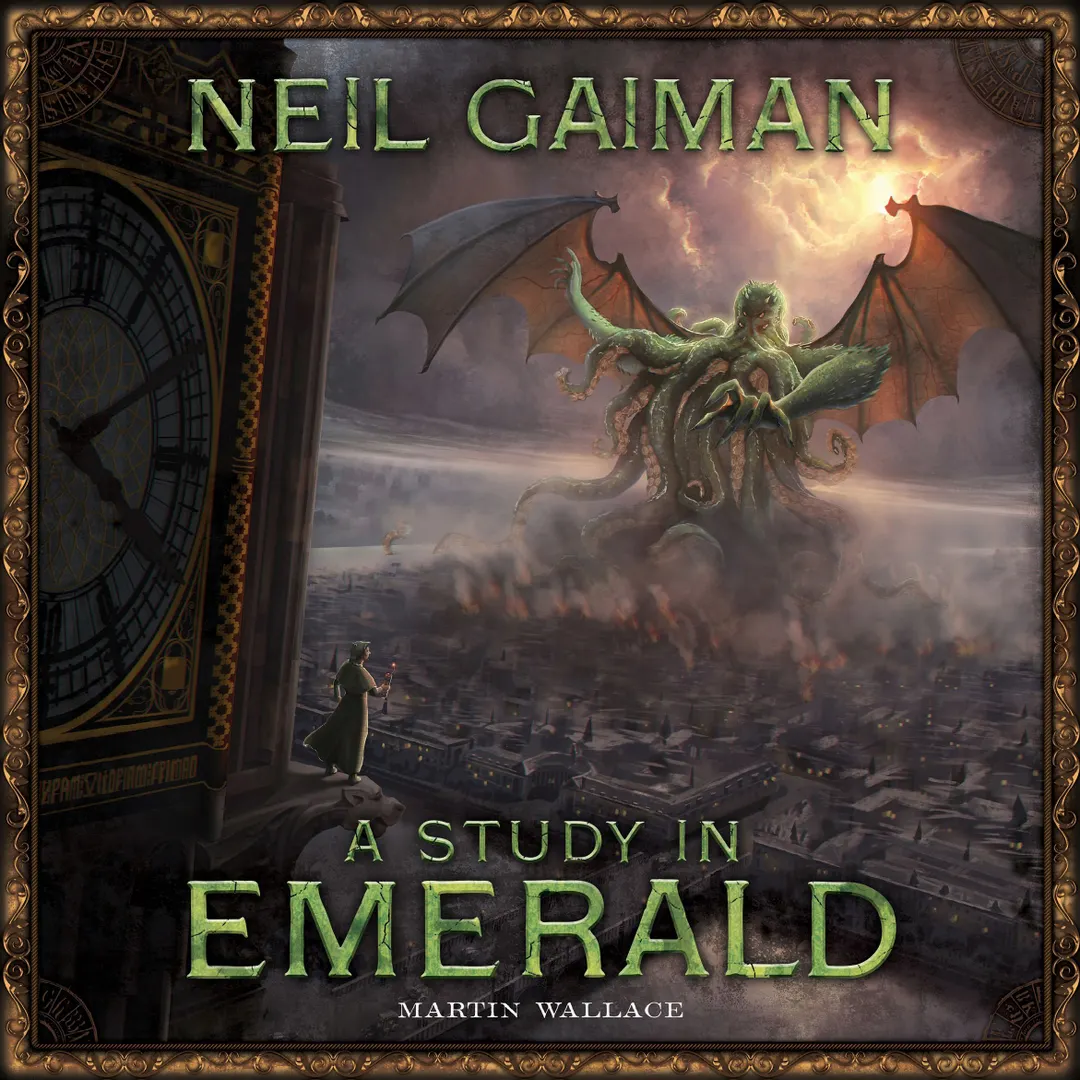
It is 1882, and the Old Ones are already here. They arrived seven hundred years ago and have been ruling the planet ever since. The majority of people just get on with their lives, accepting their monstrous rulers. However, a growing band of revolutionaries wish to free mankind from their slavery. These freedom fighters call themselves the Restorationists. A secret war has already broken out between the Restorationists and the forces loyal to the Old Ones. The invention of dynamite has changed the balance of power, and a lone assassin now has the capacity to destroy an Old One. In this shadow world of assassins, informers, police agents and anarchists, nobody is quite sure who is who and which side they fight for. The game A Study in Emerald draws its central plot from the award-winning short story penned by Neil Gaiman, in which the worlds of Sherlock Holmes and H.P. Lovecraft are combined to telling effect. However, to create a world detailed enough for players, much has been added from real history. The nineteenth century was a time of unrest, with many colorful characters fighting both for and against the authorities. A Study in Emerald is the outcome of the merging of these three worlds. This second edition of A Study in Emerald sports new artwork by Ian O'Toole and Tatiana Kuzilova along with a streamlined set of rules that will hopefully help those folks who found the first version a tad complicated. Inconsistencies have been removed and the number of available actions has been reduced to the minimum, whilst still retaining the mood of paranoia from the first edition.
Mechanics
Designers
Publishers
- Arclight Games
- Ediciones MasQueOca
- Asterion Press
- Schwerkraft-Verlag
- Grey Fox Games
- Treefrog Games
- PHALANX
Questions and answers
A Study in Emerald (Second Edition) supports 2–5 players according to the catalogue. This range comes from the publisher’s listed player count, so the game can be set up for any group size within it. Some setups, rules and scoring details may still vary by player count, so check your edition’s rulebook for the exact configuration.
The listed playing time for A Study in Emerald (Second Edition) is 60 minutes. This is the publisher’s estimate for a full game. The actual duration depends on the group, the player count and familiarity with the rules: first sessions usually run longer, while experienced groups often finish faster. Setup and teaching time are not included in this estimate.
The catalogue lists A Study in Emerald (Second Edition) for ages 13 and up. This is the publisher’s recommendation and reflects reading demands, rule complexity and small components rather than theme alone. Younger players can often join with help from an adult, so check the age guidance on your edition and consider your group’s experience with board games.
A Study in Emerald (Second Edition) has a complexity rating of 2.9 out of 5 from BoardGameGeek players, which makes it a medium-light game. The rating reflects how much rules knowledge, planning and decision-making a typical game demands. Expect a longer first teach for heavier games, and use a preparation guide before game night.
A Study in Emerald (Second Edition) belongs to these categories: Murder / Mystery, Horror, and Zombies. Its main mechanics are Hand Management, Auction / Bidding, and Point to Point Movement. Categories describe the theme and setting of a game, while mechanics describe what players actually do on their turns. Each mechanic links to a catalogue hub with similar games, which helps when you want something comparable.
The credited designers of A Study in Emerald (Second Edition) are: Martin Wallace. These credits come from the published game data and name the people responsible for the game’s design, not its illustrators or publishers. Designer pages on MeepleRules collect other titles by the same designers, which helps when you enjoy a game and want to find similar ones.
The catalogue lists A Study in Emerald (Second Edition) as a base game. It can be played on its own with the components in the box and does not require any other title. Expansions, if any exist, add new content or rules on top of it and are listed separately in the catalogue with a link back to this base game.