
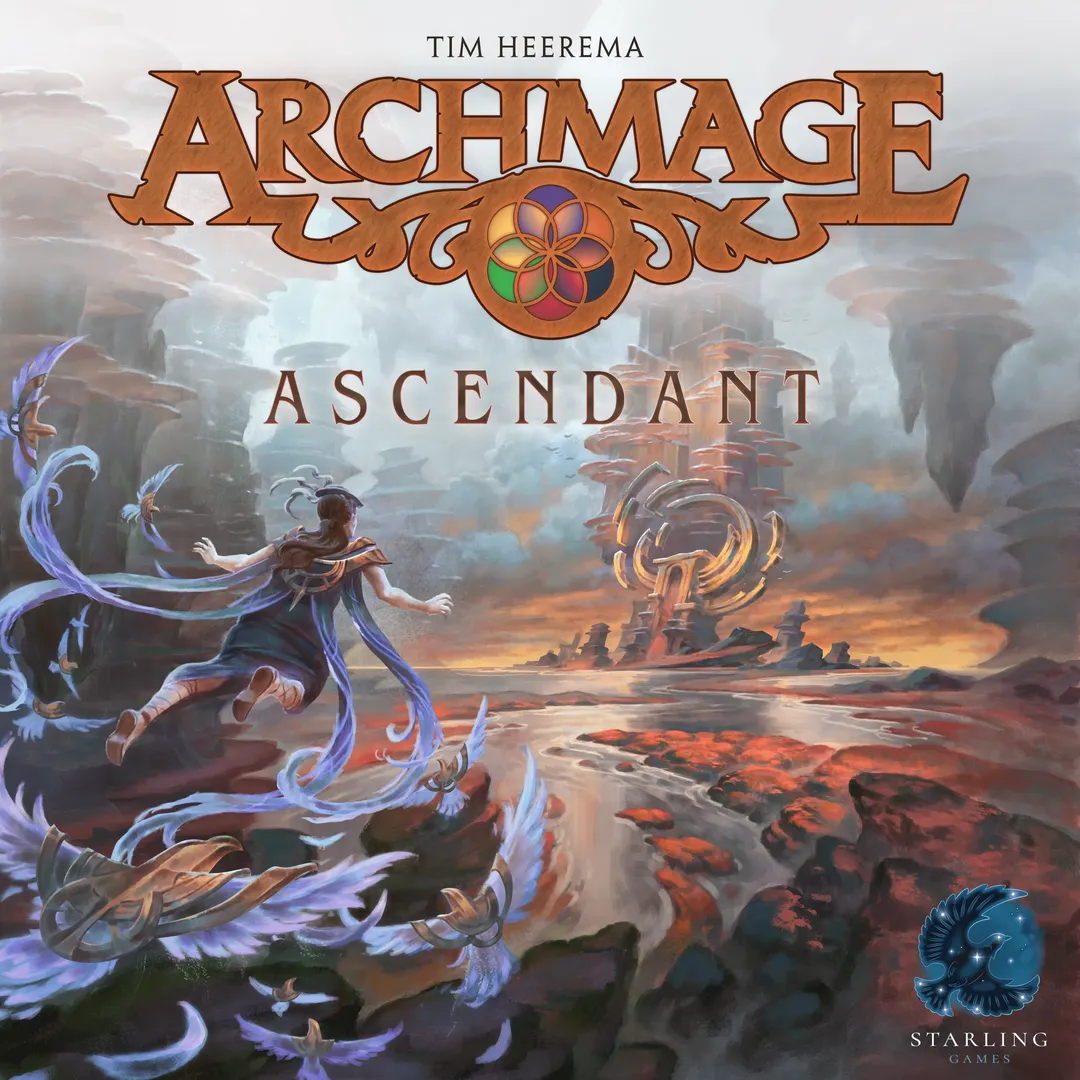
- BGG rating
- 7.8
Archmage: Ascendant
- 1–4 players
- 60–120 min
- Complexity 3.0/5
- 2019
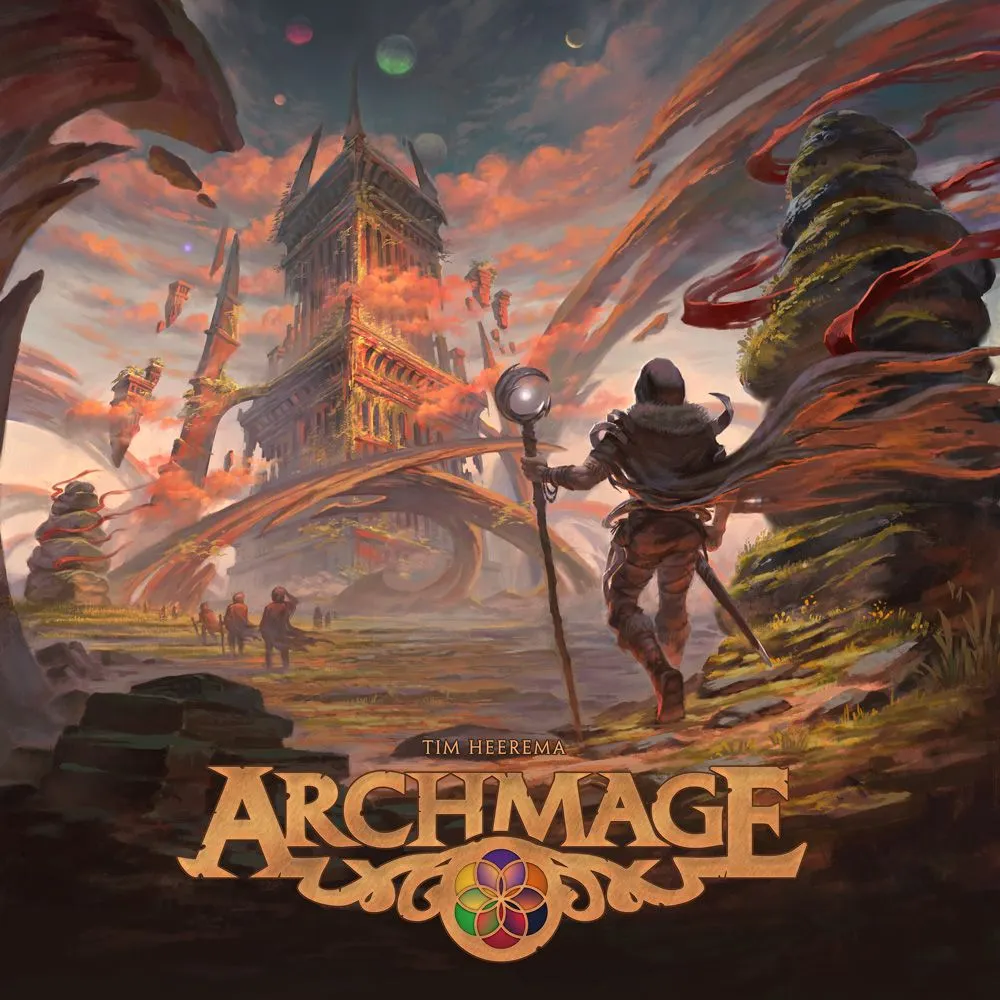
2018
Rules assistance for Archmage
Plain-language explanations of turns, card effects and disputed situations, with official source references and saved question history.
For 1 player
What would you like to know?
Answers come from the official rulebook, with the page to check.
Archmage is a board game released in 2018 for 1–4 players, 60–120 minutes per game, and ages 14 and up. It was designed by Tim Heerema and its main mechanics are Variable Player Powers, Area Majority / Influence, and Pattern Building.
A few magically talented individuals, their devoted followers in tow, have been drawn from their villages across the twisted wilderness to the Ruined City. At the very heart of the city, the cursed Tower of Magic rises into the broiling clouds. From this vantage the Archmage and her Order of Mages ruled these lands for an Age, drawing together the warring magics of the mythic races into one all-powerful and cohesive force. That was, of course, before The Ending. The Ruined City is now home to but a fragment of the mythic races that once served the Archmage and her Order. And until now, no human has dared step foot in these forsaken streets. The newcomers, of human stock, are the descendants of the ancient Mages, now outcasts living in camps in the farthest reaches of the lands. Unusual shows of power in their home villages have already gathered them small but enthusiastic bands of followers. And now they have travelled to meet with representatives of the mythic races, to seek their wisdom and magical secrets. The mythic races are the keepers of six very different spheres of magic, with very different abilities. It was only the power of the Archmage that long ago found ways to combine the spheres and gain higher and higher levels of magic. Now, much of the magic of the mythic races is lost, and the newcomers, having come so far, are told they must now travel the lands to reclaim lost relics sacred to the races. It seems the journey to absolute magical power has only just begun... Archmage is a euro-thematic hybrid, where players take on the role of fledgling Mages, traveling the lands to recover ancient relics, gather followers, and train apprentices in six spheres of magic and beyond. As the power of their Order grows, they will pit apprentices against each other, and attain unheard of spells and magical powers, building their own Mage tower to watch over the lands and weave their magics. When the time of reckoning comes, a new Archmage will rule. Each turn is formed of two phases: The Journey: A Mage travels across the map (formed of hex tiles): discovering new locations; deploying followers to gather relics from Ruins, Libraries, Sacred Glades, and other locations sacred to each of the mythic races; and encountering and dealing with the followers of their opponents. Journey's End: A Mage will finish each Journey in a specific location where they can perform a specific action. Ending a Journey on a Town will let the Mage call on their Followers to deliver the relics and resources they have gathered. Ending in a Settlement (where the spurned descendants of the Mages fled after the Ending) will let a Mage recruit more Followers to their Order. Ending with a Mythic Race will let the Mage train Followers as Apprentices specialising in the magic of that Mythic Race (at a cost of the Relics with which the magic must be weaved). Ending in the Wilderness will let the Mage's followers take more physical control over the area. Ending in the Mage's Tower (once it has been built), will let the Mage train and test their Apprentices. On the floor of the tower (player board) is a mandala in which the Apprentices stand. Moving apprentices on the mandala will change the sorts of spells the Order has access to. Testing apprentices sees one apprentice advance to a higher level and allows an Order to discover new spells and magics beyond what any of the Mythic Races could individually know, and to add to those magics to their spell library. Spells provide Mages with a range of options for strategic and tactical play. Archmage has a modular spell system, with 18 spells included in the base game, and expansions planned to add more sets. Spells are used by expending a cost in Relics, the magical currency of the game that is unique to each mythic race. The game is played over a number of turns, depending on the player count. After the last turn, the Mage with the most powerful Order of Mages, is declared the new Archmage and power is restored to the lands... until the next time!
Archmage supports 1–4 players according to the catalogue. This range comes from the publisher’s listed player count, so the game can be set up for any group size within it. Some setups, rules and scoring details may still vary by player count, so check your edition’s rulebook for the exact configuration.
The listed playing time for Archmage is 60–120 minutes. This is the publisher’s estimate for a full game. The actual duration depends on the group, the player count and familiarity with the rules: first sessions usually run longer, while experienced groups often finish faster. Setup and teaching time are not included in this estimate.
The catalogue lists Archmage for ages 14 and up. This is the publisher’s recommendation and reflects reading demands, rule complexity and small components rather than theme alone. Younger players can often join with help from an adult, so check the age guidance on your edition and consider your group’s experience with board games.
Archmage has a complexity rating of 3.2 out of 5 from BoardGameGeek players, which makes it a medium-weight game. The rating reflects how much rules knowledge, planning and decision-making a typical game demands. Expect a longer first teach for heavier games, and use a preparation guide before game night.
Archmage belongs to these categories: Fantasy, Territory Building, and Exploration. Its main mechanics are Variable Player Powers, Area Majority / Influence, and Pattern Building. Categories describe the theme and setting of a game, while mechanics describe what players actually do on their turns. Each mechanic links to a catalogue hub with similar games, which helps when you want something comparable.
The credited designers of Archmage are: Tim Heerema. These credits come from the published game data and name the people responsible for the game’s design, not its illustrators or publishers. Designer pages on MeepleRules collect other titles by the same designers, which helps when you enjoy a game and want to find similar ones.
The catalogue lists Archmage as a base game. It can be played on its own with the components in the box and does not require any other title. Expansions, if any exist, add new content or rules on top of it and are listed separately in the catalogue with a link back to this base game.