

- BGG rank
- BGG #4,244
- BGG rating
- 6.8
Arkwright: The Card Game
- 1–4 players
- 60–100 min
- Complexity 4.0/5
- 2021
2014
Rules assistance for Arkwright
Plain-language explanations of turns, card effects and disputed situations, with official source references and saved question history.
For 1 player
What would you like to know?
Answers come from the official rulebook, with the page to check.
Arkwright is a board game released in 2014 for 1–4 players, 120–240 minutes per game, and ages 12 and up. It was designed by Stefan Risthaus and its main mechanics are Income, Loans, and Variable Set-up.










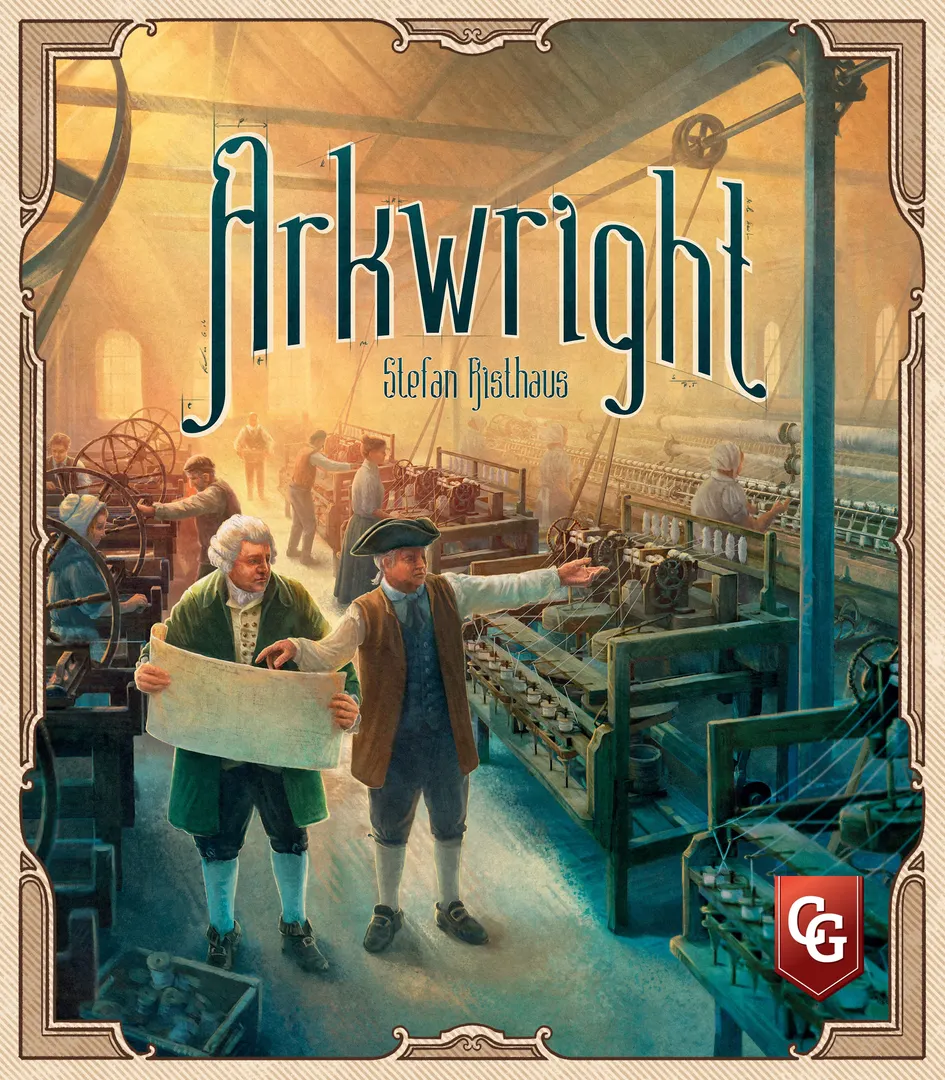
In Arkwright players run up to four factories in England during the late 18th Century. Your goal is to have the most valuable block of own shares. Thus, you must increase your share value and buy shares from the bank. To run the factories, you need workers. When hiring Workers, demand is automatically created. But of course you want to replace your expensive workers (wage 2-5) by machines (1). To have more output from your factories you may employ new Workers or improve your factory to the next technical level. You fix the price for your goods during an action round. To enhance your chances of selling goods, you improve your factories to higher levels, increase the quality and make some sales promotion. The higher these factors, the better are your chances of success - the higher the price, the lower. Each player has an own set of "action tokens" like "build and modernize factories", "employ new workers", "improve quality" etc. On your turn you place one of those tokens on one of the free spaces in your line of the "Administration board" and pay the according administration costs, ranging from 2 to 10 (even numbers). Some actions depend on how much you paid, i.e. you may buy more machines with one single action, when you pay more (= use a higher space, which is then blocked for the rest of the round). During the game your actions become more and more effective by new tokens, i.e. allow you to buy 3 machines in a single turn instead of 2, increase quality 2 levels instead of only 1...). After each round of actions one kind of factories is active and you have to pay for all your workers and machines there, then sell the manufactured products. The value of your shares increases for sold products and best quality. Goods may also be traded to the colonies by ship - provided you have a contract with the monopoly of the East Indian Company. After four turns each of the factories has produced and the round ends. Players remove the action tokens from the administration board and reveal an event token. After 5 rounds the player with the most valuable block of shares wins. Neither being to be the one with the most shares nor being the one with the highest share value guarantees victory. Arkwright allows you to act in different ways. Run all four factories with most possible output, set the focus on only two factories and improve them more than the others can; use shipping to colony or focus on the home market. In any way you have to react to the opponents and their strategy. Enter markets with deficit in supply or give up business where the other players start to push you out. Buy shares when they are cheap and increase the value, or first make money and buy shares later. To get familiar with the market mechanics you may start with a 120 minutes version "Spinning Jenny", but for those who like full strategy in economic themed games, the 240 minute "Waterframe"-Rules come with more options to improve your factory and use ships.
Arkwright supports 1–4 players according to the catalogue. This range comes from the publisher’s listed player count, so the game can be set up for any group size within it. Some setups, rules and scoring details may still vary by player count, so check your edition’s rulebook for the exact configuration.
The listed playing time for Arkwright is 120–240 minutes. This is the publisher’s estimate for a full game. The actual duration depends on the group, the player count and familiarity with the rules: first sessions usually run longer, while experienced groups often finish faster. Setup and teaching time are not included in this estimate.
The catalogue lists Arkwright for ages 12 and up. This is the publisher’s recommendation and reflects reading demands, rule complexity and small components rather than theme alone. Younger players can often join with help from an adult, so check the age guidance on your edition and consider your group’s experience with board games.
Arkwright has a complexity rating of 4.6 out of 5 from BoardGameGeek players, which makes it a heavy game. The rating reflects how much rules knowledge, planning and decision-making a typical game demands. Expect a longer first teach for heavier games, and use a preparation guide before game night.
Arkwright belongs to these categories: Economic and Industry / Manufacturing. Its main mechanics are Income, Loans, and Variable Set-up. Categories describe the theme and setting of a game, while mechanics describe what players actually do on their turns. Each mechanic links to a catalogue hub with similar games, which helps when you want something comparable.
The credited designers of Arkwright are: Stefan Risthaus. These credits come from the published game data and name the people responsible for the game’s design, not its illustrators or publishers. Designer pages on MeepleRules collect other titles by the same designers, which helps when you enjoy a game and want to find similar ones.
The catalogue lists Arkwright as a base game. It can be played on its own with the components in the box and does not require any other title. Expansions, if any exist, add new content or rules on top of it and are listed separately in the catalogue with a link back to this base game.