
- BGG rank
- BGG #2,295
- BGG rating
- 7.1
Xiangqi
- 2 players
- 60 min
- Complexity 3.6/5
- 762

1930
Rules assistance for Brazilian Checkers
Plain-language explanations of turns, card effects and disputed situations, with official source references and saved question history.
For 2 players
What would you like to know?
Answers come from the official rulebook, with the page to check.
Brazilian Checkers is a board game released in 1930 for 2 players, 20 minutes per game, and ages 6 and up. Its main mechanics are Square Grid, Grid Movement, and Pattern Movement.
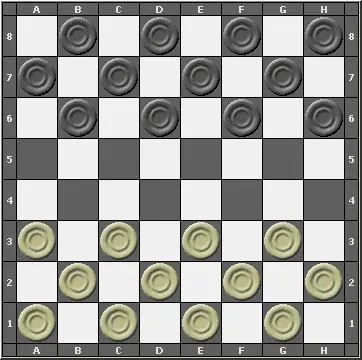
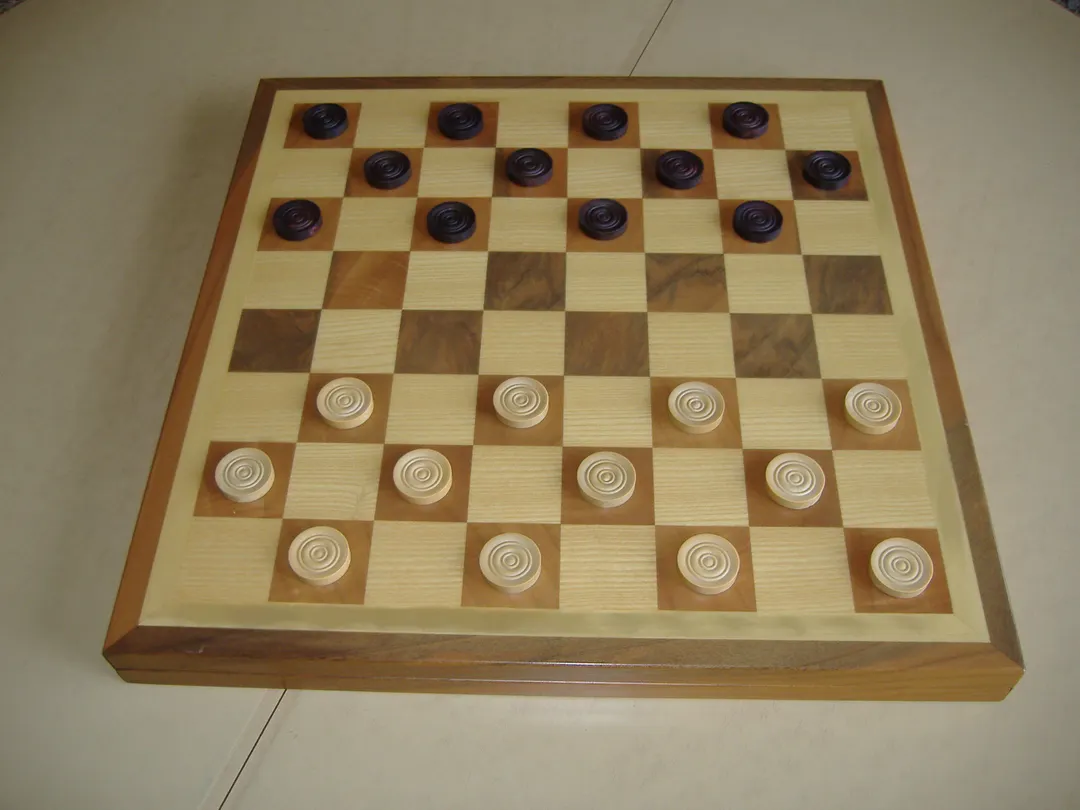


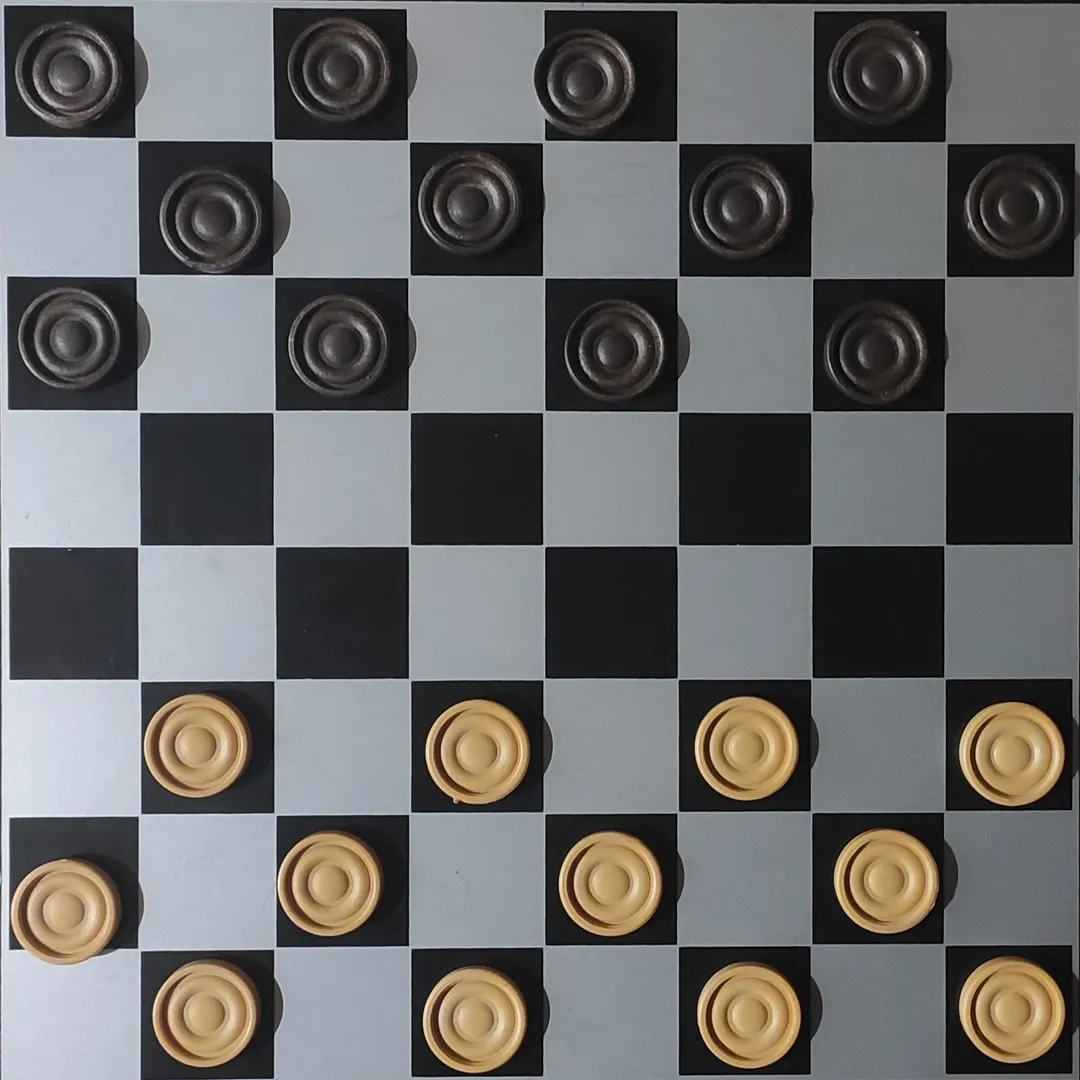
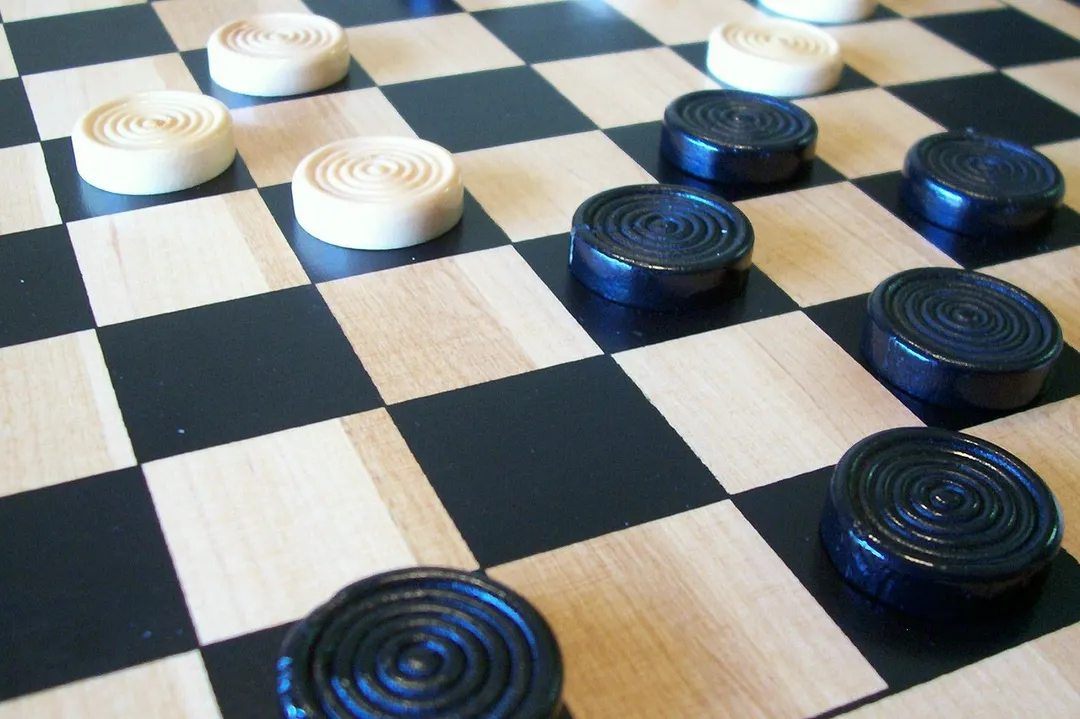
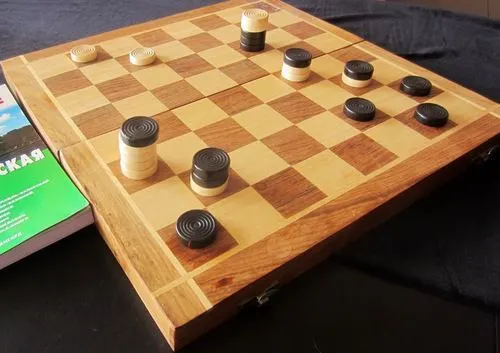
A member of the Checkers Family very popular in Brasil. Brazilian Checkers or Draughts is played under the same basic rules that apply to International Checkers except that it is played on a smaller 8 x 8, or 64-square board with each player playing 12 pieces. This variant is started by the player who either wins a random toss of a coin or the player who plays the light colored pieces. Then the players alternately make their moves thereafter. Rules of the Game: This checkers variation is played using an 8 x 8, or 64 squares checker board of light and dark squares and each player has 12 pieces of contrasting colors, usually red and white. The board is placed between the two players in such a way that the double corner is on the right side and a dark colored square is on the left side of each player. The player places his pieces on the first three rows on his side of the board The Moves of the Men: Checker players can only move their pieces forward one at a time on each empty square to the left or to the right. If a player successfully moves his pieces to the last, or "king row," then that piece must be crowned "king" by the opponent by placing a second checker on top of the crowned piece. The Moves of the King: King pieces are "flying kings," which means that they can move over many empty squares on the diagonal lines that pass over the square on which they are located. Captures: In Brazilian Checkers captures are mandatory. And, maximum captures are compulsory as well, which means that if a player has more than one way to capture the opposing pieces then he must choose that way that will result in the capture of the most number of pieces. If a checker piece reaches the king row while in a capture sequence, it must keep on capturing pieces backward for as long as there still pieces to capture. That capturing piece cannot be crowned king unless it finishes the move and stops on king row. Captures by the Men: Men can capture by jumping forward or backward over a single piece that is located next to it only if the square located next to the captured piece is unoccupied. If the man can jump again from its landing square to make another capture, then it must do so because all captures are mandatory. Captures by a King: A crowned piece can capture an opponent's piece forward and backward diagonally if it is on the same path where it is located and if the squares between them are unoccupied and that if the square immediately after the piece that will be captured is also unoccupied. The crowned piece can land on any empty square within the same path and if a continuous capture is possible, then the player must keep on capturing even if this move will not redound to the best interest of the player making the capture. The Winning Player: A player wins the game if he has captured all of his opponent's pieces or successfully blocked his opponent's pieces such that the opponent is unable to move any of his pieces. Conditions for a Draw: The players can mutually agree to a draw. A draw may also happen if the same position has occurred three times during the game, or if there are three crowned pieces playing against one and that both players have made 16 moves without attaining any promotion or making a capture. Information from checkershistory.com
Brazilian Checkers supports 2 players according to the catalogue. This is the publisher’s listed player count, so the game is designed for exactly that number of participants. Variants for other group sizes, if any, are described in the rulebook of your edition, so check it before setting up a different configuration.
The listed playing time for Brazilian Checkers is 20 minutes. This is the publisher’s estimate for a full game. The actual duration depends on the group, the player count and familiarity with the rules: first sessions usually run longer, while experienced groups often finish faster. Setup and teaching time are not included in this estimate.
The catalogue lists Brazilian Checkers for ages 6 and up. This is the publisher’s recommendation and reflects reading demands, rule complexity and small components rather than theme alone. Younger players can often join with help from an adult, so check the age guidance on your edition and consider your group’s experience with board games.
Brazilian Checkers has a complexity rating of 1.0 out of 5 from BoardGameGeek players, which makes it a light game. The rating reflects how much rules knowledge, planning and decision-making a typical game demands. Expect a longer first teach for heavier games, and use a preparation guide before game night.
Brazilian Checkers belongs to these categories: Abstract Strategy. Its main mechanics are Square Grid, Grid Movement, and Pattern Movement. Categories describe the theme and setting of a game, while mechanics describe what players actually do on their turns. Each mechanic links to a catalogue hub with similar games, which helps when you want something comparable.
The catalogue lists Brazilian Checkers as a base game. It can be played on its own with the components in the box and does not require any other title. Expansions, if any exist, add new content or rules on top of it and are listed separately in the catalogue with a link back to this base game.