
- BGG rank
- BGG #5,894
- BGG rating
- 6.8
Settlers of Catan: Gallery Edition
- 3–4 players
- 60 min
- Complexity 2.3/5
- 2008
Rules assistance for Catan: Cities & Knights
Plain-language explanations of turns, card effects and disputed situations, with official source references and saved question history.
What would you like to know?
Answers come from the official rulebook, with the page to check.
Catan: Cities & Knights is an expansion for Catan released in 1998 for 3–4 players, 90–150 minutes per game, and ages 12 and up. It was designed by Klaus Teuber and its main mechanics are Hand Management, Trading, and Dice Rolling.
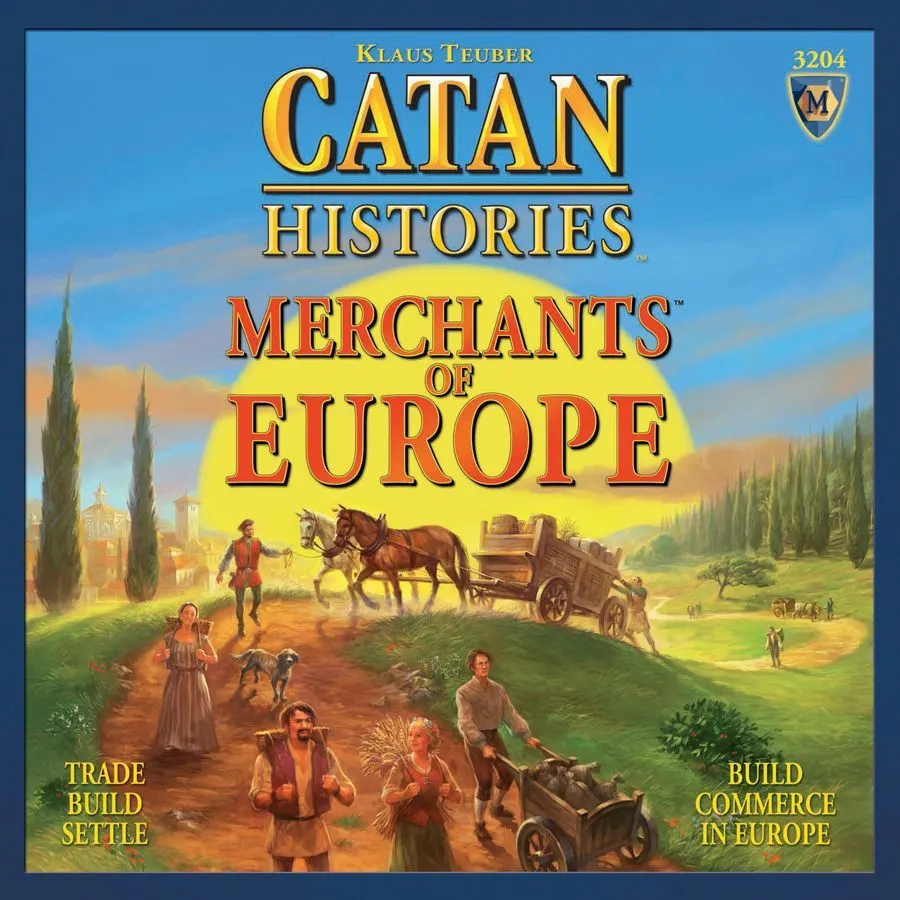
Adds several new aspects to Settlers of Catan but the two major ones are creating knights to protect the land from invading barbarians and building city improvements that confer benefits upon that city's owner. Adds tactical complexity to the game and game length. Belongs to the Catan Series. The game changes the base game in three main ways: First, there are 3 new commodities in the game, distinct from resources - paper, cloth, and coins, which can be acquired from Forest, Meadow, and Mountain spaces, respectively. Cities that would normally produce two of one of those resources instead produce 1 resource and 1 of the corresponding commodity. (To make commodities easier to obtain, each player starts the game with 1 city and 1 settlement on the board.) These commodities allow players to build city improvements that confer various advantages and eventually points. Second, the deck of development cards is replaced by three different decks, each corresponding to one of the commodities. Building city improvements gives players a chance to draw these cards with every roll of the dice. Building more improvements will increase these chances, but cards cannot be bought directly in any way. These cards are similar to the development cards in the base game, but with a wider range of effects. (Some cards are balanced better as well - the new Resource Monopoly card, for example, can take no more than 2 of the named resource from any one player.) Finally, players can also build knights on the island along their network of roads. These knights can be used to claim certain intersections and move the Robber (taking the place of Soldier cards), but are also used to defend the island from periodic barbarian attacks. If the island is successfully defended, the player(s) with the most knights are rewarded. If not, the player(s) with the fewest knights each have a city downgraded to a settlement.
Catan: Cities & Knights supports 3–4 players according to the catalogue. This range comes from the publisher’s listed player count, so the game can be set up for any group size within it. Some setups, rules and scoring details may still vary by player count, so check your edition’s rulebook for the exact configuration.
The listed playing time for Catan: Cities & Knights is 90–150 minutes. This is the publisher’s estimate for a full game. The actual duration depends on the group, the player count and familiarity with the rules: first sessions usually run longer, while experienced groups often finish faster. Setup and teaching time are not included in this estimate.
The catalogue lists Catan: Cities & Knights for ages 12 and up. This is the publisher’s recommendation and reflects reading demands, rule complexity and small components rather than theme alone. Younger players can often join with help from an adult, so check the age guidance on your edition and consider your group’s experience with board games.
Catan: Cities & Knights has a complexity rating of 2.9 out of 5 from BoardGameGeek players, which makes it a medium-light game. The rating reflects how much rules knowledge, planning and decision-making a typical game demands. Expect a longer first teach for heavier games, and use a preparation guide before game night.
Catan: Cities & Knights belongs to these categories: Medieval, Negotiation, and Expansion for Base-game. Its main mechanics are Hand Management, Trading, and Dice Rolling. Categories describe the theme and setting of a game, while mechanics describe what players actually do on their turns. Each mechanic links to a catalogue hub with similar games, which helps when you want something comparable.
The credited designers of Catan: Cities & Knights are: Klaus Teuber. These credits come from the published game data and name the people responsible for the game’s design, not its illustrators or publishers. Designer pages on MeepleRules collect other titles by the same designers, which helps when you enjoy a game and want to find similar ones.
The catalogue lists Catan: Cities & Knights as an expansion for Catan. Expansions add new content, rules or scenarios to the base game and usually cannot be played on their own, so you need Catan to use it. Check that your edition of Catan is compatible, as some expansions were revised between editions.