
- BGG rank
- BGG #45
- BGG rating
- 8.0
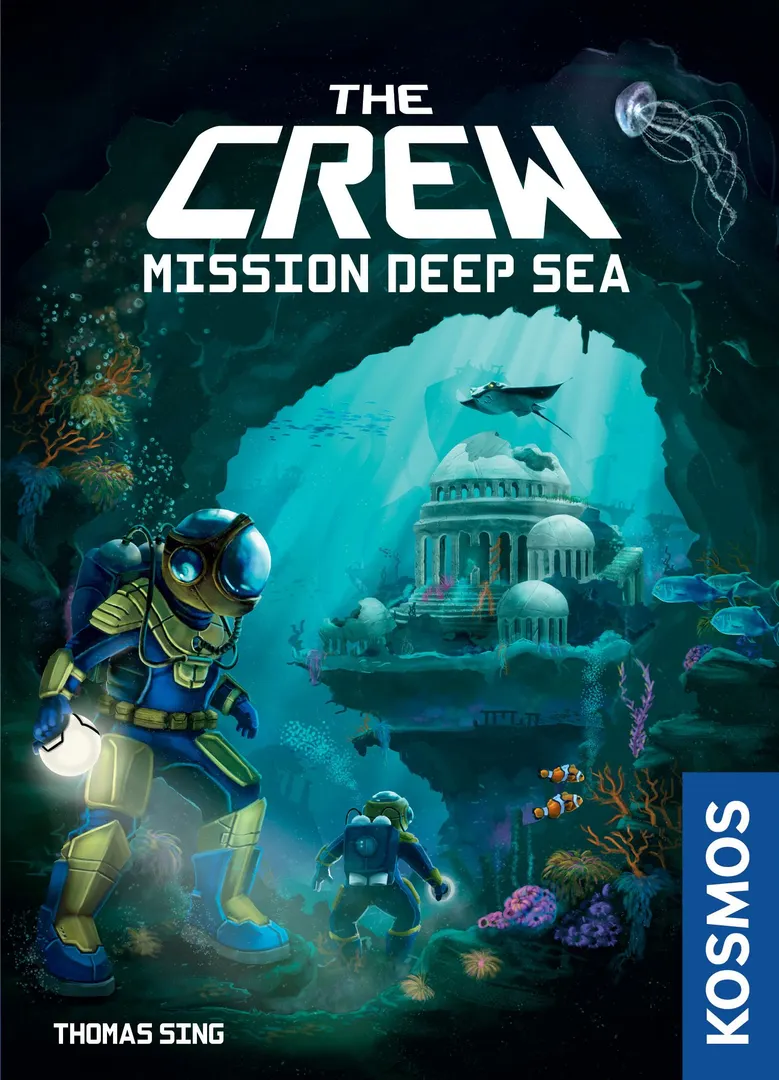
The Crew: Mission Deep Sea
- 2–5 players
- 20 min
- Complexity 2.1/5
- 2021
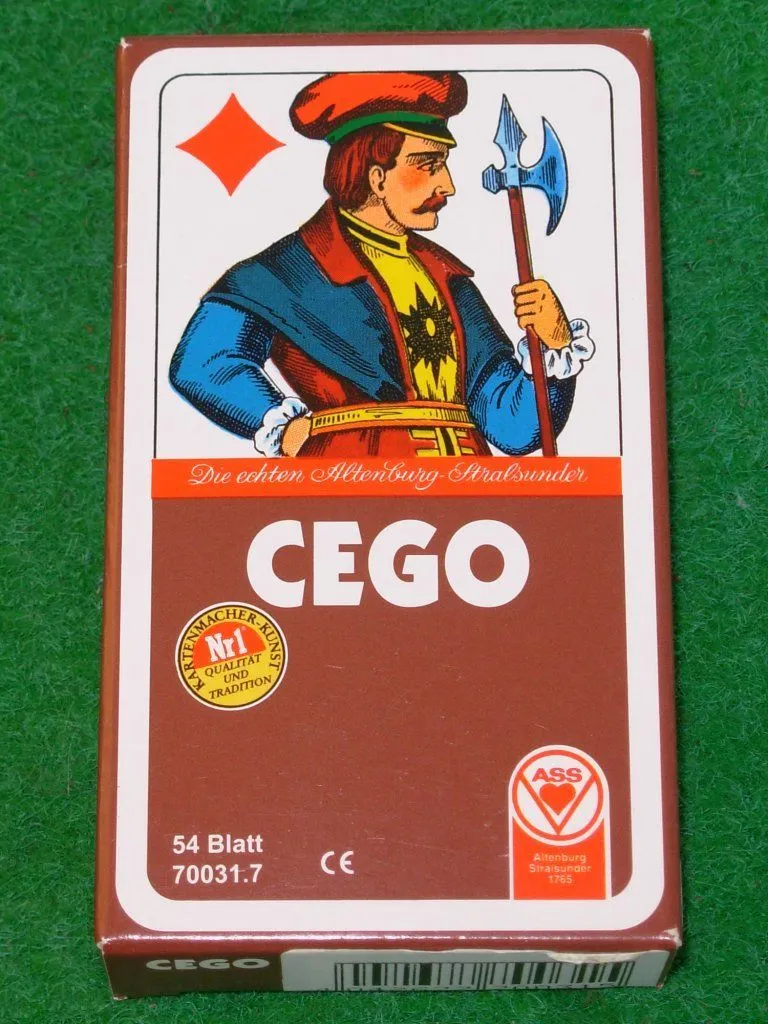
Rules assistance for Cego
Plain-language explanations of turns, card effects and disputed situations, with official source references and saved question history.
What would you like to know?
Answers come from the official rulebook, with the page to check.
Cego is a board game for 3–4 players, 10 minutes per game, and ages 12 and up. Its main mechanics are Trick-taking.






Cego, Zego or Ceco (from lat.caecus = blind) is a traditional German card game, for 3 or 4 players, played primarily in the Black Forest. Hardly a farm house which has no cego deck. The game is played mainly throughout the winter, when there is little work to do in the fields and few daylight hours. A Cego deck consists of 54 cards: 22 "Truck", that means trump cards, 16 "Bilder" or picture cards, king, queen, knight and jack in the 4 suits. and 16 "Leere" or empty cards, also in the 4 suits. The 22 trumps are numbered from 1 to 21, and a single picture card without suit, which would be #22, the highest trump, commonly called "Gsties", sometimes "Sküs" from ital. "scusa" = sorry (for taking the trick). The game is basically a trick tacking game, you've got to follow suit, if not available you have to trump. Usually one player will play against the other three, the player following the dealer will have to play if no one bids for the play. Cards are dealt 11 to each player and 10 face down in the middle (the Cego or blind cards). These 10 cards will go to the highest bidder, depending on his bid either remaining face down or he discards 9 or 10 cards from his hand and takes up the Cego cards. A simple play would be a bid for Cego, discarding 9 cards from your hand, taking up 10 cards, then choosing one additional card for your pile and starting play. This is the interesting and unusual part of this game. Your decision to bid depends on the cards which you will not have available for the coming game, but you will get to play with mainly unknown cards. Therefore the title "Blind". There are a lot of other options, available for every player or only the bidder, for example: -Solo play: when you have lots of trump in your initial play, no cards are discarded. -Räuber, rubber: when no one bids, every player on his own, you try to have fewest points. -Bettel: the bidder tries to get no cards. -Piccolo: the bidder tries to make exactly one trick. Scoring is done by counting out your points, only three trumps (Gstiess, 21 and 1) and all the pictures count. Points and counting method differ, but the bidder always need the majority of points, every 5 points over or under mean an additional factor.
Cego supports 3–4 players according to the catalogue. This range comes from the publisher’s listed player count, so the game can be set up for any group size within it. Some setups, rules and scoring details may still vary by player count, so check your edition’s rulebook for the exact configuration.
The listed playing time for Cego is 10 minutes. This is the publisher’s estimate for a full game. The actual duration depends on the group, the player count and familiarity with the rules: first sessions usually run longer, while experienced groups often finish faster. Setup and teaching time are not included in this estimate.
The catalogue lists Cego for ages 12 and up. This is the publisher’s recommendation and reflects reading demands, rule complexity and small components rather than theme alone. Younger players can often join with help from an adult, so check the age guidance on your edition and consider your group’s experience with board games.
Cego has a complexity rating of 2.6 out of 5 from BoardGameGeek players, which makes it a medium-light game. The rating reflects how much rules knowledge, planning and decision-making a typical game demands. Expect a longer first teach for heavier games, and use a preparation guide before game night.
Cego belongs to these categories: Card Game. Its main mechanics are Trick-taking. Categories describe the theme and setting of a game, while mechanics describe what players actually do on their turns. Each mechanic links to a catalogue hub with similar games, which helps when you want something comparable.
The catalogue lists Cego as a base game. It can be played on its own with the components in the box and does not require any other title. Expansions, if any exist, add new content or rules on top of it and are listed separately in the catalogue with a link back to this base game.