
- BGG rank
- BGG #27,822
- BGG rating
- 5.7
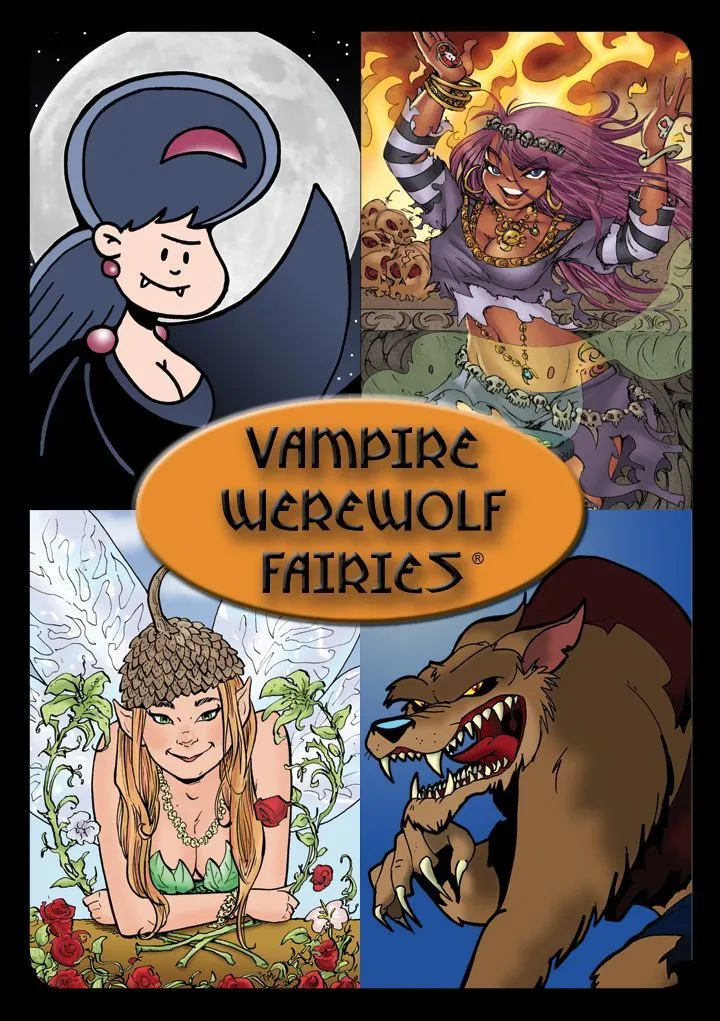
Vampire Werewolf Fairies
- 2–6 players
- 20 min
- Complexity 1.0/5
- 2011
2007
Rules assistance for Collateral Damage
Plain-language explanations of turns, card effects and disputed situations, with official source references and saved question history.
For 2 players
What would you like to know?
Answers come from the official rulebook, with the page to check.
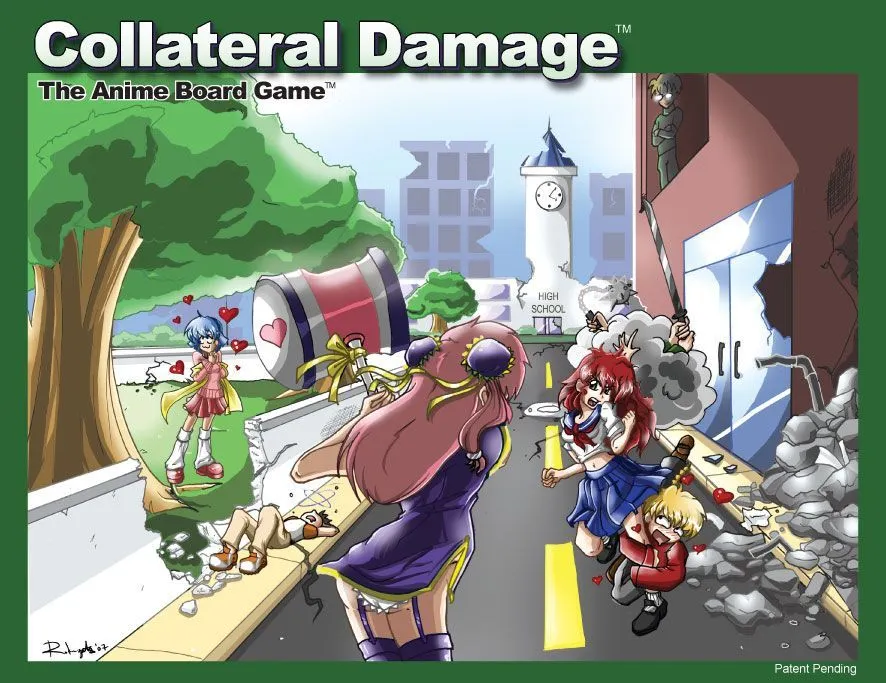
Collateral Damage is a board game released in 2007 for 2–6 players and 120 minutes per game. It was designed by MJ Duhan and its main mechanics are Variable Player Powers, Dice Rolling, and Area Majority / Influence.



In Collateral Damage, you play a Gang Boss trying to take over cities in Neo Japan in order to win the game. Your gang is made up of typical characters from romantic comedy anime, with a unique set of statistics and a Special Power to distinguish each one. You move your characters around the board from city to city, and you ultimately win the game by taking over cities. You as a gang boss get Notoriety Points by having your characters fight and hurt other players' characters. If you miss in a fight, you do Collateral Damage to the city (thus the name of the game). However, as is typical in romantic comedy anime, your characters might fall in love, usually unreciprocated, and will then ignore your orders to instead follow their love around the board. Each turn in the game has 9 phases, most of which are brief. 1) Initiative - Figure out turn order, based on player strength. 2) Libido - All characters gain Libido, which they can use to move and fight. 3) Voluntary Movement - players move their characters, then 4) Automatic Movement - characters may be dragged towards a Love Interest or Rival. 5) Love - Characters may fall in love based on the Looks and Gender of other characters in that city. 6) Combat - Characters in cities fight, gaining Notoriety for the player. 7) Domination - Players can try to use any characters still conscious to Dominate cities, spending Notoriety Points to better their chances. 8) Firing & Recruitment - Players can fire characters and recruit new characters, spending Notoriety Points to do so. 9) Mutual Love - Characters in love with each other and alone together in a city lose all of their libido. We're not saying why... The game contains: 20 city tiles which are used to make up the game board 6 sets of sliders, token stands, dice, and Gang Boss cards in 6 colors Over 55 different characters, each with his or her own stats and unique Special Power 45 Training cards 1 Grease pencil A 4 page custom manga Complete instructions and more
Collateral Damage supports 2–6 players according to the catalogue. This range comes from the publisher’s listed player count, so the game can be set up for any group size within it. Some setups, rules and scoring details may still vary by player count, so check your edition’s rulebook for the exact configuration.
The listed playing time for Collateral Damage is 120 minutes. This is the publisher’s estimate for a full game. The actual duration depends on the group, the player count and familiarity with the rules: first sessions usually run longer, while experienced groups often finish faster. Setup and teaching time are not included in this estimate.
Collateral Damage has a complexity rating of 2.7 out of 5 from BoardGameGeek players, which makes it a medium-light game. The rating reflects how much rules knowledge, planning and decision-making a typical game demands. Expect a longer first teach for heavier games, and use a preparation guide before game night.
Collateral Damage belongs to these categories: Fighting, Humor, and Comic Book / Strip. Its main mechanics are Variable Player Powers, Dice Rolling, and Area Majority / Influence. Categories describe the theme and setting of a game, while mechanics describe what players actually do on their turns. Each mechanic links to a catalogue hub with similar games, which helps when you want something comparable.
The credited designers of Collateral Damage are: MJ Duhan. These credits come from the published game data and name the people responsible for the game’s design, not its illustrators or publishers. Designer pages on MeepleRules collect other titles by the same designers, which helps when you enjoy a game and want to find similar ones.
The catalogue lists Collateral Damage as a base game. It can be played on its own with the components in the box and does not require any other title. Expansions, if any exist, add new content or rules on top of it and are listed separately in the catalogue with a link back to this base game.