
- BGG rating
- 8.1
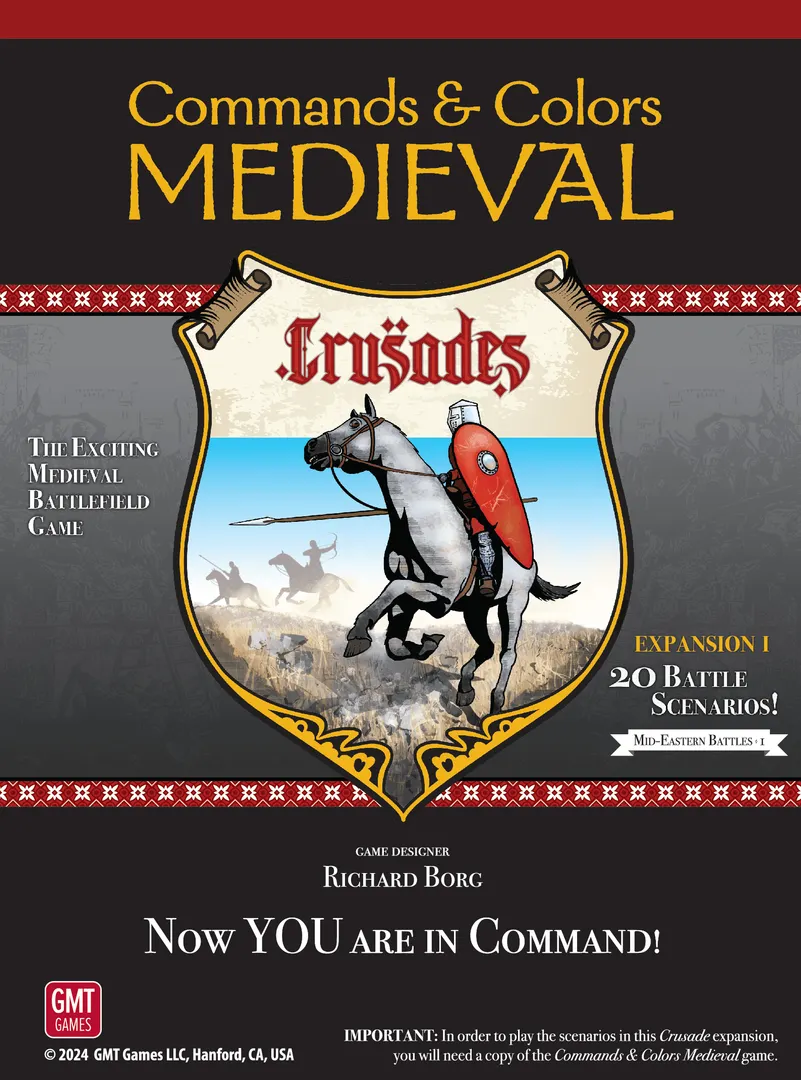
Commands & Colors: Medieval – Expansion #1 Crusades Mid-Eastern Battles I
- 2 players
- 60–120 min
- Complexity 2.0/5
- 2024
2019
Rules assistance for Commands & Colors: Medieval
Plain-language explanations of turns, card effects and disputed situations, with official source references and saved question history.
For 2 players
What would you like to know?
Answers come from the official rulebook, with the page to check.
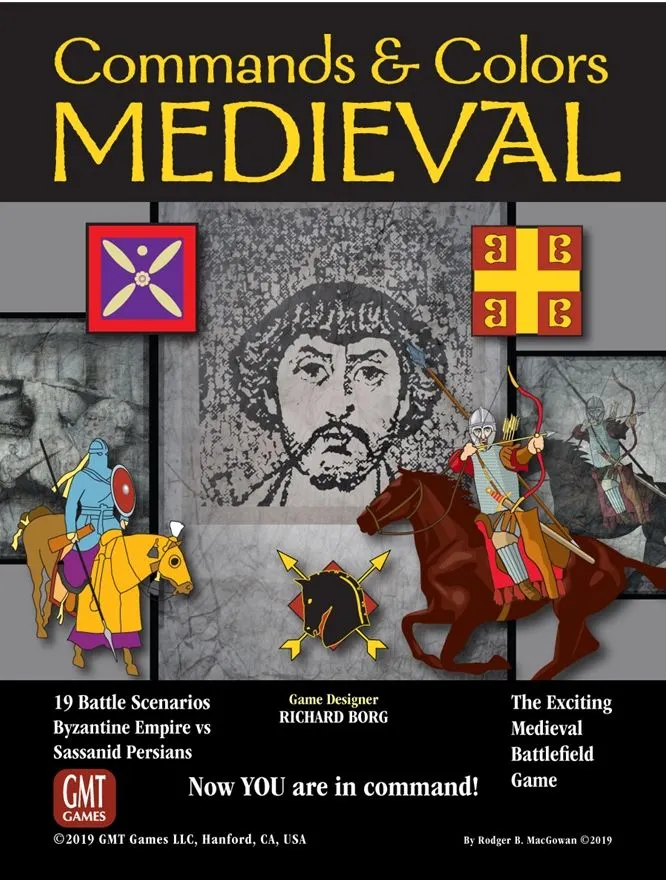
Commands & Colors: Medieval is a board game released in 2019 for 2 players, 60–120 minutes per game, and ages 12 and up. It was designed by Richard Borg and its main mechanics are Dice Rolling, Hexagon Grid, and Line of Sight.
Game description from the designer: Commands & Colors: Medieval is based on the Commands & Colors game system and by design is not overly complex. The Medieval game introduces many new game concepts to the Commands & Colors system, which add historical depth and flavor. Some of the new concepts are: Superior armor and status when battling Cavalry units increase to 4 blocks Heavy infantry battle dice are reduced from 5 dice down to 4 Light Bow Cavalry units can employ the Parthian Shot when they evade Still, some Commands & Colors game mechanics remain familiar to players of other games in the system, like the deck of Medieval Command cards that drive movement while creating a “fog of war,” and the battle dice that will resolve combat quickly and efficiently. The stylized battlefield scenario maps emphasize the important terrain features and highlight the historical deployment of forces in scale with the game system. The scale of the game is flexible, and varies from battle to battle. For some scenarios, a unit may represent a Chiliarchy of soldiers, while in other scenarios a unit may represent just a few brave warriors. The battlefield tactics, however, that you will need to execute to gain victory conform remarkably well to the strengths and limitations of the various medieval unit types, their weapons, the terrain, and history. The medieval battles showcased in the scenario book focus on the historical confrontations between the Byzantine Empire and Sassanid Persians (530 to 627 AD) with a slight detour to battle the Moors and their rebel allies (645 - 648 AD). The Byzantine Empire during this period of medieval history was one of constant transition and reorganization. Its army tended to mirror its eastern adversaries by deploying an increasing number of armored cavalry formations (Cataphracts) and more missile troops. Yet, it was how the Byzantines adapted their battlefield tactics in relation to the enemy it faced that is perhaps the chief reason for the longevity of their Empire. Although the Byzantine army fought on other frontiers, against a multitude of opponents, Visigoths, Vandals, Ostrogoths, Franks, Alemanni, those conflicts are beyond the scope and space of this one package. Additional expansion modules that address those battles will be forthcoming.
Commands & Colors: Medieval supports 2 players according to the catalogue. This is the publisher’s listed player count, so the game is designed for exactly that number of participants. Variants for other group sizes, if any, are described in the rulebook of your edition, so check it before setting up a different configuration.
The listed playing time for Commands & Colors: Medieval is 60–120 minutes. This is the publisher’s estimate for a full game. The actual duration depends on the group, the player count and familiarity with the rules: first sessions usually run longer, while experienced groups often finish faster. Setup and teaching time are not included in this estimate.
The catalogue lists Commands & Colors: Medieval for ages 12 and up. This is the publisher’s recommendation and reflects reading demands, rule complexity and small components rather than theme alone. Younger players can often join with help from an adult, so check the age guidance on your edition and consider your group’s experience with board games.
Commands & Colors: Medieval has a complexity rating of 2.6 out of 5 from BoardGameGeek players, which makes it a medium-light game. The rating reflects how much rules knowledge, planning and decision-making a typical game demands. Expect a longer first teach for heavier games, and use a preparation guide before game night.
Commands & Colors: Medieval belongs to these categories: Wargame and Medieval. Its main mechanics are Dice Rolling, Hexagon Grid, and Line of Sight. Categories describe the theme and setting of a game, while mechanics describe what players actually do on their turns. Each mechanic links to a catalogue hub with similar games, which helps when you want something comparable.
The credited designers of Commands & Colors: Medieval are: Richard Borg. These credits come from the published game data and name the people responsible for the game’s design, not its illustrators or publishers. Designer pages on MeepleRules collect other titles by the same designers, which helps when you enjoy a game and want to find similar ones.
The catalogue lists Commands & Colors: Medieval as a base game. It can be played on its own with the components in the box and does not require any other title. Expansions, if any exist, add new content or rules on top of it and are listed separately in the catalogue with a link back to this base game.