

Cultistorm: The Investigator Expansion Pack
- 2–5 players
- 90–120 min
- 2020
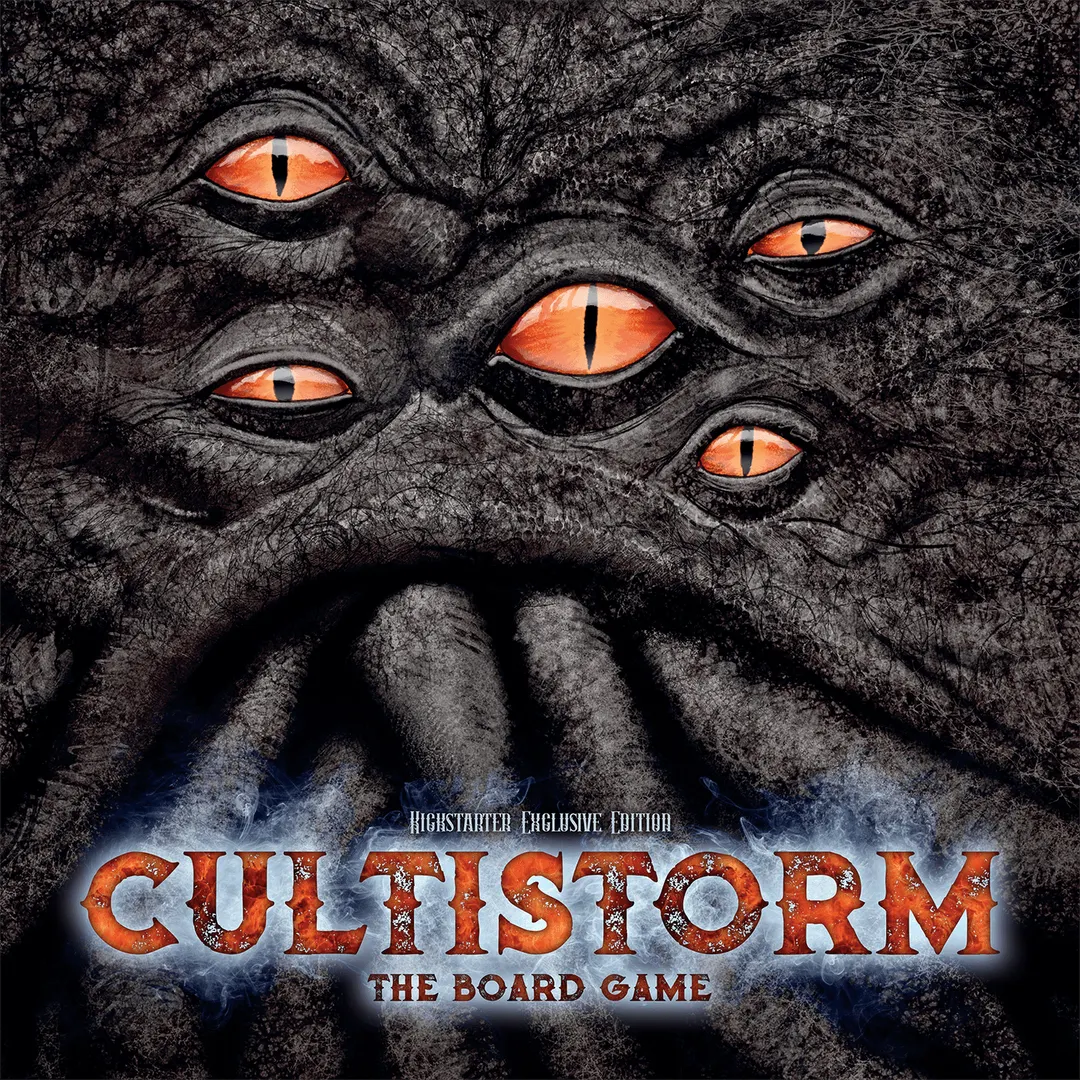
2019
Rules assistance for Cultistorm
Plain-language explanations of turns, card effects and disputed situations, with official source references and saved question history.
For 2 players
What would you like to know?
Answers come from the official rulebook, with the page to check.
Cultistorm is a board game released in 2019 for 2–5 players, 90–120 minutes per game, and ages 13 and up. It was designed by Sandor Szucs and its main mechanics are Variable Player Powers, Hand Management, and Set Collection.
Cultistorm is a Cooperative Weird Fiction and Cosmic Horror Board Game in the universe of H. P. Lovecraft. Cultistorm is the expression of our respect and love for H. P. Lovecraft. It is more than just an ordinary board game – this is a Lovecraftian gaming experience with literary and musical dimensions. Our theme choice was motivated by a deep commitment to the work and heritage of H. P. Lovecraft. We want to create an excellent board game for those who know and love Lovecraft, and we would like to make Lovecraft’s work known to those who are board game fans. Each round of Cultistorm consists of 6 phases where players combat cultists and try to close 5 portals. The game is lost if any of the following happens: ● Any investigator goes insane. ● Any Great Old One reaches a location card. ● The number of cultists exceeds the cultist threshold. ● The investigators do not manage to seal all the locations before they defeat every Great Old One after the activation of the Final Act card. Additional expnsions include: - Narrative Expansion and Script Book: the true jewel of Cultistorm is a hardcover book containing 500+ pieces of high quality weird fiction, illustrated with colourful full-page artwork. The Narrative Expansion is a story-driven game mode in which the stories impact the game itself. - Solo Expansion for those solitary detectives who wish take up the fight on their own. - Campaign Expansion: seven connected and increasingly challenging scenarios introducing new game mechanics. - Overlord Expansion: this adds a sixth player who takes on the role of Lovecraft himself. As a puppet master, this player controls the cultists, and thus the whole game. - Nine minor expansion modules: each of these introduces new game mechanics, increasing the replayability and difficulty of Cultistorm. Most modules can be played simultaneously. - Game Night Expansion (as add-on): this unique and innovative expansion provides the possibility of combining up to six separate Cultistorm games into one epic story. A common fight, in which the choices of the different teams can impact each other. This expansion was developed specifically for clubs who organise board gaming events.
Cultistorm supports 2–5 players according to the catalogue. This range comes from the publisher’s listed player count, so the game can be set up for any group size within it. Some setups, rules and scoring details may still vary by player count, so check your edition’s rulebook for the exact configuration.
The listed playing time for Cultistorm is 90–120 minutes. This is the publisher’s estimate for a full game. The actual duration depends on the group, the player count and familiarity with the rules: first sessions usually run longer, while experienced groups often finish faster. Setup and teaching time are not included in this estimate.
The catalogue lists Cultistorm for ages 13 and up. This is the publisher’s recommendation and reflects reading demands, rule complexity and small components rather than theme alone. Younger players can often join with help from an adult, so check the age guidance on your edition and consider your group’s experience with board games.
Cultistorm has a complexity rating of 2.9 out of 5 from BoardGameGeek players, which makes it a medium-light game. The rating reflects how much rules knowledge, planning and decision-making a typical game demands. Expect a longer first teach for heavier games, and use a preparation guide before game night.
Cultistorm belongs to these categories: Fighting, Horror, and Novel-based. Its main mechanics are Variable Player Powers, Hand Management, and Set Collection. Categories describe the theme and setting of a game, while mechanics describe what players actually do on their turns. Each mechanic links to a catalogue hub with similar games, which helps when you want something comparable.
The credited designers of Cultistorm are: Sandor Szucs. These credits come from the published game data and name the people responsible for the game’s design, not its illustrators or publishers. Designer pages on MeepleRules collect other titles by the same designers, which helps when you enjoy a game and want to find similar ones.
The catalogue lists Cultistorm as a base game. It can be played on its own with the components in the box and does not require any other title. Expansions, if any exist, add new content or rules on top of it and are listed separately in the catalogue with a link back to this base game.