
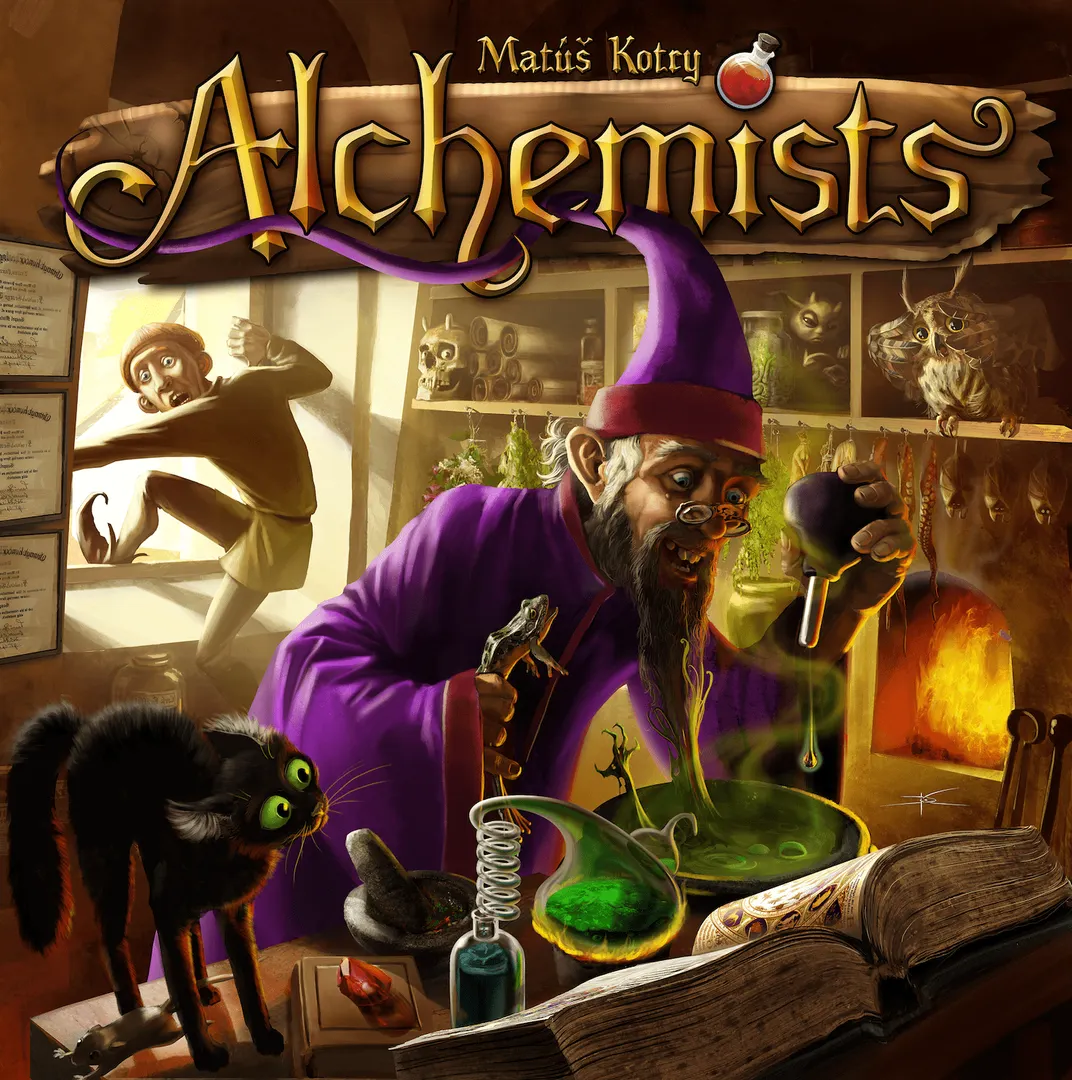
- BGG rank
- BGG #181
- BGG rating
- 7.6
Alchemists
- 2–4 players
- 120 min
- Complexity 3.9/5
- 2014
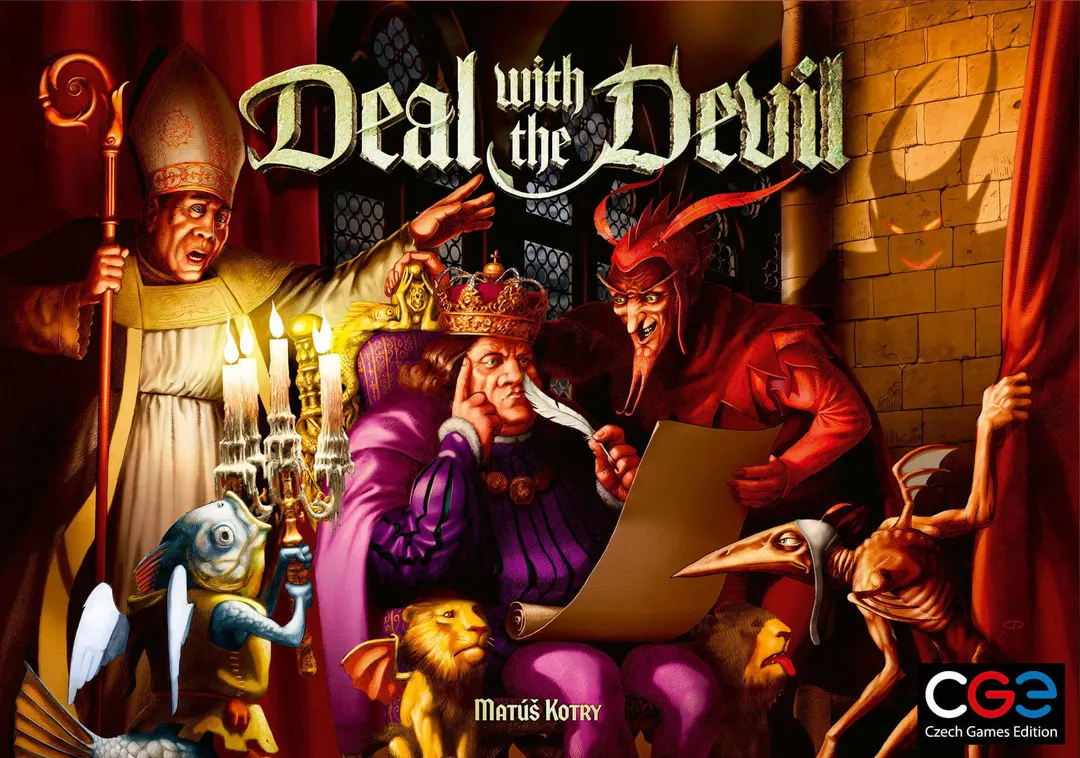
2022
Rules assistance for Deal with the Devil
Plain-language explanations of turns, card effects and disputed situations, with official source references and saved question history.
For 4 players
What would you like to know?
Answers come from the official rulebook, with the page to check.
Deal with the Devil is a board game released in 2022 for 4 players, 120–150 minutes per game, and ages 14 and up. It was designed by Matúš Kotry and its main mechanics are Variable Player Powers, Trading, and Income.
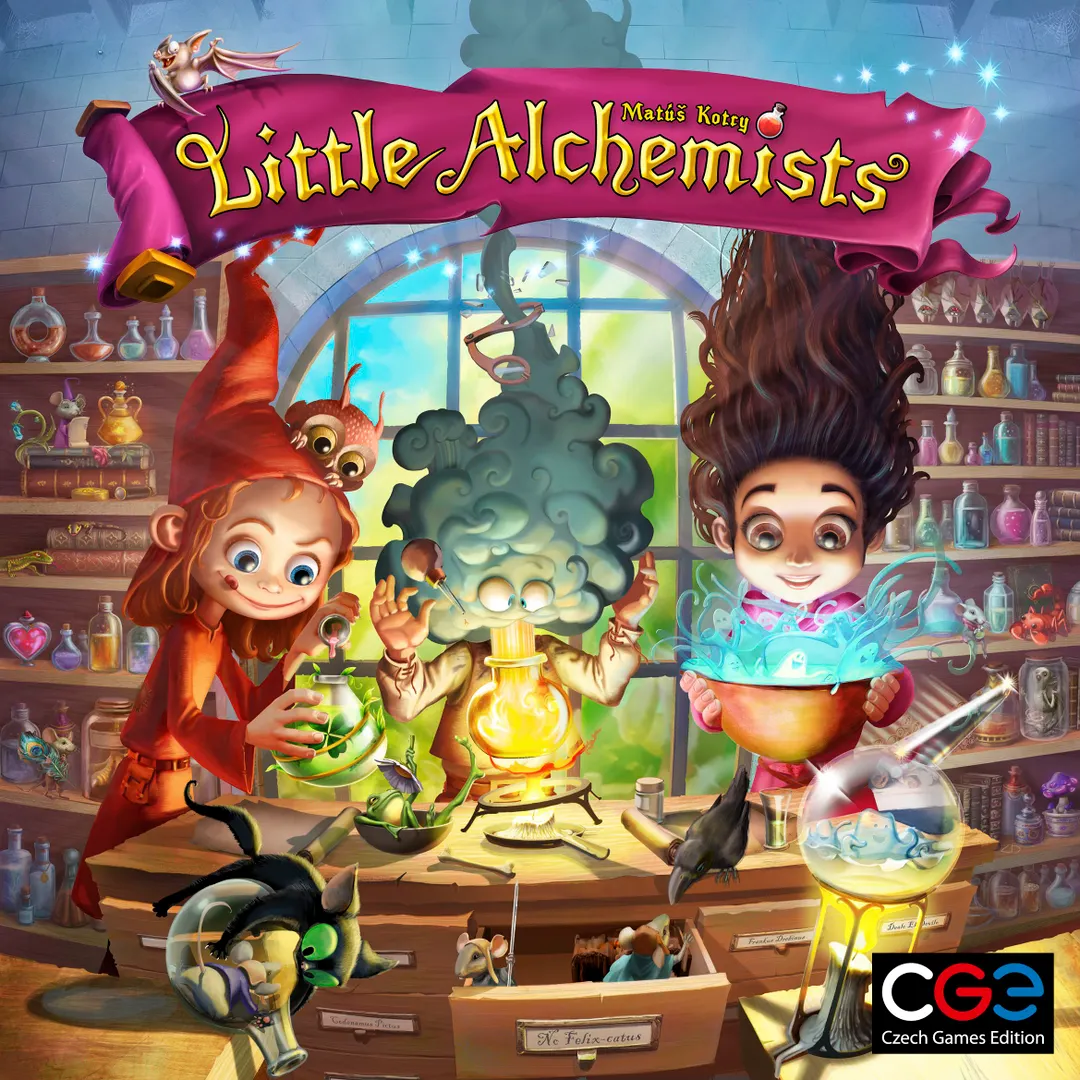
Deal with the Devil is a deeply thematic competitive Eurogame set in a fantasy medieval era. Each of the four players takes on a secret role of a mortal, a cultist, or even the Devil. Due to the asymmetrical roles, players experience the same game but with different game goals every play. During the blind trading phase, players can offer their resources in exchange for money from another player. The Devil will tempt mortals with goods for a piece of their soul, while the cultist's nature is to sell their soul easily. Only the accompanying app knows who is trading with whom. But beware! Showing off how well you are doing can attract unwelcome attention and the suspicion of other players. It also may pique the interest of the Inquisition, which is eager to punish those who cannot prove their souls remain intact. There are many dynamic strategies to experiment with across each playing. Will you sell pieces of your soul early on to boost your city-building prowess at the risk of future punishment from the Inquisition? Or will you carefully manage loan and debt repayment while waiting for others to inadvertently reveal their nefarious nature? Every choice has a consequence, and each role has its own unique strategic approach to explore. —description from the publisher
Deal with the Devil supports 4 players according to the catalogue. This is the publisher’s listed player count, so the game is designed for exactly that number of participants. Variants for other group sizes, if any, are described in the rulebook of your edition, so check it before setting up a different configuration.
The listed playing time for Deal with the Devil is 120–150 minutes. This is the publisher’s estimate for a full game. The actual duration depends on the group, the player count and familiarity with the rules: first sessions usually run longer, while experienced groups often finish faster. Setup and teaching time are not included in this estimate.
The catalogue lists Deal with the Devil for ages 14 and up. This is the publisher’s recommendation and reflects reading demands, rule complexity and small components rather than theme alone. Younger players can often join with help from an adult, so check the age guidance on your edition and consider your group’s experience with board games.
Deal with the Devil has a complexity rating of 3.7 out of 5 from BoardGameGeek players, which makes it a medium-weight game. The rating reflects how much rules knowledge, planning and decision-making a typical game demands. Expect a longer first teach for heavier games, and use a preparation guide before game night.
Deal with the Devil belongs to these categories: Fantasy, Deduction, and Medieval. Its main mechanics are Variable Player Powers, Trading, and Income. Categories describe the theme and setting of a game, while mechanics describe what players actually do on their turns. Each mechanic links to a catalogue hub with similar games, which helps when you want something comparable.
The credited designers of Deal with the Devil are: Matúš Kotry. These credits come from the published game data and name the people responsible for the game’s design, not its illustrators or publishers. Designer pages on MeepleRules collect other titles by the same designers, which helps when you enjoy a game and want to find similar ones.
The catalogue lists Deal with the Devil as a base game. It can be played on its own with the components in the box and does not require any other title. Expansions, if any exist, add new content or rules on top of it and are listed separately in the catalogue with a link back to this base game.