
- BGG rank
- BGG #30,763
- BGG rating
- 4.6
Zola
- 2 players
- 20–60 min
- Complexity 1.8/5
- 2021

2022
Rules assistance for Diablo
Plain-language explanations of turns, card effects and disputed situations, with official source references and saved question history.
For 2 players
What would you like to know?
Answers come from the official rulebook, with the page to check.
Diablo is a board game released in 2022 for 2 players, 20–60 minutes per game, and ages 5 and up. It was designed by Mark Steere and its main mechanics are Dice Rolling, Square Grid, and Pattern Movement.


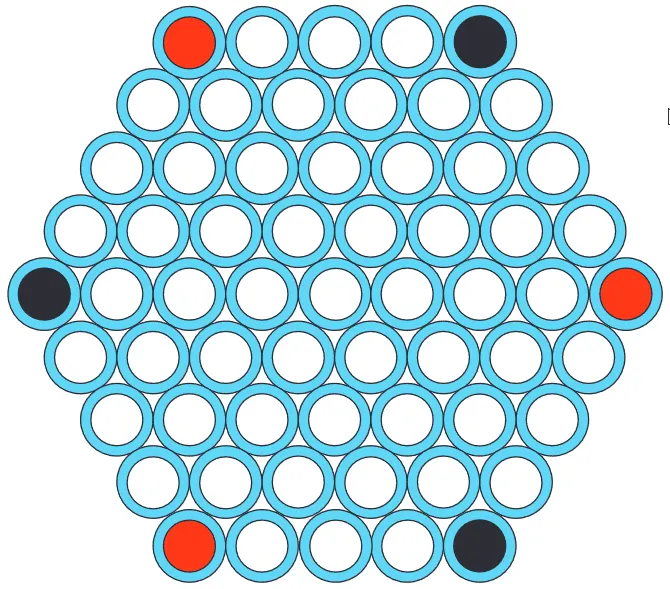

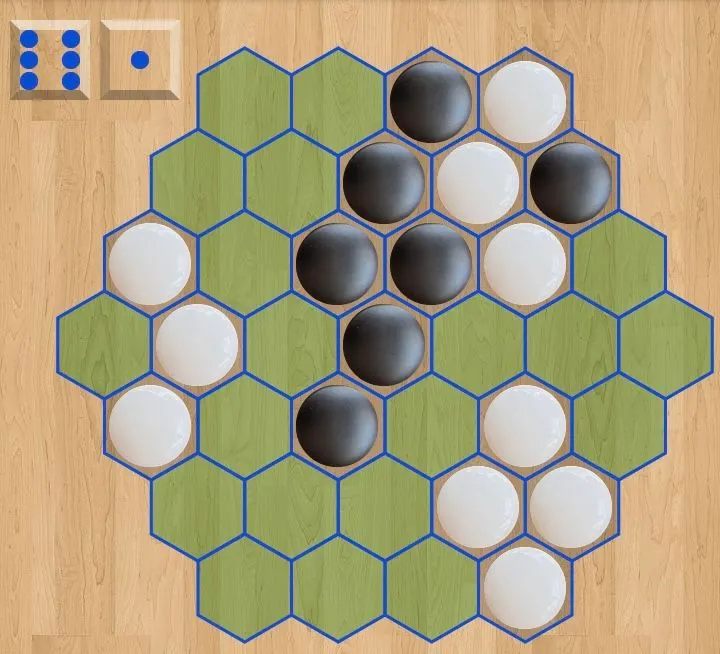
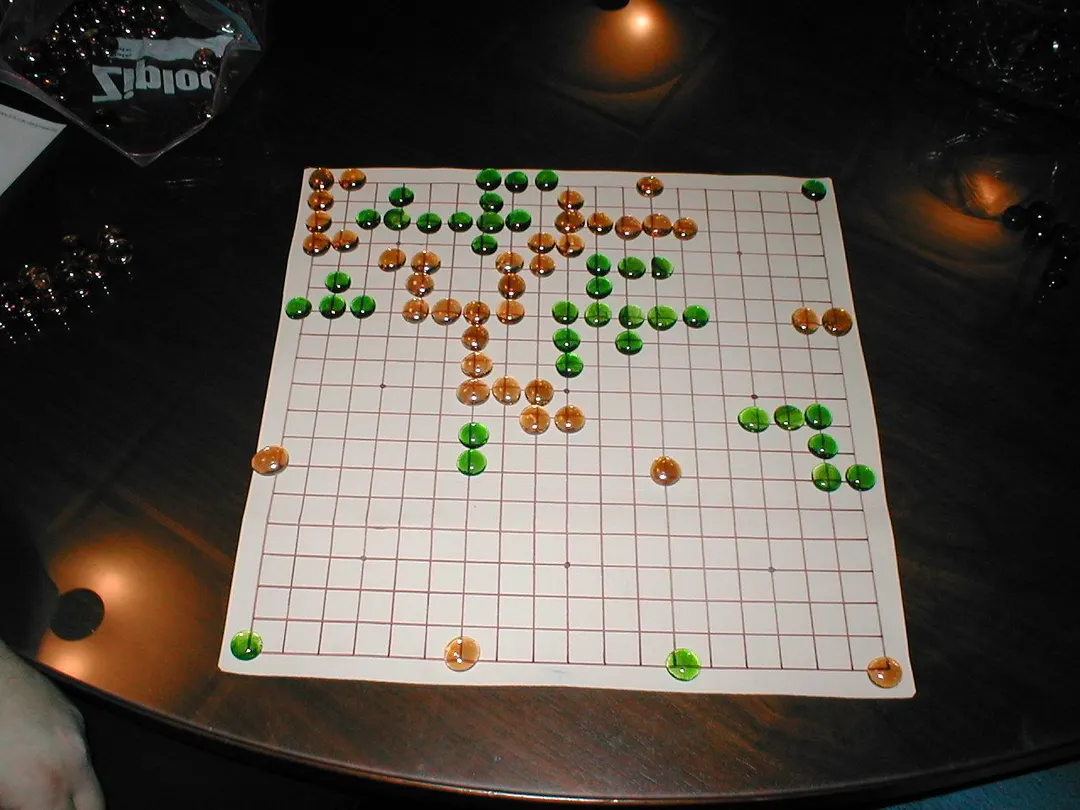


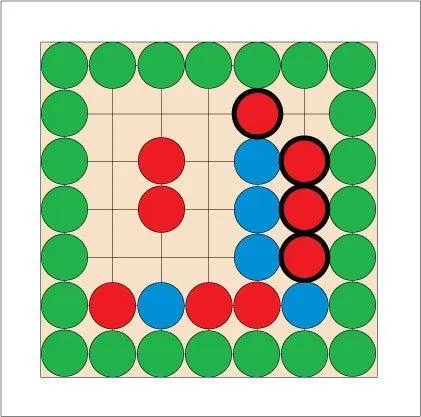
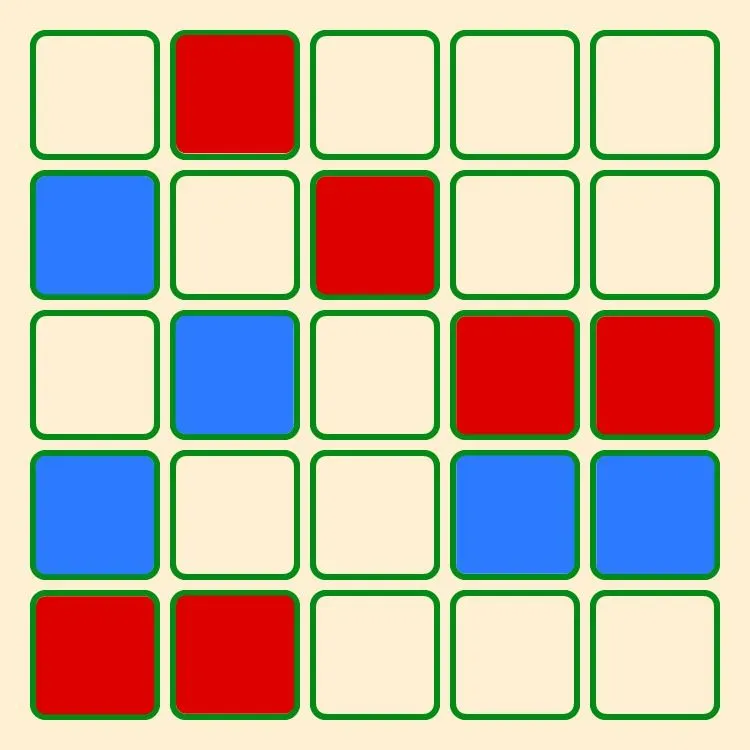

Diablo is a two-player game played with two dice and black and green checkers on a checkerboard of any even size. The number of faces on each of the dice is equal to half the length of the board. For example, if playing on a 6x6 board, the dice will be 3-sided. The board is initially populated with stacks of height one in a checkered pattern. The two players, Black and Green, take turns rolling the dice and moving their own stacks. All moves are horizontal or vertical. Only entire stacks can be moved. Stacks cannot be subdivided. Black goes first. Player turn After rolling the dice, you will take two actions. Possible action combinations: Move two stacks (or the same stack twice), each move driven by a different die. The two moves can be of the same type or different types (subject to restrictions explained in ACTION TYPES). Move one stack, driven by one of the dice, and remove one of your checkers from the board (subject to restrictions explained in ACTION TYPES). Remove two of your checkers from the board (subject to restrictions explained in ACTION TYPES). Action types Merging move. You may move one of your stacks onto another of your stacks at a distance indicated by one of the dice, merging the two stacks into one monocolored stack. Capturing move. You may capture by replacement an enemy stack of equal or smaller size at a distance indicated by one of the dice. Move to unoccupied square. You may move a stack to an unoccupied square at a distance indicated by one of the dice ONLY FOR ONE OF YOUR TWO ACTIONS. You can’t make two moves to unoccupied squares during your turn. Remove a checker. At the outset of your turn, if you are able to make any kind of a move (merge, capture, or move to unoccupied square) you must do so. If not, you must remove any two of your checkers from the board, concluding your turn. If you began your turn with a move to an unoccupied square, then you must finish your turn with a merge or capture if you can. If not, you must remove one of your checkers, concluding your turn. If you began your turn with a merge or capture, then you must finish your turn with any kind of a move (merge, capture, or move to an unoccupied square) if you can. If not, you must remove one of your checkers, concluding your turn. Balancing rule Black, on his first turn, plays only one of the two rolled dice, of his choosing. Object of the game A player wins when all of his opponent’s checkers have been removed from the board.
Diablo supports 2 players according to the catalogue. This is the publisher’s listed player count, so the game is designed for exactly that number of participants. Variants for other group sizes, if any, are described in the rulebook of your edition, so check it before setting up a different configuration.
The listed playing time for Diablo is 20–60 minutes. This is the publisher’s estimate for a full game. The actual duration depends on the group, the player count and familiarity with the rules: first sessions usually run longer, while experienced groups often finish faster. Setup and teaching time are not included in this estimate.
The catalogue lists Diablo for ages 5 and up. This is the publisher’s recommendation and reflects reading demands, rule complexity and small components rather than theme alone. Younger players can often join with help from an adult, so check the age guidance on your edition and consider your group’s experience with board games.
Diablo belongs to these categories: Dice and Abstract Strategy. Its main mechanics are Dice Rolling, Square Grid, and Pattern Movement. Categories describe the theme and setting of a game, while mechanics describe what players actually do on their turns. Each mechanic links to a catalogue hub with similar games, which helps when you want something comparable.
The credited designers of Diablo are: Mark Steere. These credits come from the published game data and name the people responsible for the game’s design, not its illustrators or publishers. Designer pages on MeepleRules collect other titles by the same designers, which helps when you enjoy a game and want to find similar ones.
The catalogue lists Diablo as a base game. It can be played on its own with the components in the box and does not require any other title. Expansions, if any exist, add new content or rules on top of it and are listed separately in the catalogue with a link back to this base game.