
- BGG rank
- BGG #6,824
- BGG rating
- 6.7
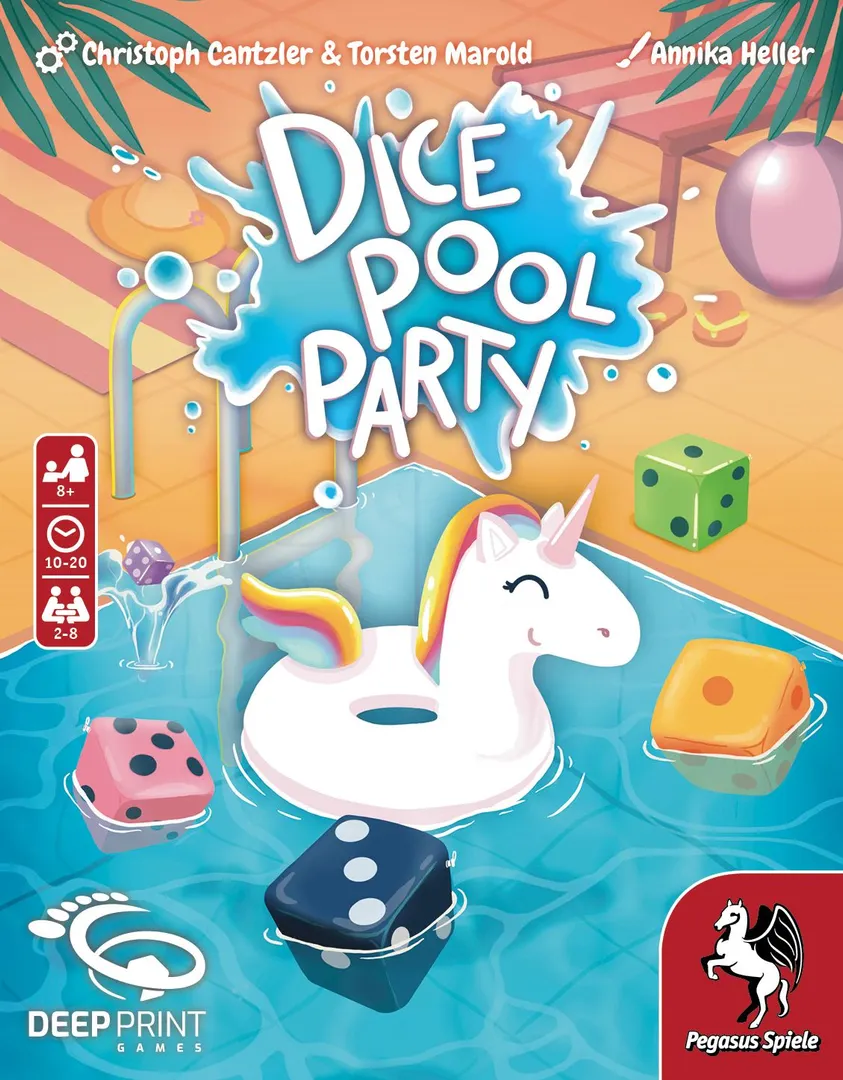
Dice Pool Party
- 2–8 players
- 10–20 min
- Complexity 1.1/5
- 2025
2022
Rules assistance for Dice Cup
Plain-language explanations of turns, card effects and disputed situations, with official source references and saved question history.
For 2 players
What would you like to know?
Answers come from the official rulebook, with the page to check.
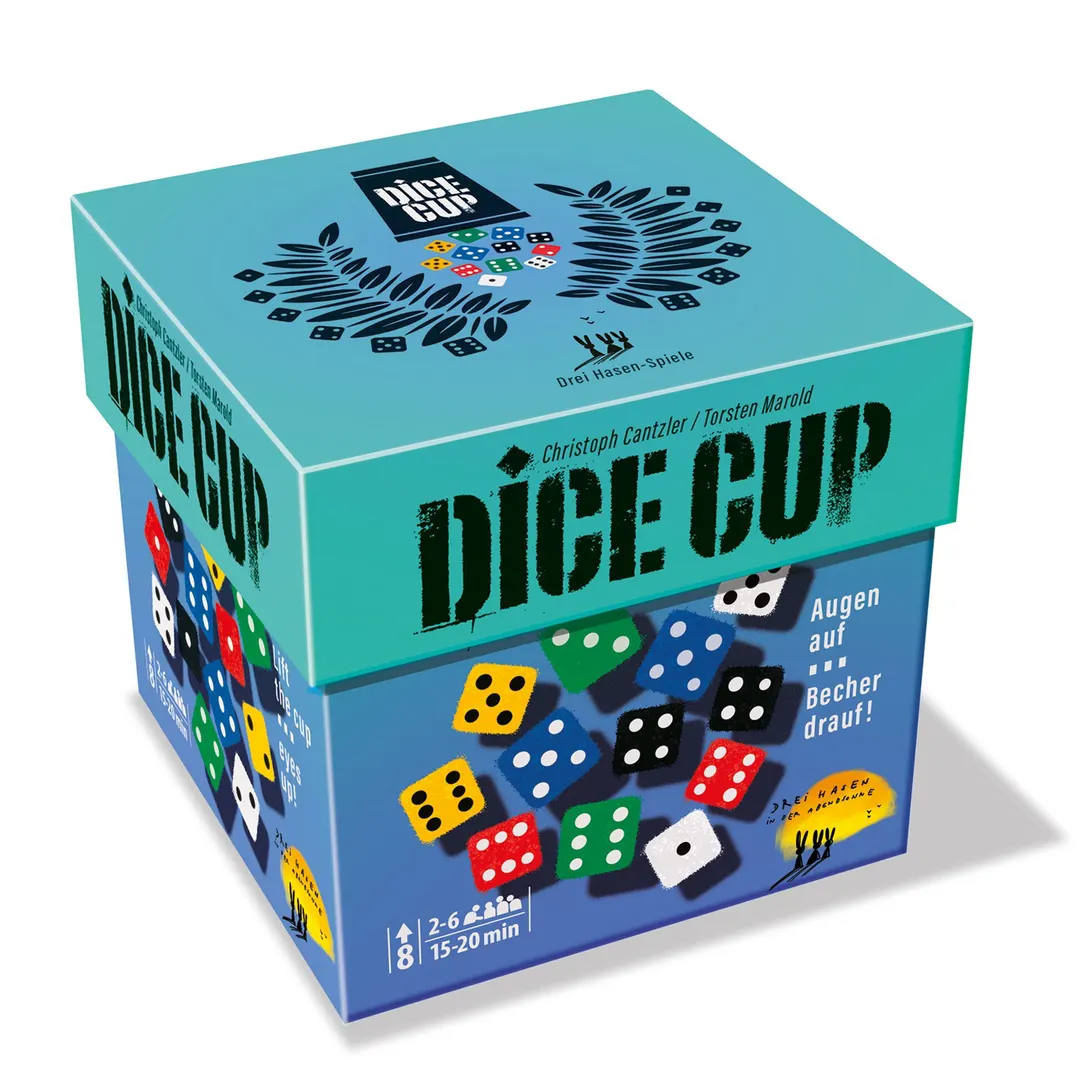
Dice Cup is a board game released in 2022 for 2–6 players, 15–20 minutes per game, and ages 8 and up. It was designed by Christoph Cantzler and Torsten Marold and its main mechanics are Dice Rolling, Simultaneous Action Selection, and Memory.
%2Fpic129091.jpg@webp)

GAME IDEA The game is played in 12 rounds in which the dice fall anew each time. All see the same result but everybody from another perspective. Each player always tries to find the best scoring category for him. But attention: Each category is available only once per game! So far so easy, if only the dice would not always disappear under the cup again so fast … Who has grasped the best result in the short term? And in which category would eventually have been more to achieve? GOAL OF THE GAME The player with the highest total score in the end wins the DICE CUP-Challenge! PREPARATION Put the dice in the cup. Each player gets a scoring sheet and a pen – and writes down his name on the up right line intended for it. Now a starting player is chosen and off we go! GAME PLAY The starting player starts rolling the dice but still everybody plays always simultaneously. Each round consists of 8 steps: Put all dice in the cup. Your hand above it and shake it well. Turn around the cup with the dice and overthrow it on the table so all dice are hidden underneath the cup. Lift up the cup for about 3 seconds (to measure the time, slowly say the following slogan: „Lift the cup – eyes up“). The dice must be clearly visible for everybody for the same amount of time. Then the cup is put over the dice again carefully so that they are not turned over accidentally. Now each player sets a cross in the little circle of the box in the category he wants to value. You can use your hand as a sight screen. Once the cross is set it may not be changed anymore. When everybody is ready the player lifts the cup again and puts it aside so the dice result is visible for all players again. Now everybody values his result and writes the points in the corresponding field (Example Kim see valuation). Pass the cup on in clockwise direction. The next round starts. Important: Sometimes the dice lie on top of each other. Then the dice roll must be repeated immediately! VALUATION AND EXAMPLES Who has chosen „count fours only“ in the upper part, multiplies the number of fours with 4 (of fives with 5, of sixes with 6). E.g. three time 4: 3 x 4 = 12 points Who has set a cross for a colour, e.g. „blue“, in the middle part, only counts the eyes of the two dice in this colour and notes down the sum. Scoring of Kim 5 + 6 = 11 points Who has chosen „double“, may note down 10 points for each „double“ of the same colour. E.g. one „double“ (red) = 10 points Who has marked „all ones, twos and threes“, adds all dice pips which show ones, twos and threes. E.g. 1 + 1 + 1 + 2 + 2 + 3 + 3 = 13 points Who has chosen „DICE CUP“, adds the pips of all dice and notes down the sum. E.g. 1 + 1 + 1 + 2 + 2 + 3 + 3 + 4 + 4 + 4 +5 + 6 = 36 points After each valuation the respective selected category * The dot next to the red square is used for better is of course dropped for the current game. END OF THE GAME The game ends after 12 played rounds. In the last round the cup can be left aside after the third playing step, and the last valuation (for the respective individual last category) is done at once. Afterwards every player adds the points of the three parts on his scoring sheet, transmits the sum into the fields provided for this purpose and calculates the total amount. The player with the highest total amount wins the DICE CUP-Challenge! VARIATIONS: The „Eyes up time“ may vary as the players like or by experience. Pro players can shorten the time to 2 seconds, for example. Beginners and younger players may extend it. All players always have the same length of time available … It is also much fun to play several games simultaneously. The players have two or more columns in each category to fill in and value. Have fun playing!
Dice Cup supports 2–6 players according to the catalogue. This range comes from the publisher’s listed player count, so the game can be set up for any group size within it. Some setups, rules and scoring details may still vary by player count, so check your edition’s rulebook for the exact configuration.
The listed playing time for Dice Cup is 15–20 minutes. This is the publisher’s estimate for a full game. The actual duration depends on the group, the player count and familiarity with the rules: first sessions usually run longer, while experienced groups often finish faster. Setup and teaching time are not included in this estimate.
The catalogue lists Dice Cup for ages 8 and up. This is the publisher’s recommendation and reflects reading demands, rule complexity and small components rather than theme alone. Younger players can often join with help from an adult, so check the age guidance on your edition and consider your group’s experience with board games.
Dice Cup has a complexity rating of 1.4 out of 5 from BoardGameGeek players, which makes it a light game. The rating reflects how much rules knowledge, planning and decision-making a typical game demands. Expect a longer first teach for heavier games, and use a preparation guide before game night.
Dice Cup belongs to these categories: Number, Dice, and Memory. Its main mechanics are Dice Rolling, Simultaneous Action Selection, and Memory. Categories describe the theme and setting of a game, while mechanics describe what players actually do on their turns. Each mechanic links to a catalogue hub with similar games, which helps when you want something comparable.
The credited designers of Dice Cup are: Christoph Cantzler and Torsten Marold. These credits come from the published game data and name the people responsible for the game’s design, not its illustrators or publishers. Designer pages on MeepleRules collect other titles by the same designers, which helps when you enjoy a game and want to find similar ones.
The catalogue lists Dice Cup as a base game. It can be played on its own with the components in the box and does not require any other title. Expansions, if any exist, add new content or rules on top of it and are listed separately in the catalogue with a link back to this base game.