
- BGG rating
- 7.1
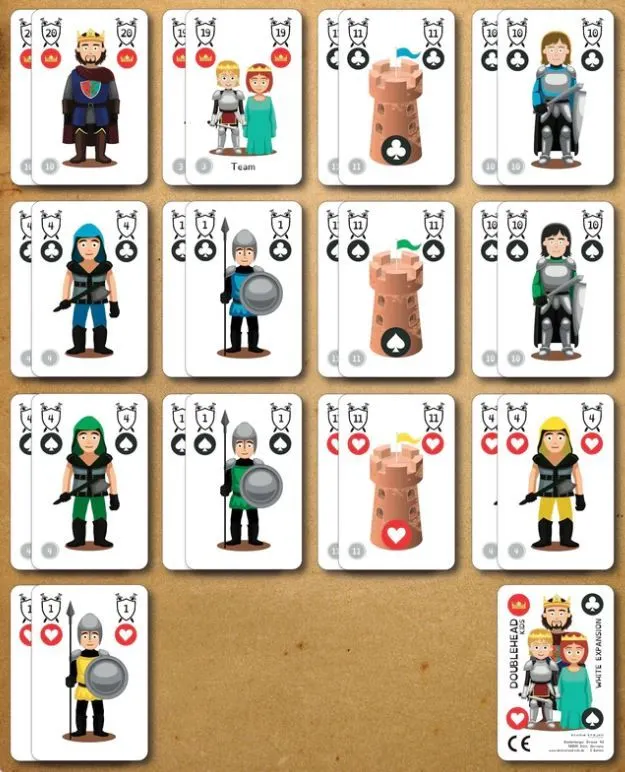
Doublehead Kids: White Expansion
- 4–6 players
- 30–60 min
- 2020
2019
Rules assistance for Doublehead Kids
Plain-language explanations of turns, card effects and disputed situations, with official source references and saved question history.
For 4 players
What would you like to know?
Answers come from the official rulebook, with the page to check.
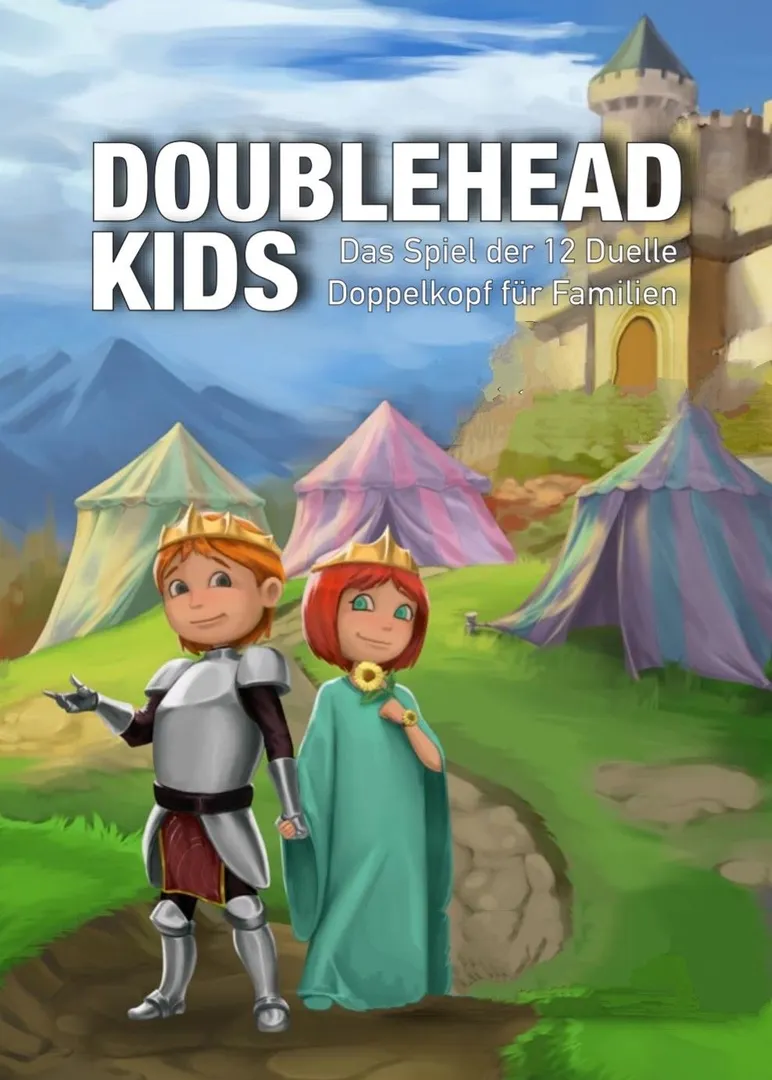
Doublehead Kids is a board game released in 2019 for 4–6 players, 30–90 minutes per game, and ages 6 and up. It was designed by Joerg Trojan and its main mechanics are Team-Based Game and Trick-taking.
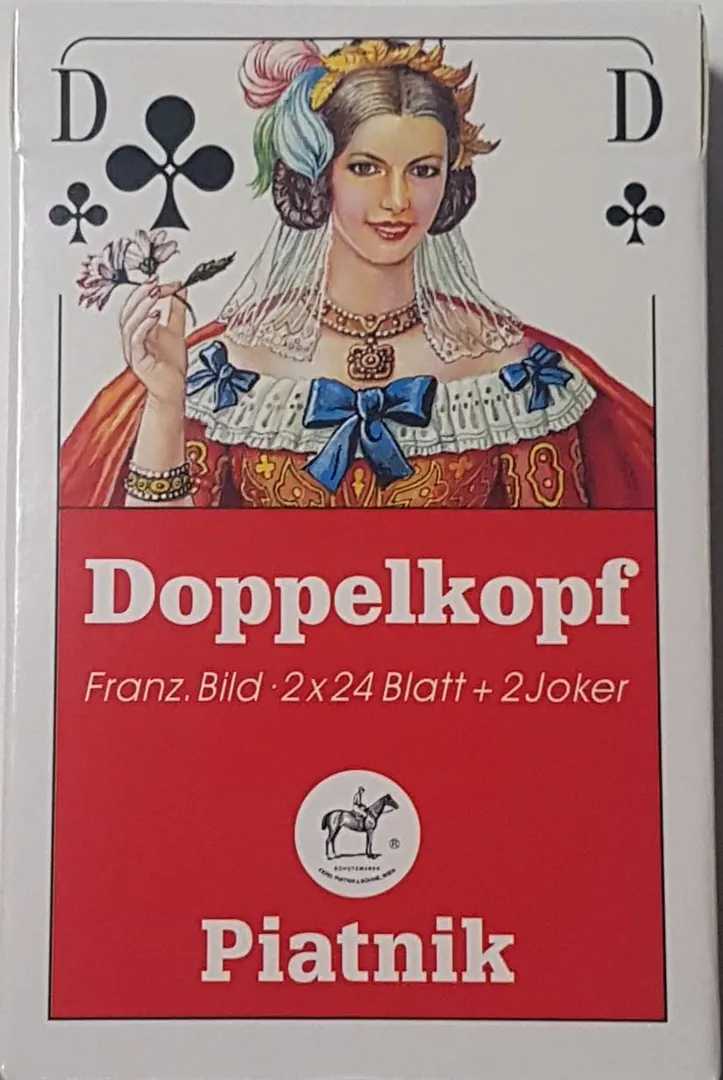
Doublehead Kids is a card game for four (or more persons), which depicts the “Doppelkopf” normal game with cards suitable for children. The game is suitable for players from about 6 years (the numbers from 1 to 20 must be read and recognized independently) and lasts about 30-45 minutes or 60-90 minutes, depending on the chosen winning score. The “Doppelkopf”-Game is one of the most popular German card games, which finds more and more enthusiastic fans and supporters, who organize themselves in clubs and even in a German umbrella organization (DDV). Doppelkopf even manages to replace the extremely popular game Skat as the favourite card game of the Germans. Doppelkopf probably originated from the game “Schafkopf”, which already had a set of rules since 1895. Doppelkopf got its name from the fact that all cards in the game are doubled. DOUBLEHEAD KIDS for 4 players consists of 48 playing cards. The playing cards have differently displayed strengths (shield symbol at the top left), which determine the ranking of the card and silver winning coins, which represent the winning value of a card. Furthermore the cards are assigned to four different family coats of arms (colours): the royal family with the red crown sign (26 cards), the black princely families with cross and spades signs (8 cards each) and the red princely family with the heart sign (6 cards). The royal family’s cards are trumps. The four players form two teams: the players with the princesses/prince pair and the players without the princesses/prince pair. As a game goal, each team tries to bag more silver winning coins than the opposing team. A total of 240 silver winning coins can be collected in a game round with 12 duels (tricks). The team with at least 121 silver winning coins wins the round and receives victory points in the form of gold coins. Furthermore, additional victory points can be gained through special points. The special attraction of the double-headed game is that at the beginning of a new round the players do not know with whom they are playing. Only when the princess and the prince are laid out bit by bit, the picture becomes clearer for the players and the other players recognize in which team they are playing. Each game round is different and takes place in different player combinations. It is forbidden to signal to other players whether you are playing together in a team by verbal utterances or sign language. It is very well allowed to send playful signals to your fellow players by tactically laying out cards (e.g. deliberately re-buttering silver winning points into a duel or not). Bluffing is also allowed here, of course, to create confusion. —description from the designer
Doublehead Kids supports 4–6 players according to the catalogue. This range comes from the publisher’s listed player count, so the game can be set up for any group size within it. Some setups, rules and scoring details may still vary by player count, so check your edition’s rulebook for the exact configuration.
The listed playing time for Doublehead Kids is 30–90 minutes. This is the publisher’s estimate for a full game. The actual duration depends on the group, the player count and familiarity with the rules: first sessions usually run longer, while experienced groups often finish faster. Setup and teaching time are not included in this estimate.
The catalogue lists Doublehead Kids for ages 6 and up. This is the publisher’s recommendation and reflects reading demands, rule complexity and small components rather than theme alone. Younger players can often join with help from an adult, so check the age guidance on your edition and consider your group’s experience with board games.
Doublehead Kids has a complexity rating of 2.0 out of 5 from BoardGameGeek players, which makes it a medium-light game. The rating reflects how much rules knowledge, planning and decision-making a typical game demands. Expect a longer first teach for heavier games, and use a preparation guide before game night.
Doublehead Kids belongs to these categories: Card Game and Children's Game. Its main mechanics are Team-Based Game and Trick-taking. Categories describe the theme and setting of a game, while mechanics describe what players actually do on their turns. Each mechanic links to a catalogue hub with similar games, which helps when you want something comparable.
The credited designers of Doublehead Kids are: Joerg Trojan. These credits come from the published game data and name the people responsible for the game’s design, not its illustrators or publishers. Designer pages on MeepleRules collect other titles by the same designers, which helps when you enjoy a game and want to find similar ones.
The catalogue lists Doublehead Kids as a base game. It can be played on its own with the components in the box and does not require any other title. Expansions, if any exist, add new content or rules on top of it and are listed separately in the catalogue with a link back to this base game.