- BGG rank
- BGG #15,835
- BGG rating
- 6.6
Electronic Detective
1979
Rules assistance for Electronic Detective
Plain-language explanations of turns, card effects and disputed situations, with official source references and saved question history.
- 1–4 players
- 45 min
- 10+
- Complexity 2.0/5

For 1 player
Rules assistant for Electronic Detective
What would you like to know?
Answers come from the official rulebook, with the page to check.
Electronic Detective is a board game released in 1979 for 1–4 players, 45 minutes per game, and ages 10 and up. It was designed by Phil Orbanes Sr. and Julius Cooper and its main mechanics are Player Elimination, Variable Set-up, and Deduction.
About the game
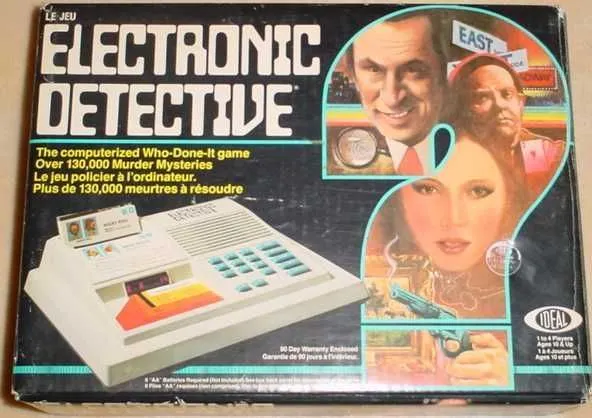
The ultimate "Who-Done-It" game, where 1-4 players combine human deductive reasoning with advanced computer logic to solve over 130,000 totally different murder mysteries. Bang! Bang! Shots ring out in the big city. A body lies alone at the docks. The funeral dirge sounds. 19 colorful characters at the scene of the crime flee to other parts of town. As one of the “private eyes” assigned to the case, you must interrogate these suspects. Players compete, using logic and deduction, to be first to identify the murderer. Features Each suspect card contains different questions you may ask to obtain vital information which will help you deduce the identity of the murderer. The computer becomes the suspects, as you “grill” them one by one. You have the questions and it has the answers. Get careless and you’ll ask for useless information. Ask a smart question and you’ll have a key fact in a flash! Electronic Display (light-emitting diodes) shows you the answers. Your case fact sheet helps you study and weigh the suspects’ statements, and logically follow the tangled web of evidence. Now you’re ready to make an accusation. If you’re correct the sirens sound. If not…Bang! Bang! The next victim is you and you’re out of the game! In its powerful microcomputer brain electronic detective has all the suspects’ alibis, plus key clues pertaining to the dastardly deed. Its electronic I.Q. is at your fingertips! You may recheck clues at any time using the computer’s electronic memory bank. Gun shots, police sirens, and the funeral dirge are all part of the game’s play. May be played at 3 different levels: “Gumshoe,” “Sleuth,” or “Master Detective.” Automatically switches off after game play is completed. Battery operated - 6 AA – you can play it anywhere.
Categories
Designers
Publishers
- Ideal
- Arxon
Questions and answers
Electronic Detective supports 1–4 players according to the catalogue. This range comes from the publisher’s listed player count, so the game can be set up for any group size within it. Some setups, rules and scoring details may still vary by player count, so check your edition’s rulebook for the exact configuration.
The listed playing time for Electronic Detective is 45 minutes. This is the publisher’s estimate for a full game. The actual duration depends on the group, the player count and familiarity with the rules: first sessions usually run longer, while experienced groups often finish faster. Setup and teaching time are not included in this estimate.
The catalogue lists Electronic Detective for ages 10 and up. This is the publisher’s recommendation and reflects reading demands, rule complexity and small components rather than theme alone. Younger players can often join with help from an adult, so check the age guidance on your edition and consider your group’s experience with board games.
Electronic Detective has a complexity rating of 2.0 out of 5 from BoardGameGeek players, which makes it a medium-light game. The rating reflects how much rules knowledge, planning and decision-making a typical game demands. Expect a longer first teach for heavier games, and use a preparation guide before game night.
Electronic Detective belongs to these categories: Deduction, Murder / Mystery, and Electronic. Its main mechanics are Player Elimination, Variable Set-up, and Deduction. Categories describe the theme and setting of a game, while mechanics describe what players actually do on their turns. Each mechanic links to a catalogue hub with similar games, which helps when you want something comparable.
The credited designers of Electronic Detective are: Phil Orbanes Sr. and Julius Cooper. These credits come from the published game data and name the people responsible for the game’s design, not its illustrators or publishers. Designer pages on MeepleRules collect other titles by the same designers, which helps when you enjoy a game and want to find similar ones.
The catalogue lists Electronic Detective as a base game. It can be played on its own with the components in the box and does not require any other title. Expansions, if any exist, add new content or rules on top of it and are listed separately in the catalogue with a link back to this base game.