

- BGG rank
- BGG #1,756
- BGG rating
- 7.4
Bot Factory
- 1–4 players
- 30–60 min
- Complexity 2.8/5
- 2023
2022
Rules assistance for Évora
Plain-language explanations of turns, card effects and disputed situations, with official source references and saved question history.
For 2 players
What would you like to know?
Answers come from the official rulebook, with the page to check.
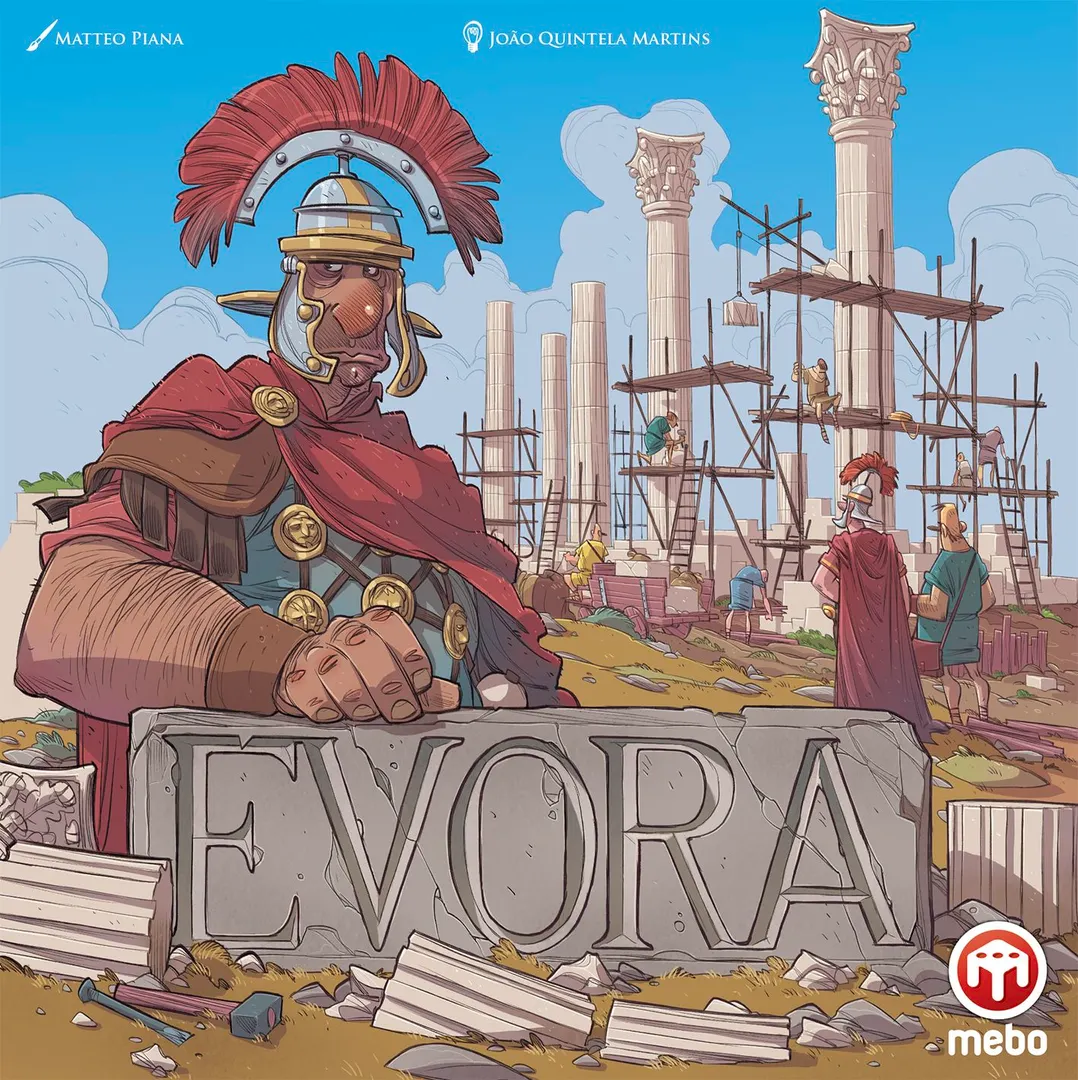
Évora is a board game released in 2022 for 2–4 players, 30–60 minutes per game, and ages 8 and up. It was designed by João Quintela Martins and its main mechanics are Hand Management, Area Majority / Influence, and End Game Bonuses.


The Roman temple of Évora was probably built in honor of Emperor Augustus. It was built in the 1st century AD in the main square (forum) of Évora - then called Liberalitas Julia. In this game players will play the role of builders of the Roman Empire and the action takes place in Évora in the 1st century AD. The objective: Build the 14 columns that still exist today on the site. Players move their workers around the rondel to define the action they intend to perform: Build (stones and capitals), improve the columns already built (points multiplier) and request the influence of important characters (cards). These characters are: The Emperor who will value the columns at the end of the game. The governor who will inspect the columns and during the game will compensate the player. The centurion who maintain order in the construction site and will offer greater mobility to the player. The architect who helps in the construction process making it much more effective and profitable. The player who obtains the most prestige points, based on the stones placed in each column and also on bonuses, wins the game. —description from publisher O templo romano de Évora foi provavelmente construído em homenagem ao imperador Augusto, que era venerado como um deus, durante e após seu reinado. Foi construído no século I d.C. na praça principal (fórum) de Évora - então chamada de Liberalitas Julia.Neste jogo os jogadores desempenharão o papel de construtores do Império Romano e a ação ocorre em Évora no século I d.C. O objectivo: Construir as 14 colunas que ainda existem nos dias de hoje no local. Este jogo tem a sua mecânica principal baseada num rondel e os jogadores movimentam os seus trabalhadores para definirem a ação que pretendem executar: Construir (pedras e capiteis), aperfeiçoar as colunas já construídas (multiplicador de pontos) e solicitar a influência de personagens importantes (cartas). Estas personagens são: O Imperador que valorizará as construções no final do jogo. O governador que inspecionará as construções e durante o jogo compensará o jogador. O centurião que mantêm a ordem no estaleiro e oferecerá maior mobilidade ao jogador. O arquiteto que ajuda no processo de construção tornando-o muito mais eficaz e rentável. Vence o jogador que obtiver mais pontos de prestigio baseado nas pedras colocadas em cada coluna e também nalgumas bonificações.
Évora supports 2–4 players according to the catalogue. This range comes from the publisher’s listed player count, so the game can be set up for any group size within it. Some setups, rules and scoring details may still vary by player count, so check your edition’s rulebook for the exact configuration.
The listed playing time for Évora is 30–60 minutes. This is the publisher’s estimate for a full game. The actual duration depends on the group, the player count and familiarity with the rules: first sessions usually run longer, while experienced groups often finish faster. Setup and teaching time are not included in this estimate.
The catalogue lists Évora for ages 8 and up. This is the publisher’s recommendation and reflects reading demands, rule complexity and small components rather than theme alone. Younger players can often join with help from an adult, so check the age guidance on your edition and consider your group’s experience with board games.
Évora has a complexity rating of 2.4 out of 5 from BoardGameGeek players, which makes it a medium-light game. The rating reflects how much rules knowledge, planning and decision-making a typical game demands. Expect a longer first teach for heavier games, and use a preparation guide before game night.
Évora belongs to these categories: Ancient. Its main mechanics are Hand Management, Area Majority / Influence, and End Game Bonuses. Categories describe the theme and setting of a game, while mechanics describe what players actually do on their turns. Each mechanic links to a catalogue hub with similar games, which helps when you want something comparable.
The credited designers of Évora are: João Quintela Martins. These credits come from the published game data and name the people responsible for the game’s design, not its illustrators or publishers. Designer pages on MeepleRules collect other titles by the same designers, which helps when you enjoy a game and want to find similar ones.
The catalogue lists Évora as a base game. It can be played on its own with the components in the box and does not require any other title. Expansions, if any exist, add new content or rules on top of it and are listed separately in the catalogue with a link back to this base game.