
- BGG rating
- 7.3
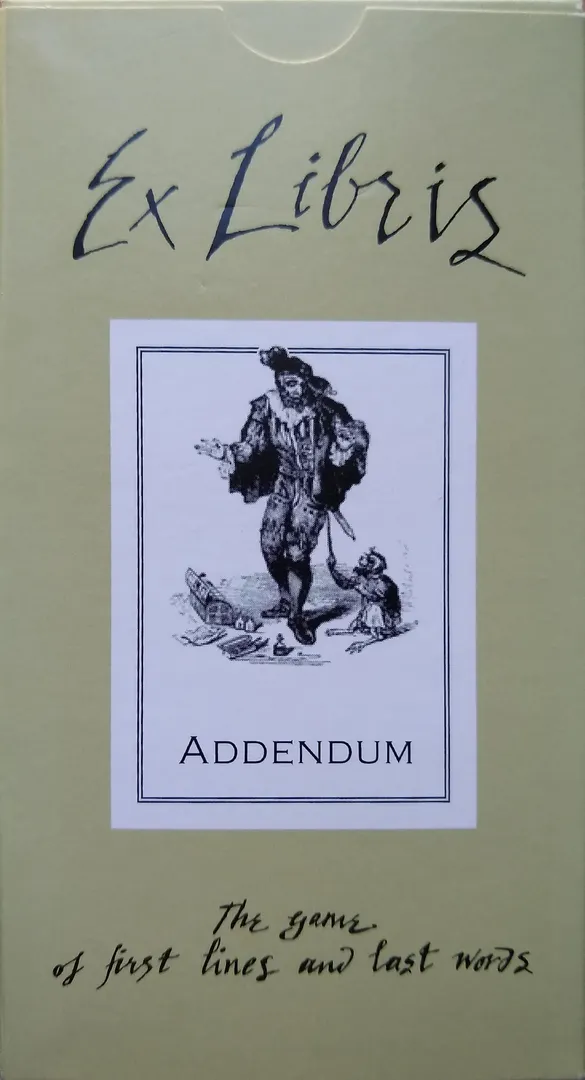
Ex Libris: Addendum
- 4–8 players
- 30 min
- 1991
1991
Rules assistance for Ex Libris
Plain-language explanations of turns, card effects and disputed situations, with official source references and saved question history.
For 4 players
What would you like to know?
Answers come from the official rulebook, with the page to check.
Ex Libris is a board game released in 1991 for 4–8 players and 30 minutes per game. It was designed by Leslie Scott and Sara Finch and its main mechanics are Paper-and-Pencil and Betting and Bluffing.




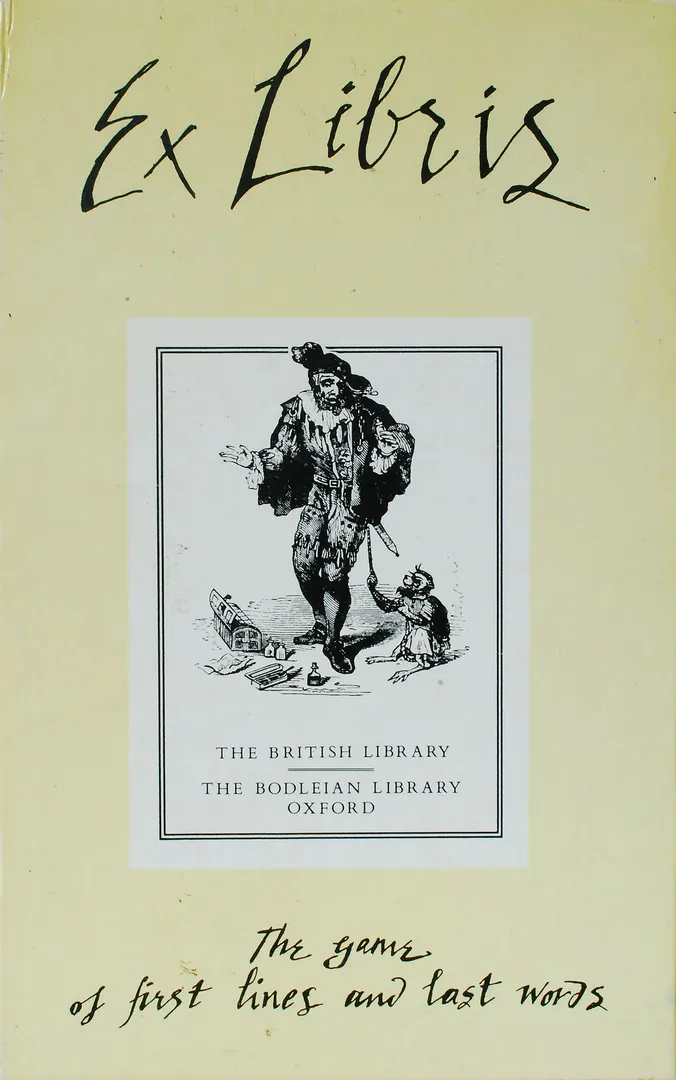
The game of first lines and last words. Ex Libris has been a firm favourite with book lovers, and readers and writers, since Oxford Games first devised and published the game in 1991. Ex Libris is a subtle, yet highly entertaining game of bluff that will challenge your literary acumen and test your writing skills as you attempt to compose fake, but plausible, first or last lines for genuine English novels. One hundred authors representing widely different writing styles are featured in Ex Libris – from Charles Dickens to Harold Robbins, from Jane Austen to Barbara Cartland. At the start of a round one player, taking a turn as the reader, picks a card and reads it out loud. The other players then have each to write a plausible opening or closing sentence to the work in an attempt to bluff fellow players into believing his or her ‘script’ to be the genuine one. These are all handed in to the reader, who has meanwhile written down the genuine sentence (given on the back of the card). The genuine and fake are shuffled together, and then each sentence is read out. Each player votes for the sentence he/she believes is the real one. Players win a point for each vote cast for his or her entry (while further points are won if you manage to identify the genuine sentence). The reader receives a point if no one manages to identify the authentic sentence. Players try to both: guess the correct 1st or last line to a novel write a fake 1st or last line to a novel and trick other players into thinking it is real Points are scored for making correct guesses and for tricking other players. The actual 1st/last lines for novels such as the following are included: Moby Dick Pride and Prejudice Jude the Obscure Zuleika Dobson The Spy Who Loved Me The House at Pooh Corner Similar to: Liebrary
Ex Libris supports 4–8 players according to the catalogue. This range comes from the publisher’s listed player count, so the game can be set up for any group size within it. Some setups, rules and scoring details may still vary by player count, so check your edition’s rulebook for the exact configuration.
The listed playing time for Ex Libris is 30 minutes. This is the publisher’s estimate for a full game. The actual duration depends on the group, the player count and familiarity with the rules: first sessions usually run longer, while experienced groups often finish faster. Setup and teaching time are not included in this estimate.
Ex Libris has a complexity rating of 2.1 out of 5 from BoardGameGeek players, which makes it a medium-light game. The rating reflects how much rules knowledge, planning and decision-making a typical game demands. Expect a longer first teach for heavier games, and use a preparation guide before game night.
Ex Libris belongs to these categories: Card Game, Word Game, and Party Game. Its main mechanics are Paper-and-Pencil and Betting and Bluffing. Categories describe the theme and setting of a game, while mechanics describe what players actually do on their turns. Each mechanic links to a catalogue hub with similar games, which helps when you want something comparable.
The credited designers of Ex Libris are: Leslie Scott and Sara Finch. These credits come from the published game data and name the people responsible for the game’s design, not its illustrators or publishers. Designer pages on MeepleRules collect other titles by the same designers, which helps when you enjoy a game and want to find similar ones.
The catalogue lists Ex Libris as a base game. It can be played on its own with the components in the box and does not require any other title. Expansions, if any exist, add new content or rules on top of it and are listed separately in the catalogue with a link back to this base game.