- BGG rank
- BGG #273
- BGG rating
- 7.7
Magical Athlete
- 2–6 players
- 30 min
- Complexity 1.2/5
- 2025

Rules assistance for Four Twenty-one
Plain-language explanations of turns, card effects and disputed situations, with official source references and saved question history.
What would you like to know?
Answers come from the official rulebook, with the page to check.
Four Twenty-one is a board game for 2–8 players and 5 minutes per game. Its main mechanics are Dice Rolling.





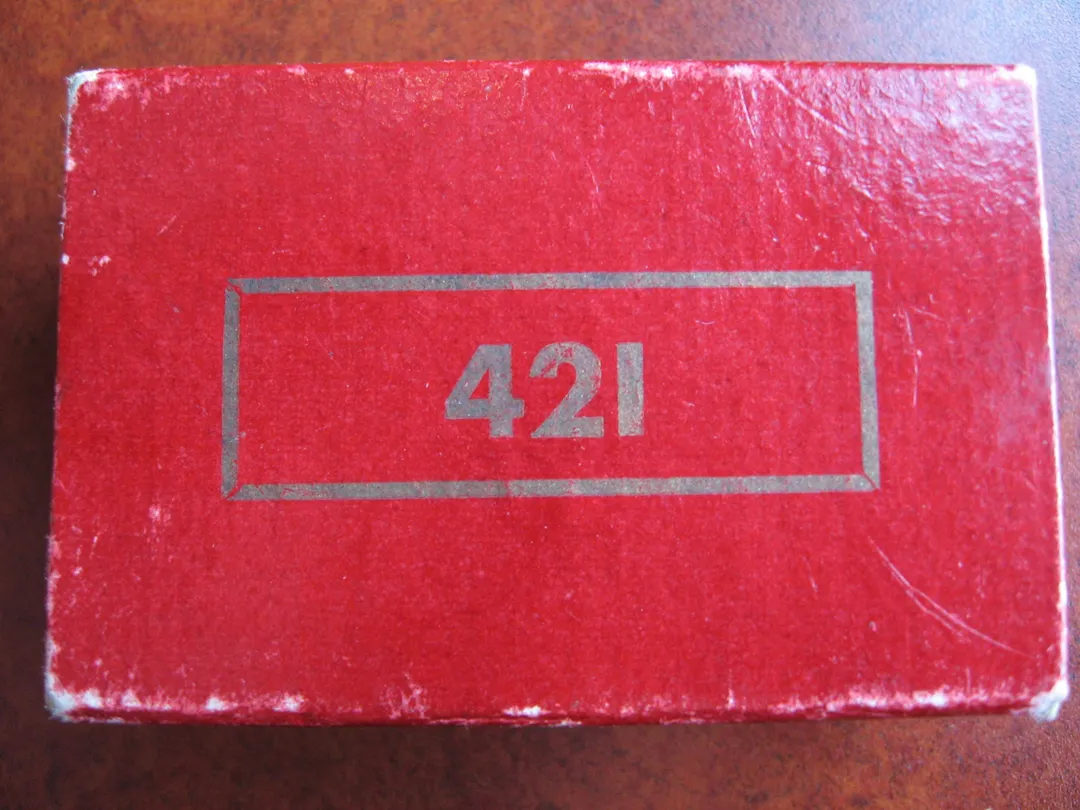
This game is popular in Europe. It is played with three dice and an number of tokens ("fiches", usually 11 or 21) and it is not uncommon to find special porcelain boxes, marked with the dice numbers 4-2-1. Play is in two phases. "Charge" and "Décharge" (discharge). Charge phase : all players roll the dice once and only once, each. The biggest hand takes as many tokens as the value in points of his or her hand. This process is repeated until all tokens have been distributed (with the last hand taking has many tokens as are available). If a player has all tokens at the end of the charge, the game is finished (and he or she pays a round of drinks). Discharge phase : The player with the biggest number of tokens has the first roll and then clockwise. The first player of a round of rolls decide for one or two rerolls. A reroll meaning rerolling one, two or all dice, to try to achieve the best hand. By electing to have rerolls, he or she allows the same number of rerolls to the other players. The one who rolls the biggest hand gives a number of tokens equal to the value of his hand (or all of his tokens if not enough) to the player who rolled the lowest hand. That player becomes first player. The game ends when one player has all tokens. He's the loser of the game and pays the next round. If at some point a player has no tokens, play continues without him/her ("saved"). Hands rank as follows (from biggest to smallest): 1. 421 2. 3 aces (1-1-1) 3. 2 aces-six (1-1-6) 4. 3 six (6-6-6) 5. 2 aces-five (1-1-5) 6. 3 fives (5-5-5) 7. 2 aces-four (1-1-4) 8. 3 fours (4-4-4) 9. 2 aces-three (1-1-3) 10. 3 threes (3-3-3) 11. 2 aces-two (1-1-2) 12. 3 two (2-2-2) 13. 6-5-4 14. 5-4-3 15. 4-3-2 16. 3-2-1 Others hands are by decreasing order of values the dice, from 665 to 221 (which is "nenette"). For info, the last value before 221 is 322. 1-1-x are called "fiches" x-x-x are called "baraques" 6-5-4 and the like are called "tierces" 421 is worth 11 points (sometimes 10 or 8 in variants) 111 is worth 7 points x-x-x is worth x points (except for 111, see above) 1-1-x is also worth x points (except, again, for 111) The difference is that for x, 1-1-x>x-x-x as explained in the order of hands above. Tierces are worth 2 and the rest is worth 1.
Four Twenty-one supports 2–8 players according to the catalogue. This range comes from the publisher’s listed player count, so the game can be set up for any group size within it. Some setups, rules and scoring details may still vary by player count, so check your edition’s rulebook for the exact configuration.
The listed playing time for Four Twenty-one is 5 minutes. This is the publisher’s estimate for a full game. The actual duration depends on the group, the player count and familiarity with the rules: first sessions usually run longer, while experienced groups often finish faster. Setup and teaching time are not included in this estimate.
Four Twenty-one has a complexity rating of 1.0 out of 5 from BoardGameGeek players, which makes it a light game. The rating reflects how much rules knowledge, planning and decision-making a typical game demands. Expect a longer first teach for heavier games, and use a preparation guide before game night.
Four Twenty-one belongs to these categories: Party Game and Dice. Its main mechanics are Dice Rolling. Categories describe the theme and setting of a game, while mechanics describe what players actually do on their turns. Each mechanic links to a catalogue hub with similar games, which helps when you want something comparable.
The catalogue lists Four Twenty-one as a base game. It can be played on its own with the components in the box and does not require any other title. Expansions, if any exist, add new content or rules on top of it and are listed separately in the catalogue with a link back to this base game.


