
- BGG rank
- BGG #4,879
- BGG rating
- 6.9
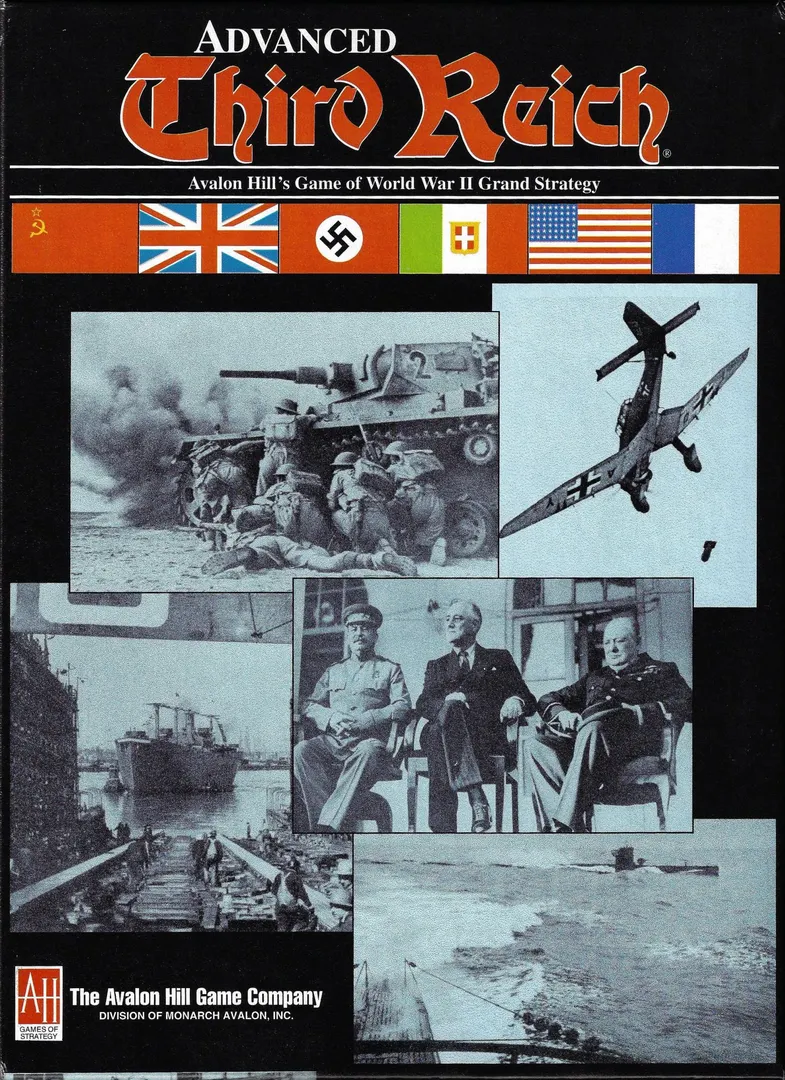
Advanced Third Reich
- 1–6 players
- 180–1200 min
- Complexity 4.5/5
- 1992
2015
Rules assistance for Gathering Storm
Plain-language explanations of turns, card effects and disputed situations, with official source references and saved question history.
What would you like to know?
Answers come from the official rulebook, with the page to check.
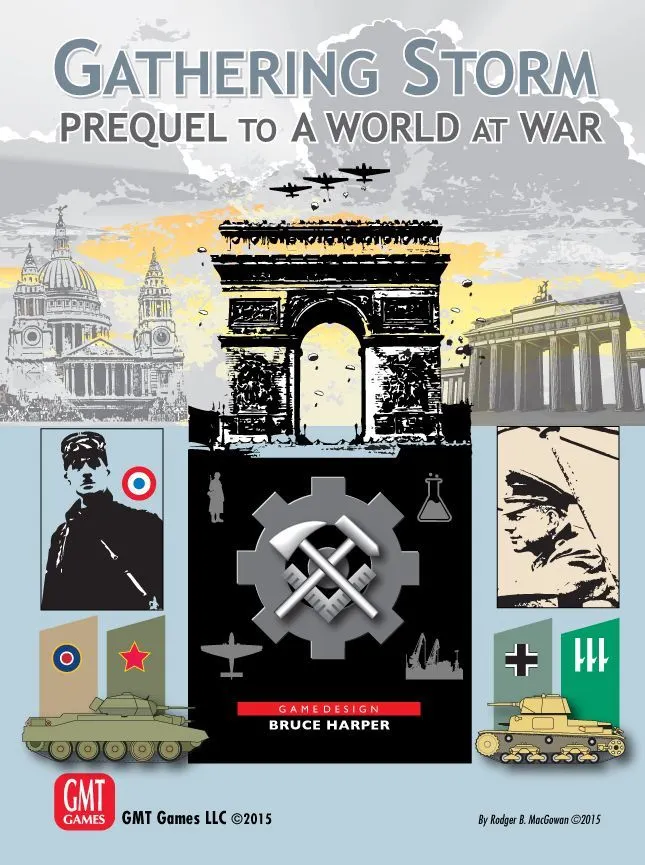
Gathering Storm is a board game released in 2015 for 2–5 players, 360–480 minutes per game, and ages 12 and up. It was designed by Bruce Harper and its main mechanics are Area Majority / Influence, Simultaneous Action Selection, and Action Points.



Gathering Storm does for GMT's A World at War what Days of Decision did for ADG's World in Flames. It allows players to simulate the diplomatic, economic, and political maneuverings that preceded the Second World War, either as a stand alone game or as an expansion for A World at War. (Unlike Days of Decision, Gathering Storm covers only the European events leading to war.) <From the publisher's website:> Gathering Storm, both a game in its own right and a prequel to GMT’s A World at War, covers the period from 1935 to the outbreak of World War II, whenever that might be. Like A World at War, Gathering Storm simulates the military, economic, political, diplomatic, research and production preparations for the Second World War, allowing the players to explore what might have happened if: - Admiral Doenitz had convinced his superiors of the importance of submarine warfare in the impending war with Britain. - Germany had pursued the Z Plan earlier and more consistently. - The development of the “Ural bomber” had been pursued. - Poland had become a German satellite, rather than resisting German aggression. - War had broken out over the Sudetenland, or even the remilitarization of the Rhineland. - Mussolini had given a lower priority to naval armaments, to the benefit of the Italian armor and air forces. - France had extended the Maginot Line. - de Gaulle’s arguments to expand and strengthen France’s armor units had been accepted. - Britain had rearmed sooner. - Russia had deferred the Great Purges. Or accelerated them. - The Spanish civil war had been won by the Loyalists. - A civil war had broken out in Yugoslavia. Or Greece. - Atomic fission had been discovered earlier. - The Second World War had begun with a Franco-Italian conflict. Or a French pre-emptive attack on Germany. Or a Russo-German war, with Italy and the Western Allies neutral. - War comes early. Or later, in 1940 or even 1941. - YOU had been in command. Gathering Storm can be played as a separate game in a single session, with its own victory conditions, but A World at War players will want to press on and see how the war they have created plays out. While using different mechanics, Gathering Storm's structure is consistent with A World at War and allows for a seamless transition to whatever alternate war the players planned – or stumbled into. Some 30 years in development, with three years of design and playtesting, Gathering Storm, includes the following: - Six random events each turn, providing unlimited replay value. - Economics based on tiles and activity counters, eliminating any paperwork. - Flexible mobilization rules, allowing players to emphasis civilian or military production – each at the expense of the other. - Unit construction which allows players to activate reserve units for immediate benefits, at a cost of limiting future options. - Variable research, which can focus on air, naval, military or intelligence projects, as well as short or long term gains. - A fast-moving diplomatic system, with each player allocating diplomatic counters each turn. Diplomatic targets are public, but the points allocated to them are not. - Shipbuilding that allows varied fleets, including the possibility of 5-factor super battleships. - Ahistorical A World at War counters, including armor units of different strengths and additional ships. - A dynamic crisis system, in which the Allies can appease or oppose the Axis, with neither side necessarily being certain whether war might break out. - No dice. Gathering Storm is a must-buy for any committed A World at War player, an excellent – and possibly dangerously time consuming – introduction to the A World at War universe for those unfamiliar with that game, and a enjoyable and instructive fast-paced game all on its own.
Gathering Storm supports 2–5 players according to the catalogue. This range comes from the publisher’s listed player count, so the game can be set up for any group size within it. Some setups, rules and scoring details may still vary by player count, so check your edition’s rulebook for the exact configuration.
The listed playing time for Gathering Storm is 360–480 minutes. This is the publisher’s estimate for a full game. The actual duration depends on the group, the player count and familiarity with the rules: first sessions usually run longer, while experienced groups often finish faster. Setup and teaching time are not included in this estimate.
The catalogue lists Gathering Storm for ages 12 and up. This is the publisher’s recommendation and reflects reading demands, rule complexity and small components rather than theme alone. Younger players can often join with help from an adult, so check the age guidance on your edition and consider your group’s experience with board games.
Gathering Storm has a complexity rating of 4.1 out of 5 from BoardGameGeek players, which makes it a heavy game. The rating reflects how much rules knowledge, planning and decision-making a typical game demands. Expect a longer first teach for heavier games, and use a preparation guide before game night.
Gathering Storm belongs to these categories: Wargame and World War II. Its main mechanics are Area Majority / Influence, Simultaneous Action Selection, and Action Points. Categories describe the theme and setting of a game, while mechanics describe what players actually do on their turns. Each mechanic links to a catalogue hub with similar games, which helps when you want something comparable.
The credited designers of Gathering Storm are: Bruce Harper. These credits come from the published game data and name the people responsible for the game’s design, not its illustrators or publishers. Designer pages on MeepleRules collect other titles by the same designers, which helps when you enjoy a game and want to find similar ones.
The catalogue lists Gathering Storm as a base game. It can be played on its own with the components in the box and does not require any other title. Expansions, if any exist, add new content or rules on top of it and are listed separately in the catalogue with a link back to this base game.