
- BGG rank
- BGG #358
- BGG rating
- 7.8
Cthulhu Wars
- 2–4 players
- 90–120 min
- Complexity 3.1/5
- 2015
2019
Rules assistance for Glorantha: The Gods War
Plain-language explanations of turns, card effects and disputed situations, with official source references and saved question history.
For 3 players
What would you like to know?
Answers come from the official rulebook, with the page to check.
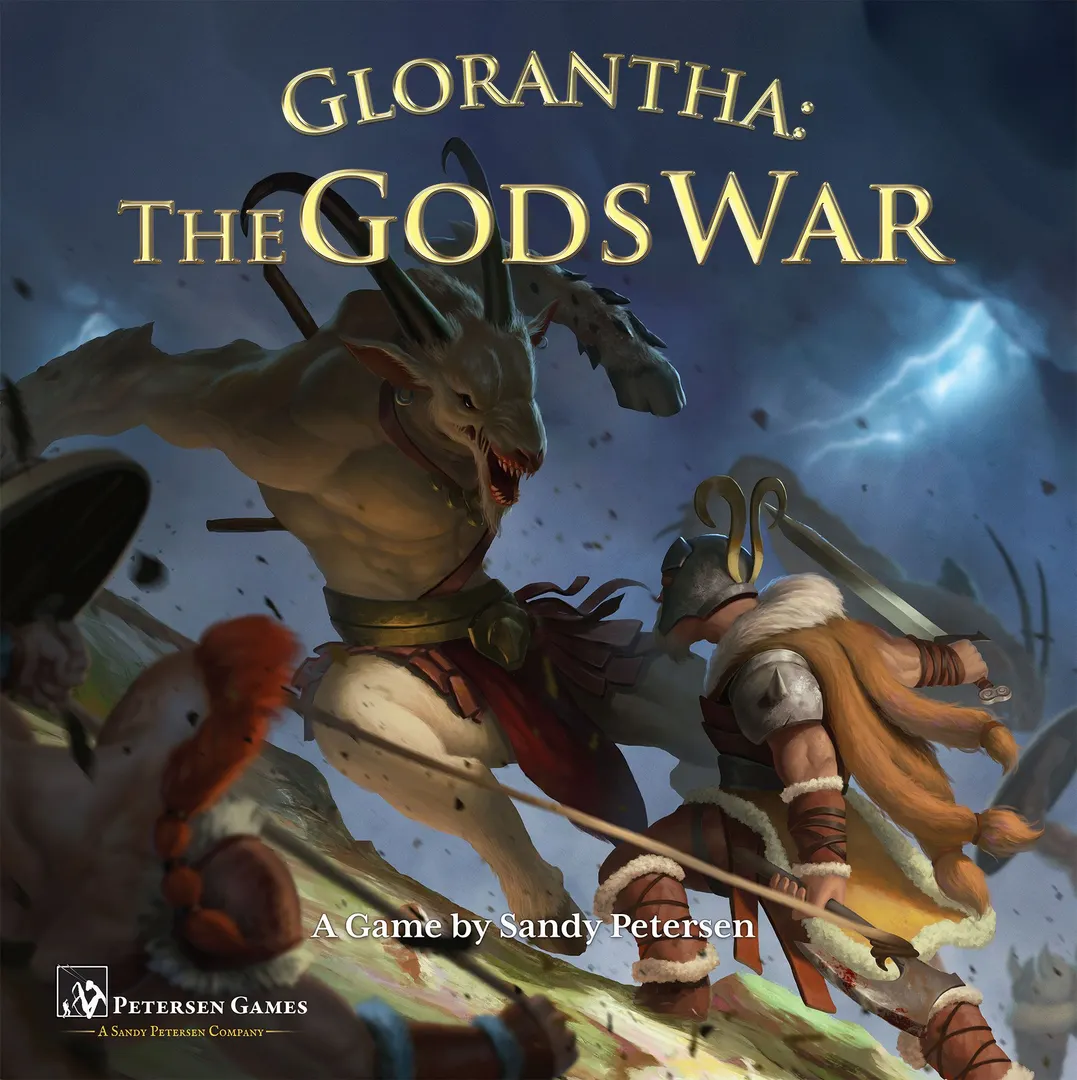
Glorantha: The Gods War is a board game released in 2019 for 3–4 players, 90–120 minutes per game, and ages 14 and up. It was designed by Sandy Petersen and its main mechanics are Variable Player Powers, Area Movement, and Dice Rolling.

Glorantha: The Gods War is a competitive strategy game in which 3 or 4 players (3 to 8 players with the Empires expansion) summon units (minions, heroes, lesser gods and usually one greater god); construct buildings (usually Shrines, Temples, and Ziggurats) and clash in mortal combat. The players seek to build their own strength and destroy their enemies by killing their enemies' units and capturing and destroying their enemies' buildings, to achieve Heroquests and thus earn gifts, and to earn runes with unique effects. Each empire has its own, and different, unique ability, weakness, greater god ability, units, Heroquests and gifts. For example, the Darkness empire features trolls, the Mistress (Cragspider), shades, and the Hellmother (Kyger Litor), while the Sky empire has archers, the Emperor, phoenixes, and the Sun God (Yelm). These are not just the same units with different names, but also have different abilities, as do their buildings. Chaos has both different buildings, three greater gods (the Unholy Trio) and a different agenda to the other empires. The game has a world-shattering "mythic" feel to it rather than a “fantasy adventure” sensation. Glorantha: The Gods War is based on the vigorous mythic realm of Glorantha, which has been the basis for multiple tabletop board, roleplaying, and even digital games, as well as numerous works of fiction. Its depth and scope has been recognized by numerous aficionados of fantasy and gaming, and now it is brought to you in all its astounding power. In each round, in the Action Phase players spend the power they have earned from various sources, most importantly how many different types of buildings they have and the Heroquests they have achieved. They then spend power to build more buildings, summon and move units, do battle with enemy empires, and use powerful empire-specific abilities including from their earned gifts. The Council Phase may include an attempt to close the Chaos Rift that threatens the existence of the world and/or the Great Compromise in which an empire may sacrifice power for the greater good and to distribute victory points. Victory is determined by obtaining victory points from various sources, most importantly the number of buildings controlled each round, paired Heroquests achieved and the Great Compromise, and from runes.
Glorantha: The Gods War supports 3–4 players according to the catalogue. This range comes from the publisher’s listed player count, so the game can be set up for any group size within it. Some setups, rules and scoring details may still vary by player count, so check your edition’s rulebook for the exact configuration.
The listed playing time for Glorantha: The Gods War is 90–120 minutes. This is the publisher’s estimate for a full game. The actual duration depends on the group, the player count and familiarity with the rules: first sessions usually run longer, while experienced groups often finish faster. Setup and teaching time are not included in this estimate.
The catalogue lists Glorantha: The Gods War for ages 14 and up. This is the publisher’s recommendation and reflects reading demands, rule complexity and small components rather than theme alone. Younger players can often join with help from an adult, so check the age guidance on your edition and consider your group’s experience with board games.
Glorantha: The Gods War has a complexity rating of 3.4 out of 5 from BoardGameGeek players, which makes it a medium-weight game. The rating reflects how much rules knowledge, planning and decision-making a typical game demands. Expect a longer first teach for heavier games, and use a preparation guide before game night.
Glorantha: The Gods War belongs to these categories: Fantasy, Miniatures, and Negotiation. Its main mechanics are Variable Player Powers, Area Movement, and Dice Rolling. Categories describe the theme and setting of a game, while mechanics describe what players actually do on their turns. Each mechanic links to a catalogue hub with similar games, which helps when you want something comparable.
The credited designers of Glorantha: The Gods War are: Sandy Petersen. These credits come from the published game data and name the people responsible for the game’s design, not its illustrators or publishers. Designer pages on MeepleRules collect other titles by the same designers, which helps when you enjoy a game and want to find similar ones.
The catalogue lists Glorantha: The Gods War as a base game. It can be played on its own with the components in the box and does not require any other title. Expansions, if any exist, add new content or rules on top of it and are listed separately in the catalogue with a link back to this base game.