
- BGG rating
- 7.1
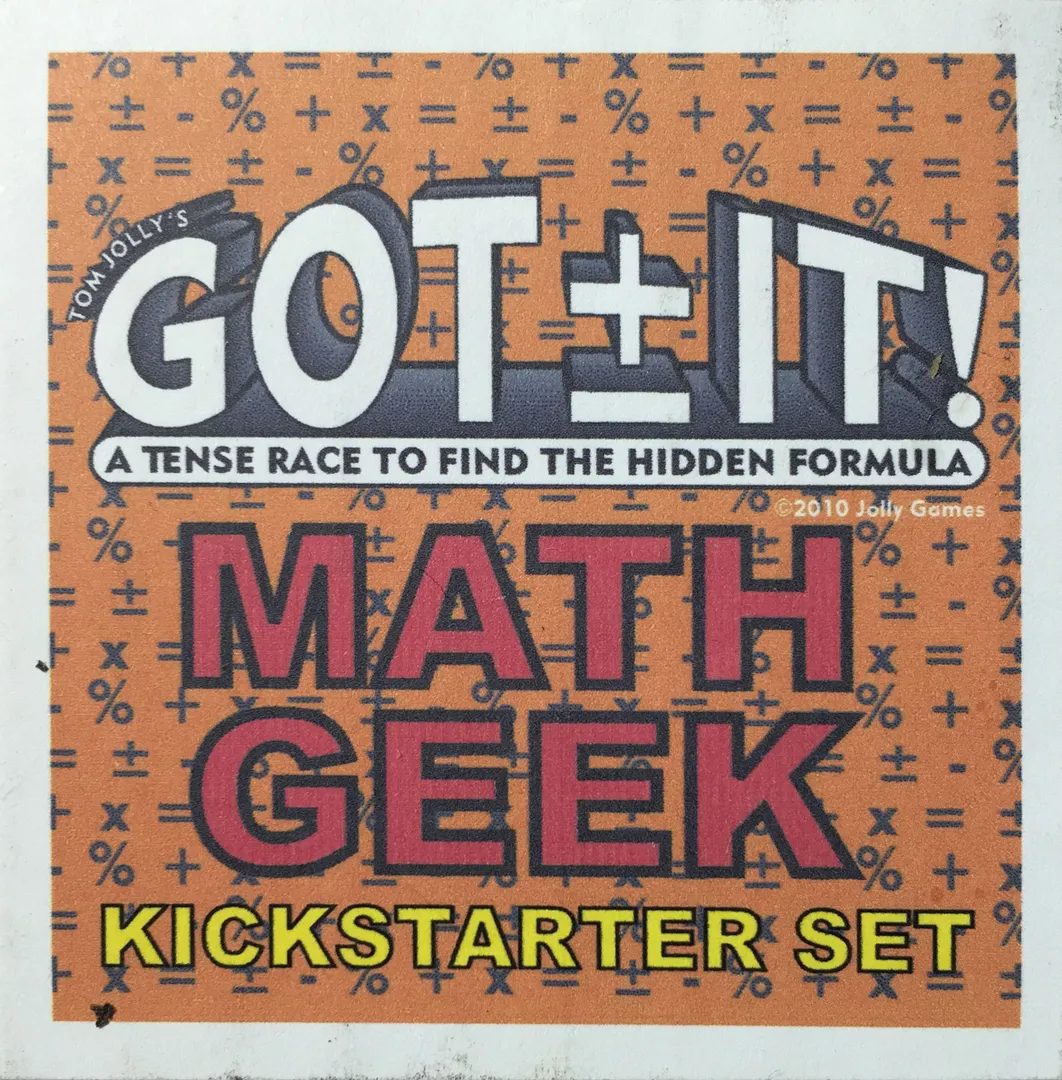
Got It!: Math Geek
- 1–8 players
- 20 min
- 2012
2010
Rules assistance for Got It!
Plain-language explanations of turns, card effects and disputed situations, with official source references and saved question history.
What would you like to know?
Answers come from the official rulebook, with the page to check.
Got It! is a board game released in 2010 for 2–8 players, 20 minutes per game, and ages 6 and up. It was designed by Tom Jolly and its main mechanics are Pattern Recognition.




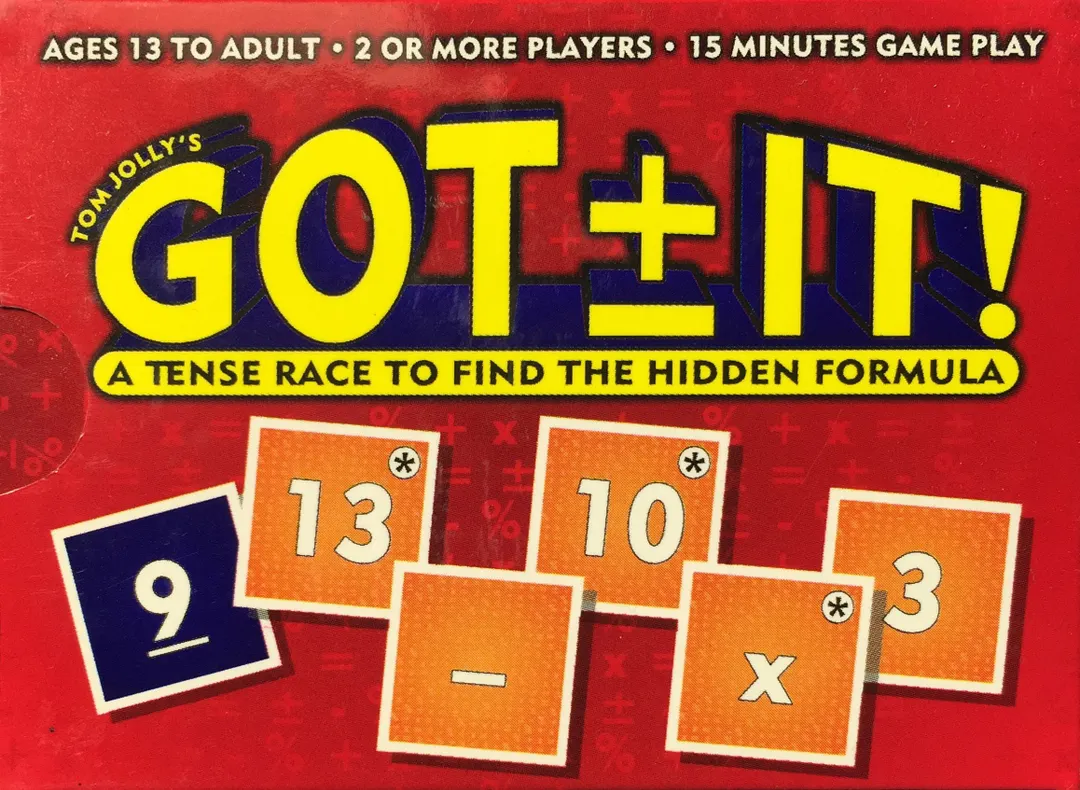
The math game Got It! – which had a working title of Fermat – accommodates as many people as fit around the table. What they're looking at on the table is a 6x6 grid of cards, with half the cards numbered 1-14 and the other half bearing mathematical operators. To set up the game, these cards are placed randomly checkerboard-style, with numbers and operators placed adjacent to one another. Everyone plays simultaneously, with players trying to find a five-card formula that results in the number shown on a goal card, with goals ranging from 1 to 40. The solution must consist of orthogonally adjacent cards, though not necessarily in a straight line, and a player can't use a card twice in a formula. If a 12 is turned up as the goal, for example, one might find "8+4x1" in the grid, then shout out "Got It!" Players can mentally insert parentheses into a formula, so "7+2x3" can result in (7+2)x3 (=27) or 7+(2x3) (=13). The first player to shout with a correct formula – and the grid might contain many – claims the goal card. The player who collects the most goal cards wins! An easy version of Got It! can be set up for younger players, with a 5x5 grid that contains only the numbers 1-9 and only addition and subtraction as mathematical operators.
Got It! supports 2–8 players according to the catalogue. This range comes from the publisher’s listed player count, so the game can be set up for any group size within it. Some setups, rules and scoring details may still vary by player count, so check your edition’s rulebook for the exact configuration.
The listed playing time for Got It! is 20 minutes. This is the publisher’s estimate for a full game. The actual duration depends on the group, the player count and familiarity with the rules: first sessions usually run longer, while experienced groups often finish faster. Setup and teaching time are not included in this estimate.
The catalogue lists Got It! for ages 6 and up. This is the publisher’s recommendation and reflects reading demands, rule complexity and small components rather than theme alone. Younger players can often join with help from an adult, so check the age guidance on your edition and consider your group’s experience with board games.
Got It! has a complexity rating of 1.8 out of 5 from BoardGameGeek players, which makes it a light game. The rating reflects how much rules knowledge, planning and decision-making a typical game demands. Expect a longer first teach for heavier games, and use a preparation guide before game night.
Got It! belongs to these categories: Number, Puzzle, and Math. Its main mechanics are Pattern Recognition. Categories describe the theme and setting of a game, while mechanics describe what players actually do on their turns. Each mechanic links to a catalogue hub with similar games, which helps when you want something comparable.
The credited designers of Got It! are: Tom Jolly. These credits come from the published game data and name the people responsible for the game’s design, not its illustrators or publishers. Designer pages on MeepleRules collect other titles by the same designers, which helps when you enjoy a game and want to find similar ones.
The catalogue lists Got It! as a base game. It can be played on its own with the components in the box and does not require any other title. Expansions, if any exist, add new content or rules on top of it and are listed separately in the catalogue with a link back to this base game.