
- BGG rank
- BGG #7,466
- BGG rating
- 8.0
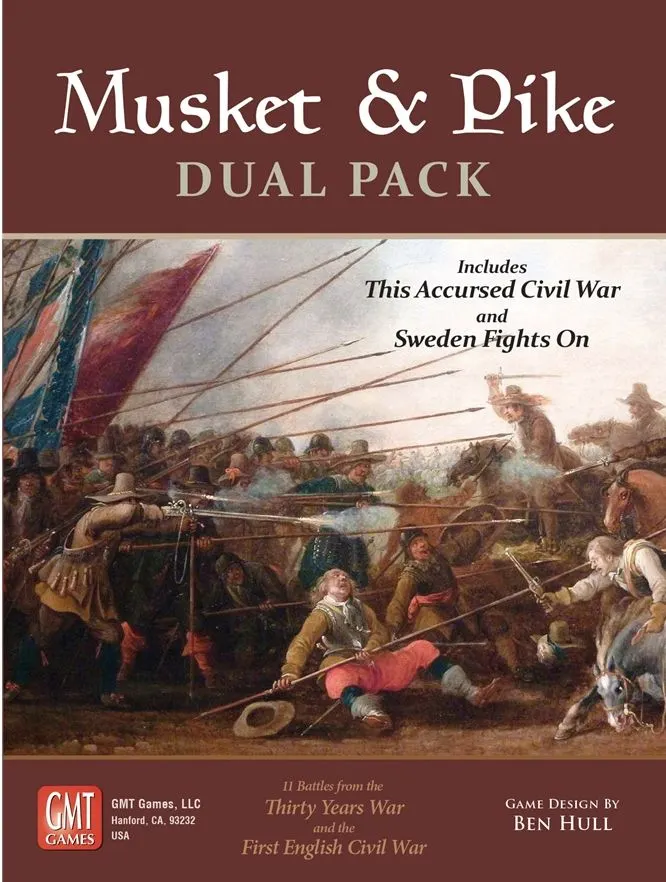
Musket & Pike: Dual Pack
- 2 players
- 240 min
- Complexity 3.8/5
- 2022
2006
Rules assistance for Gustav Adolf the Great: With God and Victorious Arms
Plain-language explanations of turns, card effects and disputed situations, with official source references and saved question history.
For 1 player
What would you like to know?
Answers come from the official rulebook, with the page to check.
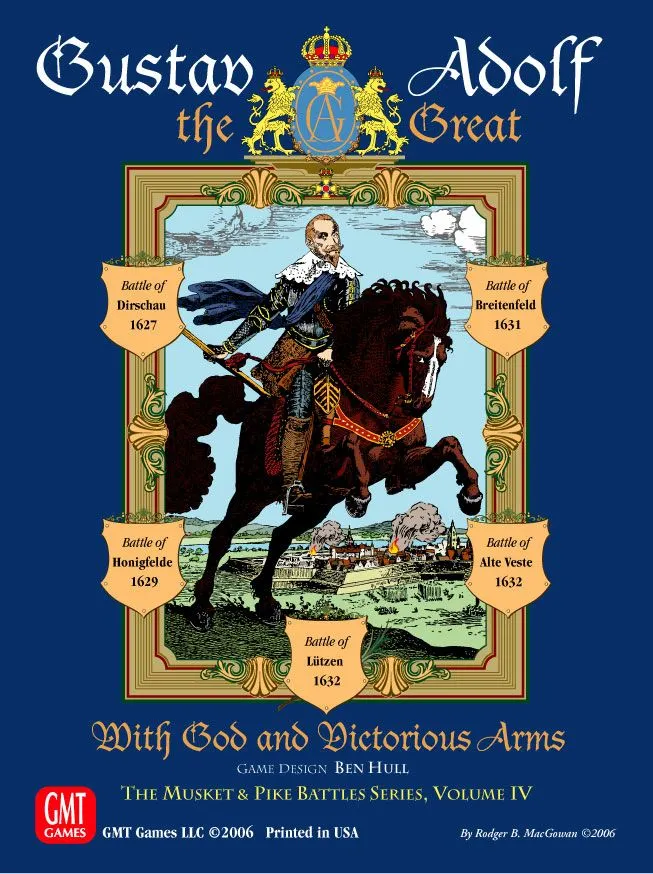
Gustav Adolf the Great: With God and Victorious Arms is a board game released in 2006 for 1–2 players, 300 minutes per game, and ages 12 and up. It was designed by Ben Hull and its main mechanics are Dice Rolling and Hexagon Grid.
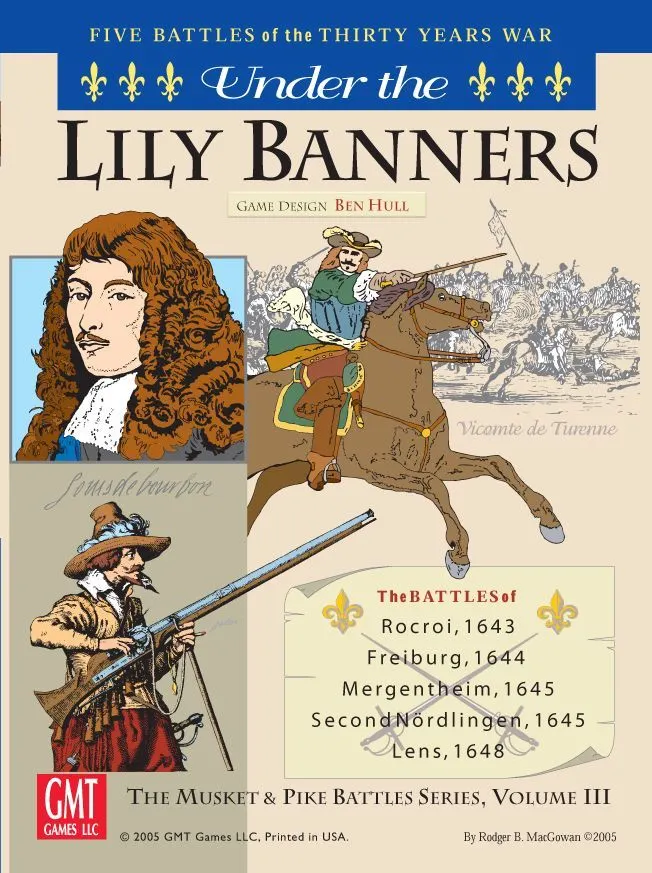
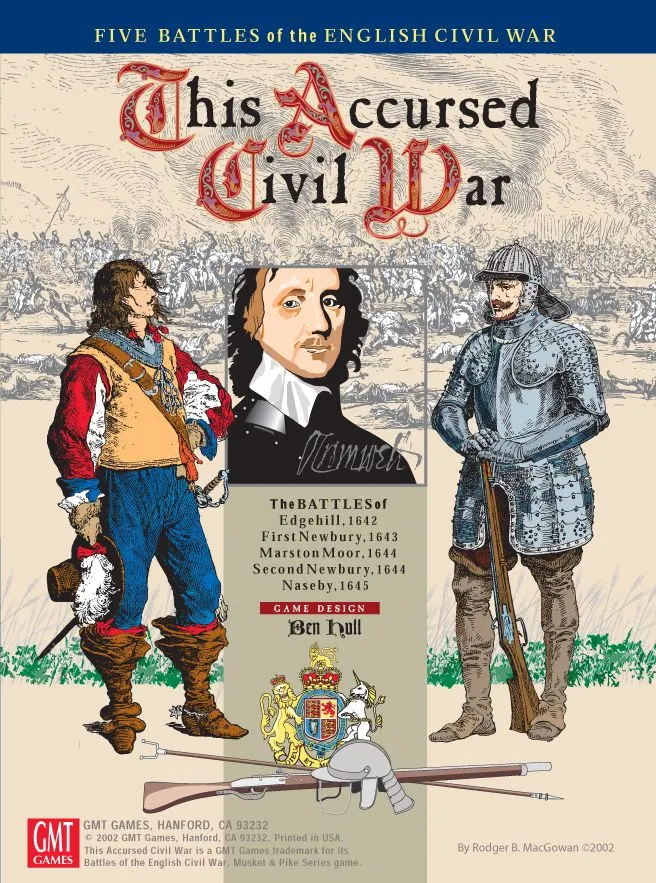
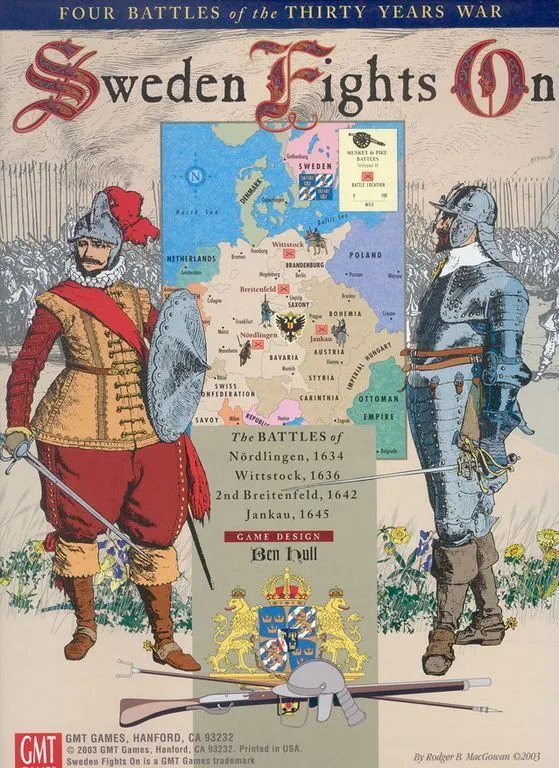
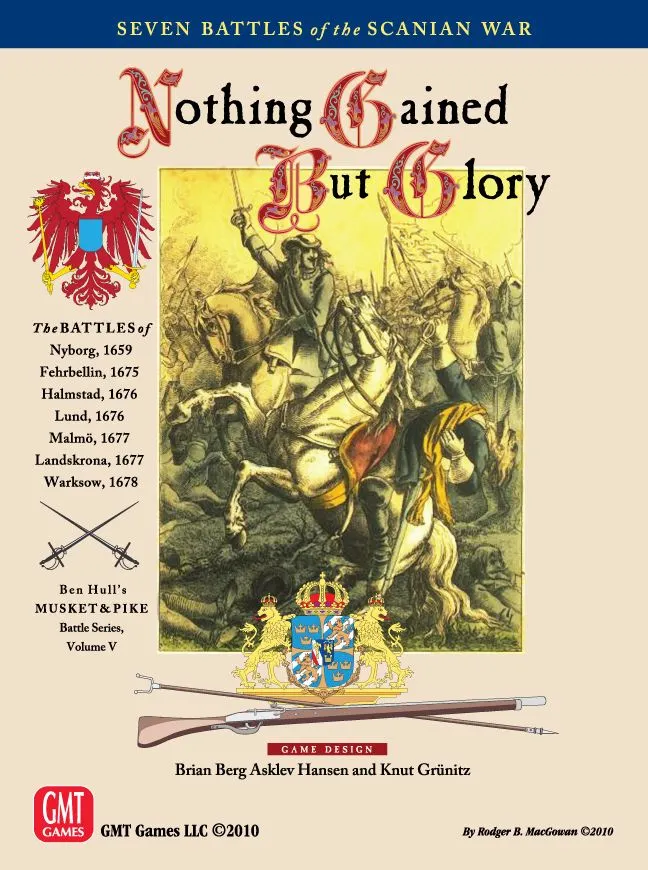



Part of Ben Hull's award-winning Musket & Pike Battles series. The fourth installment in this series is a tactical battle game featuring five battles from the career of one of the Great Captains of History, King Gustav II Adolf the Great of Sweden. In his brief career, he catapulted Sweden to the forefront of European power politics. This volume sets it focus on the rise and climax of Gustav Adolf's military system. The series began with the English Civil War in This Accursed Civil War, then covered the Swedish army after Gustav Adolf in Sweden Fights On, then looked at the rise of the French in the Thirty Years War in Under the Lily Banners. In this volume the Swedish face the tough Polish cavalry, lance equipped winged Husars and Cossacks. The Swedish-style brigades also take on the unbeaten Tilly at the head of the allied Catholic League and Imperial armies. Finally, Wallenstein, with a resurgent Imperial army, mastered the art of drawing out the Swedes to attack on ground of his choosing. In each battle included in Gustav Adolf the Great: With God and Victorious Arms, armies are divided into several wings. Each has a commander and an order that limits the types of actions that units of that wing may perform. Victory goes to the player who can coordinate the actions of his wings in the heat of battle. Units are infantry battalions or brigades, cavalry regiments and artillery batteries. Rules include Cavalry Charges, Cavalry Pistols for skirmishing or for close combat, and artillery grazing fire. Play is highly interactive and most battles can be played through in one sitting. The battles included in Gustav Adolf the Great: With God and Victorious Arms are: Dirschau 1627 - The Prussian campaign that started in 1626, Gustav Adolf had finally brought the Poles to the field and defeated them in battle at Gniew a month before, skillfully using terrain to offset the powerful Polish Hussars. Again the King faced the Polish General Koniecpolski and sought to the same again. Breitenfeld 1631 - The most famous battle of the Thirty Years War Alte Veste 1632 - The late summer saw the Swedish besieged by Wallenstein at Nürnberg. Lützen 1632 - Southeast of Leipzig the Swedes caught up to the Imperial main body. Wallenstein's army had detached two corps and was serious danger. He fortified a position at Lützen. King Gustav Adolf's final battle. Honigfelde / Trzciano 1629 - "I've never had a hotter bath!" exclaimed Gustav II Adolf upon his return. Very nearly captured while trying to extricate his army from a Polish and Imperial trap, this great cavalry battle showed the Poles were to be treated with respect. Rheingraf Otto Ludwig's German cavalry attacked the advancing Poles and was drawn into a pincer. Gustav Adolf rushed forward to save the impetuous Rheingraf. Koniecpolski showed his cunning. The Imperial contingent joined the fray and sent the Swedes falling back. The Imperial commander, von Arnim, would take the field with Gustav Adolf at Breitenfeld two years later. Components: 3 Full-color countersheets Two 22"x34" back-printed maps Rulebook Scenario/Playbook 2 11x17" Player Aid Cards
Gustav Adolf the Great: With God and Victorious Arms supports 1–2 players according to the catalogue. This range comes from the publisher’s listed player count, so the game can be set up for any group size within it. Some setups, rules and scoring details may still vary by player count, so check your edition’s rulebook for the exact configuration.
The listed playing time for Gustav Adolf the Great: With God and Victorious Arms is 300 minutes. This is the publisher’s estimate for a full game. The actual duration depends on the group, the player count and familiarity with the rules: first sessions usually run longer, while experienced groups often finish faster. Setup and teaching time are not included in this estimate.
The catalogue lists Gustav Adolf the Great: With God and Victorious Arms for ages 12 and up. This is the publisher’s recommendation and reflects reading demands, rule complexity and small components rather than theme alone. Younger players can often join with help from an adult, so check the age guidance on your edition and consider your group’s experience with board games.
Gustav Adolf the Great: With God and Victorious Arms has a complexity rating of 3.8 out of 5 from BoardGameGeek players, which makes it a heavy game. The rating reflects how much rules knowledge, planning and decision-making a typical game demands. Expect a longer first teach for heavier games, and use a preparation guide before game night.
Gustav Adolf the Great: With God and Victorious Arms belongs to these categories: Wargame and Pike and Shot. Its main mechanics are Dice Rolling and Hexagon Grid. Categories describe the theme and setting of a game, while mechanics describe what players actually do on their turns. Each mechanic links to a catalogue hub with similar games, which helps when you want something comparable.
The credited designers of Gustav Adolf the Great: With God and Victorious Arms are: Ben Hull. These credits come from the published game data and name the people responsible for the game’s design, not its illustrators or publishers. Designer pages on MeepleRules collect other titles by the same designers, which helps when you enjoy a game and want to find similar ones.
The catalogue lists Gustav Adolf the Great: With God and Victorious Arms as a base game. It can be played on its own with the components in the box and does not require any other title. Expansions, if any exist, add new content or rules on top of it and are listed separately in the catalogue with a link back to this base game.