

- BGG rank
- BGG #175
- BGG rating
- 8.2
Vantage
- 1–6 players
- 120–180 min
- Complexity 2.3/5
- 2025
2017
Rules assistance for In Tenebris Lux
Plain-language explanations of turns, card effects and disputed situations, with official source references and saved question history.
What would you like to know?
Answers come from the official rulebook, with the page to check.
In Tenebris Lux is a board game released in 2017 for 1–4 players and ages 13 and up. It was designed by Owen Aurelio and its main mechanics are Dice Rolling, Solo / Solitaire Game, and Narrative Choice / Paragraph.







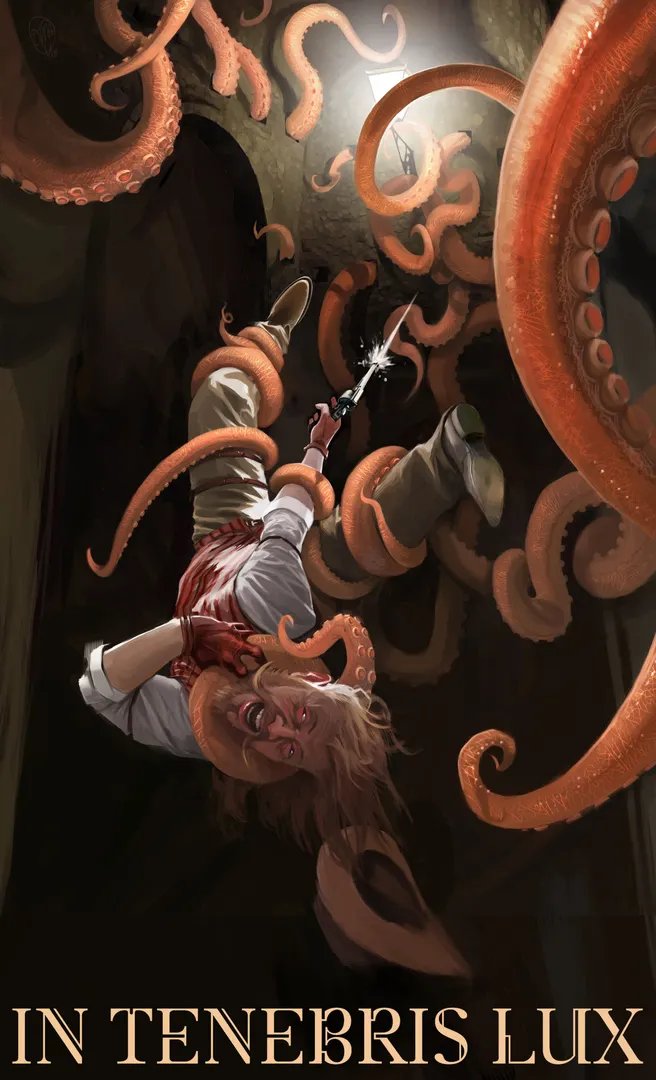
ENTER A WORLD OF VICTORIAN HORROR! In 19th-century Rome, ancient crypts have been discovered beneath the Capuchin tombs. Take on the role of a dauntless explorer and plunder these catacombs of their secrets and spoils. Build your catacomb as you go, seeking finds and surviving horrors. End your story before the evils of the catacomb devour you all! IN TENEBRIS LUX is a game for 1-4 players ages 13 and up, and can be played in about 45 minutes to an hour. Players rush to explore and resolve personal quests, called narratives, before their opponents can resolve their own, or the dark catacombs close in on them, ending the game. The game is played in turns, each broken into 3 Steps, with several Phases. STEP 1: BREATHE The first Step adds Rooms to the Catacombs, by drawing them from a random pile. This builds up the game board out of playing card sized map pieces, or Rooms. This step also has a phase allowing Explorers to change their gear, referred to as Equipment or Finds… this is critical as these important items strengthen an Explorer so that they may deal with the dangers to come. Following phases allow an Explorer to adjust their card hand and play any non-room cards, if so desired. STEP 2: SEEK The second step allows Explorers to actually explore and navigate through the Catacombs, or growing game board. This dangerous course allows Explorers to search for new Finds and gear. More phases allow for adding extra Rooms, or cards, onto the board, moving around from card to card, and interacting with Room Cards in order to complete Naratives, or the game’s objectives. This is the Phase where Explorers are most at risk of stumbling upon Horrors, as they are actively exploring the Catacombs. STEP 3: SURVIVE In Step 3 Horrors, the game’s many monsters in the dark, may attack your Explorer! Canny and brave Explorers may also strike out and attack each other in hopes of thwarting each other’s progress in pursuit of personal Narratives. This phase resolves each combat one by one, and adjusts health and loot bodies. Basic combat is simple. As the attacker, role one of the game’s 14 included dice, and add it to your chosen Trait (Grit, Wit or Daring). The Defender rolls one die and adds it to their same Trait, as they defend along the same lines as the incoming attack. Whichever result is highest wins. The game’s “Combat Reference Card” will take players through any extra steps, notably the way in which rooms impact the outcomes with rolls in combat. Each Horror and Explorer features an affinity with different Room types, this gives an edge or disadvantage in combat. Be careful of the Room you land on, it will have dire consequences! After each Step is resolved a player finishes their turn and, moving clockwise, the next player goes, and so on. The game is ended when one player completes their randomly drawn Narrative objective, all Explorers are killed, or the Doom Counter (the Game’s timer) has run its course, sending the catacombs crashing in on the hapless Explorers. In Tenebris Lux comes with 13 Jumbo Explorer cards, 4 jumbo Combat and Turn Cycle reference cards, a full color rule book, 24 Horror cards, 18 Equipment cards, 21 Find cards, 12 Narrative cards, 32 Room cards, 3 Great Room Jumbo cards, one Jumbo Doom Counter card, 14 Dice, 13 Double Sided Explorer counters with 4 stands, and a counter for each Horror as well as many counters to help record progress for Narratives.
In Tenebris Lux supports 1–4 players according to the catalogue. This range comes from the publisher’s listed player count, so the game can be set up for any group size within it. Some setups, rules and scoring details may still vary by player count, so check your edition’s rulebook for the exact configuration.
The catalogue lists In Tenebris Lux for ages 13 and up. This is the publisher’s recommendation and reflects reading demands, rule complexity and small components rather than theme alone. Younger players can often join with help from an adult, so check the age guidance on your edition and consider your group’s experience with board games.
In Tenebris Lux has a complexity rating of 2.0 out of 5 from BoardGameGeek players, which makes it a medium-light game. The rating reflects how much rules knowledge, planning and decision-making a typical game demands. Expect a longer first teach for heavier games, and use a preparation guide before game night.
In Tenebris Lux belongs to these categories: Adventure, Science Fiction, and Post-Napoleonic. Its main mechanics are Dice Rolling, Solo / Solitaire Game, and Narrative Choice / Paragraph. Categories describe the theme and setting of a game, while mechanics describe what players actually do on their turns. Each mechanic links to a catalogue hub with similar games, which helps when you want something comparable.
The credited designers of In Tenebris Lux are: Owen Aurelio. These credits come from the published game data and name the people responsible for the game’s design, not its illustrators or publishers. Designer pages on MeepleRules collect other titles by the same designers, which helps when you enjoy a game and want to find similar ones.
The catalogue lists In Tenebris Lux as a base game. It can be played on its own with the components in the box and does not require any other title. Expansions, if any exist, add new content or rules on top of it and are listed separately in the catalogue with a link back to this base game.