
- BGG rank
- BGG #2,295
- BGG rating
- 7.1
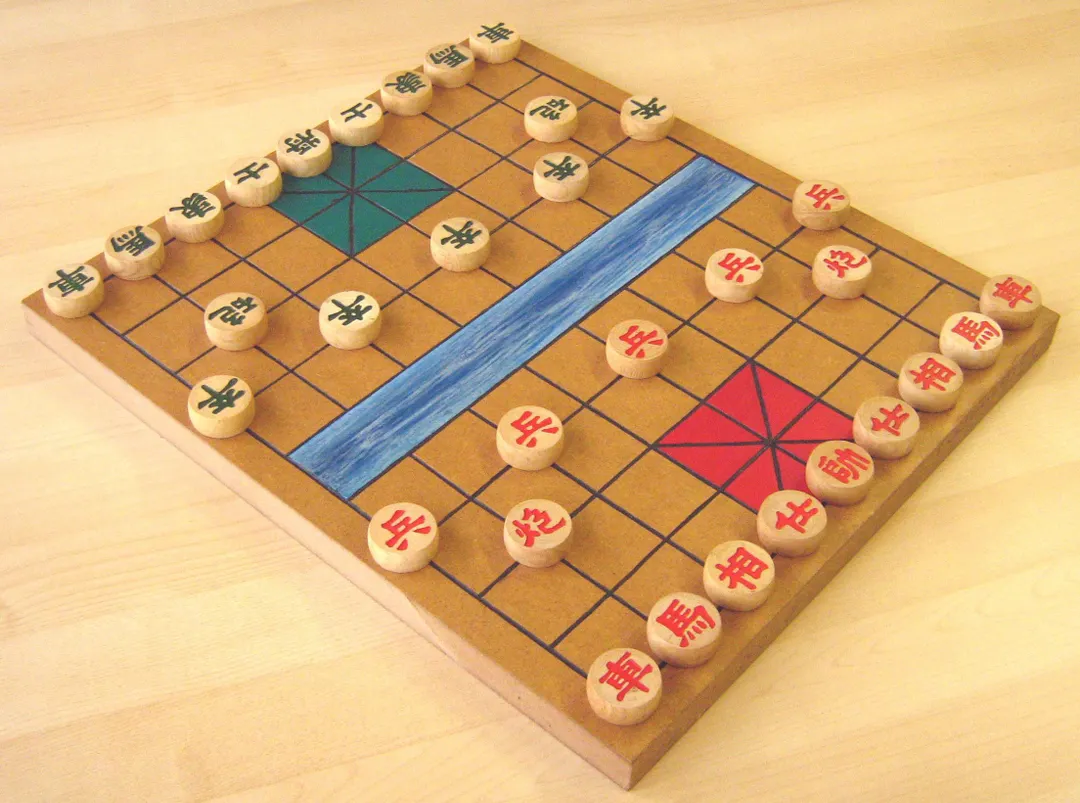
Xiangqi
- 2 players
- 60 min
- Complexity 3.6/5
- 762
2025
Rules assistance for IYE
Plain-language explanations of turns, card effects and disputed situations, with official source references and saved question history.
For 2 players
What would you like to know?
Answers come from the official rulebook, with the page to check.
IYE is a board game released in 2025 for 2 players, 15–30 minutes per game, and ages 8 and up. It was designed by Onur Şencan and its main mechanics are Set Collection, Square Grid, and Grid Movement.



The clan’s Shaman has gotten long in the tooth; it is time for him to pass on his drum. The drum shall be passed down to either one of his apprentices. The successor shall be chosen not through a competition nor a contest, but through a traditional ritual of calling and gathering the İye. The Shaman candidates, raised through apprenticeship, shall prove themselves capable of being the clan’s new spiritual leader. Albeit they are in a way competing against one another, cooperation is still a necessity. For such is the way to build a bridge between men and İye. In this game, the two Shaman candidates endeavour to gather the İyes through the beat of the Shaman’s drum. The candidates need to calculate which İye shall be left to their opponent; moreover,they need to make the most logical choice on when to ask the İye to lend a hand and to let them go. The one who proves to be the most skilful in gathering the İye and utilising their abilities shall be appointed as the clan’s next Shaman. İye (pronounced EE-yeah): Belonging to the animist mythologies of Central Asia, İye are nature spirits that inhabit various things. It is believed that they are the protectors of whatever object or part of nature they inhabit, and hold extraordinary powers. Kam (pronounced like English word ‘come’): A shaman in the Altaic, Mongol and Turkic cultures. They serve as the sages and spiritual leaders of their clans. They handcraft their own drums with which they contact the İyes. Utilising the power of an İye is described as “asking the İye to lend a hand”. GAME STRUCTURE AND RULES The first player is the one who is most interested in Shamanism. You can also use any other method to determine the first player. On their turn, a player chooses to perform a A: “Natural Movement” or an B: “İye Tile Movement” to move the Shaman’s drum. Whichever İye Tile the drum moves onto is given to the opponent along with the turn. When there is but a single İye Tile left on the game board, the cycle ends and scoring begins. Natural Movement: The players can move the Shaman’s drum for 1 or 2 spaces on a vertical or horizontal axis. The drum cannot be moved diagonally through a Natural Movement, only vertically or horizontally. The drum cannot be placed on an empty tile, but it can move over them. Moving over an empty tile still counts as moving 2 spaces. İye Tile Movement: The İye Tiles that have been gathered on previous turns can be utilised by the players to move the Shaman’s drum beyond what is naturally possible. In such an instance, whichever İye Tile the drum lands on is still given to the opponent. An İye Tile that has been utilised thusly is spent and ‘discarded’ next to the game board. It will not be included in scoring. The number and types of discarded İye Tiles musty always be visible to both players. The Premature End Of A Cycle If a player is unable to execute any legal moves during their turn, the cycle ends then and there. The player who was last able to execute a movement, becomes the winner. This can only occur if a player has no possible “Natural Movement” to execute and no applicable İye Tiles that can be used for an “İye Tile Movement”. End of a cycle and scoring If a cycle ends because a player was not able to move, the player who played the last move wins the cycle. In this case, there is no need for scoring. If a cycle ends because there is a single İye Tile left on the game board, scoring ensues. Each type of İye is scored separately. Whoever holds the greatest count of a particular type of İye, receives all the points for that type. If both players hold an equal number of tiles regarding a type of İye, neither player wins any points. Moreover, any İye Tile that was used for an “İye Tile Movement” is not counted during scoring; it has been spent and ‘discarded’.
IYE supports 2 players according to the catalogue. This is the publisher’s listed player count, so the game is designed for exactly that number of participants. Variants for other group sizes, if any, are described in the rulebook of your edition, so check it before setting up a different configuration.
The listed playing time for IYE is 15–30 minutes. This is the publisher’s estimate for a full game. The actual duration depends on the group, the player count and familiarity with the rules: first sessions usually run longer, while experienced groups often finish faster. Setup and teaching time are not included in this estimate.
The catalogue lists IYE for ages 8 and up. This is the publisher’s recommendation and reflects reading demands, rule complexity and small components rather than theme alone. Younger players can often join with help from an adult, so check the age guidance on your edition and consider your group’s experience with board games.
IYE has a complexity rating of 1.7 out of 5 from BoardGameGeek players, which makes it a light game. The rating reflects how much rules knowledge, planning and decision-making a typical game demands. Expect a longer first teach for heavier games, and use a preparation guide before game night.
IYE belongs to these categories: Abstract Strategy. Its main mechanics are Set Collection, Square Grid, and Grid Movement. Categories describe the theme and setting of a game, while mechanics describe what players actually do on their turns. Each mechanic links to a catalogue hub with similar games, which helps when you want something comparable.
The credited designers of IYE are: Onur Şencan. These credits come from the published game data and name the people responsible for the game’s design, not its illustrators or publishers. Designer pages on MeepleRules collect other titles by the same designers, which helps when you enjoy a game and want to find similar ones.
The catalogue lists IYE as a base game. It can be played on its own with the components in the box and does not require any other title. Expansions, if any exist, add new content or rules on top of it and are listed separately in the catalogue with a link back to this base game.