
- BGG rank
- BGG #3,001
- BGG rating
- 7.3
Knitting Circle
- 1–4 players
- 30–45 min
- Complexity 2.1/5
- 2025
2025
Rules assistance for Kuldhara
Plain-language explanations of turns, card effects and disputed situations, with official source references and saved question history.
For 1 player
What would you like to know?
Answers come from the official rulebook, with the page to check.
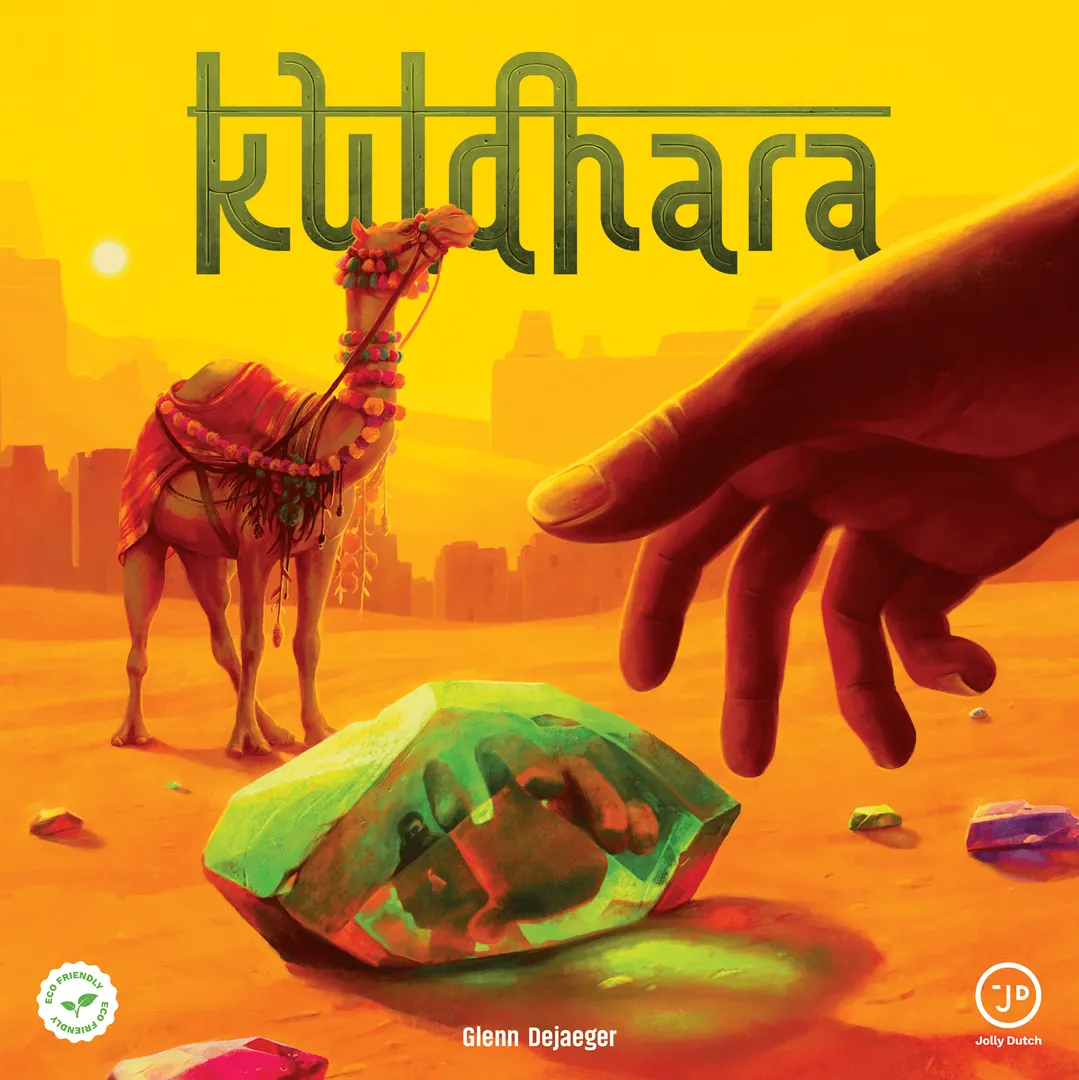
Kuldhara is a board game released in 2025 for 1–4 players, 30–120 minutes per game, and ages 8 and up. It was designed by Glenn Dejaeger and its main mechanics are Area Movement, Point to Point Movement, and Variable Set-up.





STORY: The once-magnificent Kuldhara used to be a prosperous village in northern India. However, once it's Grand Vizier began making cruel and unrealistic demands of its people, threatening the village's destruction ... its inhabitants decided to raze Kuldhara themselves. The buildings burned, its riches scattered to the sands, and its people disappeared into the desert without a trace. Now Kuldhara is said to be a ghost town, where its former inhabitants roam the nights as specters … however, many of its treasures are still lost in the surrounding desert. As an intrepid treasure hunter, your goal is to find Kuldhara's lost gemstones, load them up on your trusty camel, and head back to base camp to forge them into valuable jewellery. The days stretch long in the desert, but watch the sun's position carefully - because once night falls, the spirits of Kuldhara will rise again! GAMEPLAY: A full game of Kuldhara lasts 4 rounds, corresponding to one full 'day'. Every round, players replenish their water which is used to perform different actions; such as traveling with their camel through the desert, digging up gems in the ruins, and taking their gemstones back to basecamp. Each turn is fast and simple, with only 1 or 2 actions taken per player before they begin organizing collected stones on their personal workbench to craft jewellery. When the active player has created the pattern displayed on the jewellery card, they can craft it, trading in the gemstones in exchange for taking the card and earning points. Not only that, but certain cards can grant 'protection tiles' which allow gemstones to be reused multiple times - meaning that through smart planning and a bit of luck, a player could even make 2 or 3 pieces of jewellery at once! As the rounds progress, the position of the sun also changes - meaning that the traveling routes will change in cost over the course of a game. So you'll need to plan out your water usage carefully, in order to make the strongest amulets through well places combos on your own personal workbench. Ultimately, the player with the most points will win. Kuldhara also comes with a dedicated Solo mode; a custom board and deck of cards for Kadhan, a spectre in Kuldhara. His turns are easy to run and have multiple difficulty levels, and almost always ends in close games where the final round really matters!
Kuldhara supports 1–4 players according to the catalogue. This range comes from the publisher’s listed player count, so the game can be set up for any group size within it. Some setups, rules and scoring details may still vary by player count, so check your edition’s rulebook for the exact configuration.
The listed playing time for Kuldhara is 30–120 minutes. This is the publisher’s estimate for a full game. The actual duration depends on the group, the player count and familiarity with the rules: first sessions usually run longer, while experienced groups often finish faster. Setup and teaching time are not included in this estimate.
The catalogue lists Kuldhara for ages 8 and up. This is the publisher’s recommendation and reflects reading demands, rule complexity and small components rather than theme alone. Younger players can often join with help from an adult, so check the age guidance on your edition and consider your group’s experience with board games.
Kuldhara has a complexity rating of 2.7 out of 5 from BoardGameGeek players, which makes it a medium-light game. The rating reflects how much rules knowledge, planning and decision-making a typical game demands. Expect a longer first teach for heavier games, and use a preparation guide before game night.
Kuldhara belongs to these categories: Exploration, Adventure, and Puzzle. Its main mechanics are Area Movement, Point to Point Movement, and Variable Set-up. Categories describe the theme and setting of a game, while mechanics describe what players actually do on their turns. Each mechanic links to a catalogue hub with similar games, which helps when you want something comparable.
The credited designers of Kuldhara are: Glenn Dejaeger. These credits come from the published game data and name the people responsible for the game’s design, not its illustrators or publishers. Designer pages on MeepleRules collect other titles by the same designers, which helps when you enjoy a game and want to find similar ones.
The catalogue lists Kuldhara as a base game. It can be played on its own with the components in the box and does not require any other title. Expansions, if any exist, add new content or rules on top of it and are listed separately in the catalogue with a link back to this base game.