
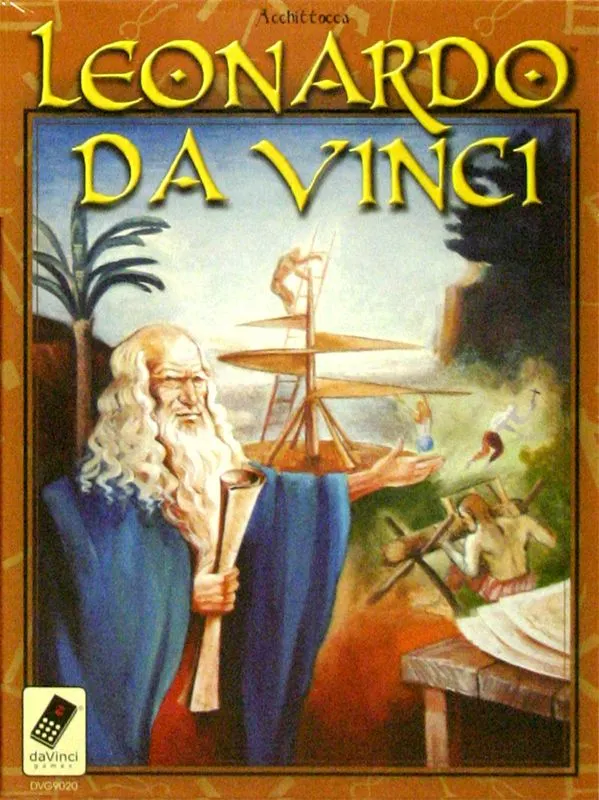
- BGG rank
- BGG #2,253
- BGG rating
- 6.7
Leonardo da Vinci
- 2–5 players
- 90 min
- Complexity 3.2/5
- 2006
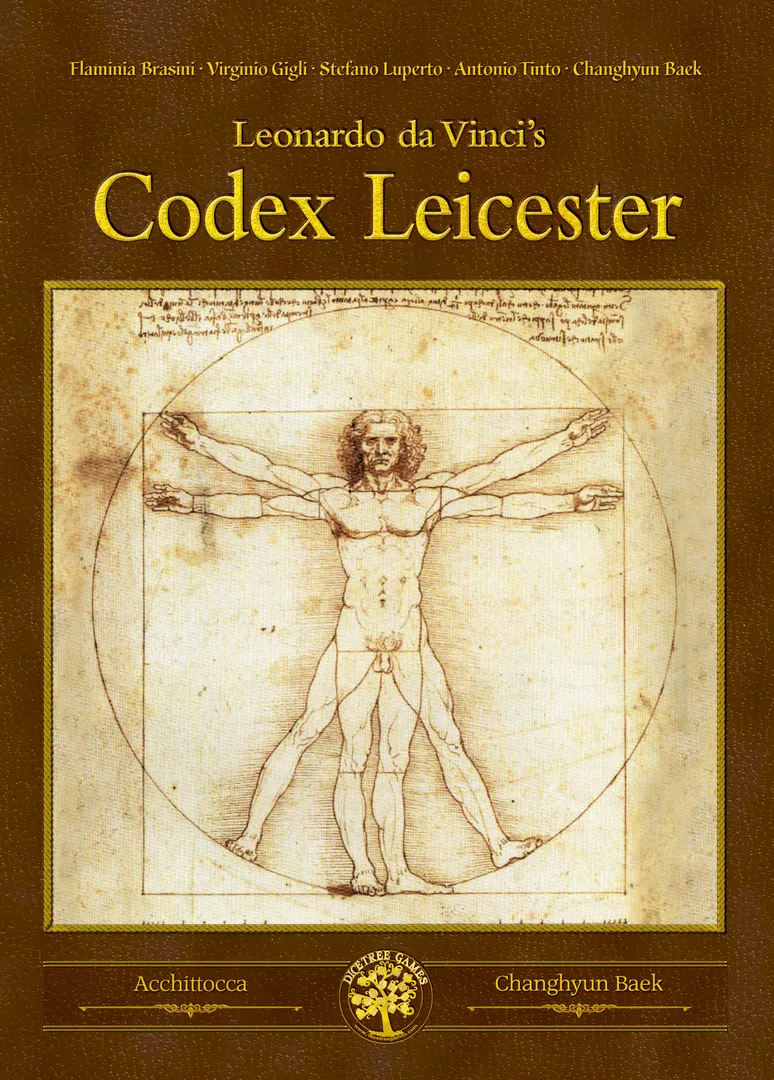
2023
Rules assistance for Leonardo da Vinci's Codex Leicester
Plain-language explanations of turns, card effects and disputed situations, with official source references and saved question history.
For 1 player
What would you like to know?
Answers come from the official rulebook, with the page to check.
Leonardo da Vinci's Codex Leicester is a board game released in 2023 for 1–5 players, 30–150 minutes per game, and ages 14 and up. It was designed by Stefano Luperto, Antonio Tinto, Virginio Gigli, Flaminia Brasini, and Changhyun Baek and its main mechanics are Area Majority / Influence and Worker Placement.


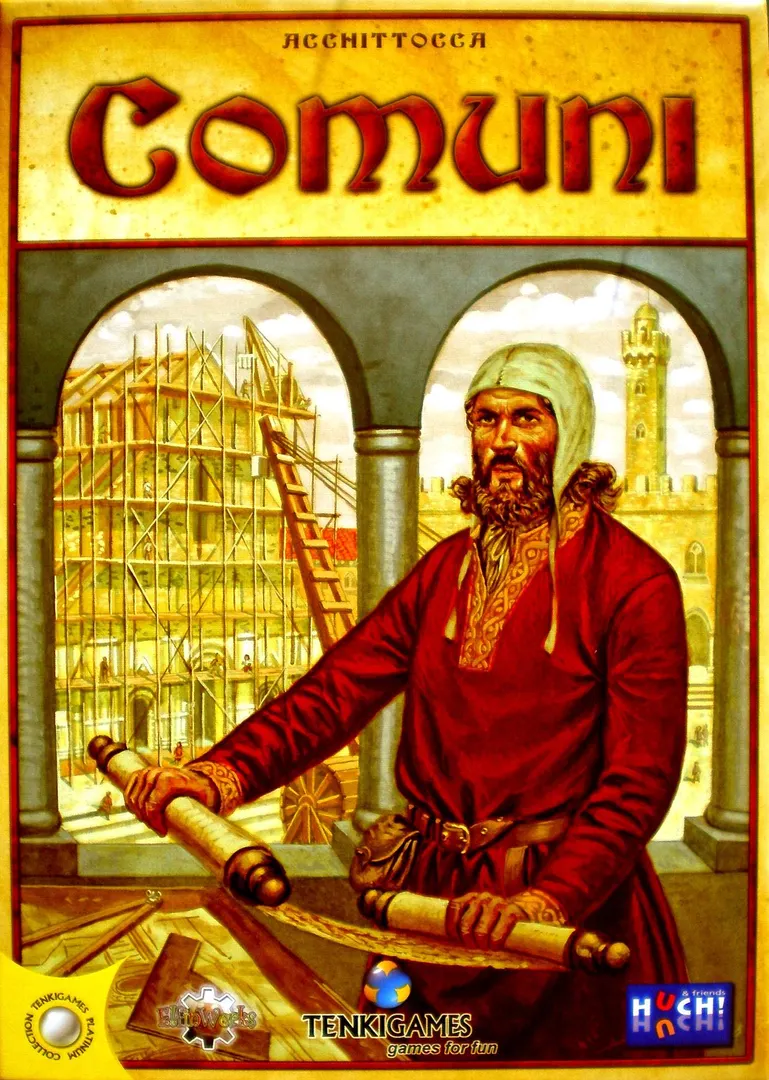


Codex Leicester is the reimplementation of Leonardo da Vinci (2006) by Acchittocca (Flaminia Brasini, Virginio Gigli, Stefano Luperto, Antonio Tinto) in collaboration with the founder of DiceTree Games, Changhyun Baek. It is a new game using the original’s system and theme. This is a worker placement game for 1 to 5 players, featuring strong player interaction. Playtime lasts approximately 30 minutes per player. Summary: Players find themselves as inventors trying to breathe life into their designs, all of which draw their inspiration from the notes of the master himself: the Codex Leicester of Leonardo da Vinci. Ranging from relatively simple to epic, all these inventions require materials and time to bring them to fruition. Of course, genius alone won’t get the job done. Get support from the Council and sponsors. You will need to expand your workshops and procure Automata designed by Leonardo himself – all this to increase your work efficiency. Hire apprentices straight out of the academy to nab highly coveted materials from the market before your rivals. Time is of the essence. Race to be the foremost in completing inventions. You will unlock rewards and special abilities if you are the first player to complete the inventions. Otherwise, you will get less rewards without special abilities. After 7 rounds, the player who has amassed the largest fortune will be awarded victory! Who among you will be the most ingenious Renaissance inventor? -description from publisher = Changes from Leonardo da Vinci (2006): - The allocation of start game resources has changed. 4 resource selection cards are distributed, of which 2 are kept, and their corresponding resources are collected. Receive additional resources according to to turn order. - Competitive elements have been strengthened for a 2 or 3 players game, allowing enjoyment of a similar tension at any player count. - More invention cards! An increase from 25 to 40 cards, with each card having special effects that players can use instantly, once in a round, and permanently. - More enticing Council options! An increase from four to eight options, with florins piling up on tiles that no one has chosen each time a new tile is placed. - Card resources have been replaced with meeples, and player screens have been added. - Invention card completion has been modified so that everyone knows what inventions are being worked on at any given time. - Invention cards are now divided into current and future spaces, adding a new dimension for strategic play. - The 15-week inventions are now only revealed at the start of the game, allowing players to prepare in advance. - Restrictions of the workshops have been lifted so that you can upgrade them, as well as add automata, in the middle of working on an invention. - Each player now gets six objectives, all of which yield rewards upon fulfillment. So if you find yourself falling behind in completing inventions, these objectives will help you catch up. - New effects have been added to the Laboratory and Academy. You can buy 1 work from the Laboratory and 1 resource from the Academy. Now there’s a reason to use the Laboratory and Academy in the later of the game. - The game consists of 7 rounds. Players pay salaries to hired assistants at the end of rounds 3, 5, and 7. Some effects of the Laboratory and Academy change in rounds 4 and 6. In round 7, players can sell resources instead of buying them. - The game comes with a double-sided game board; double-layered player boards; premium wooden, glass, and plastic resource tokens; and 12 transparent containers for storing components.
Leonardo da Vinci's Codex Leicester supports 1–5 players according to the catalogue. This range comes from the publisher’s listed player count, so the game can be set up for any group size within it. Some setups, rules and scoring details may still vary by player count, so check your edition’s rulebook for the exact configuration.
The listed playing time for Leonardo da Vinci's Codex Leicester is 30–150 minutes. This is the publisher’s estimate for a full game. The actual duration depends on the group, the player count and familiarity with the rules: first sessions usually run longer, while experienced groups often finish faster. Setup and teaching time are not included in this estimate.
The catalogue lists Leonardo da Vinci's Codex Leicester for ages 14 and up. This is the publisher’s recommendation and reflects reading demands, rule complexity and small components rather than theme alone. Younger players can often join with help from an adult, so check the age guidance on your edition and consider your group’s experience with board games.
Leonardo da Vinci's Codex Leicester has a complexity rating of 3.2 out of 5 from BoardGameGeek players, which makes it a medium-weight game. The rating reflects how much rules knowledge, planning and decision-making a typical game demands. Expect a longer first teach for heavier games, and use a preparation guide before game night.
Leonardo da Vinci's Codex Leicester belongs to these categories: Industry / Manufacturing, Renaissance, and Book. Its main mechanics are Area Majority / Influence and Worker Placement. Categories describe the theme and setting of a game, while mechanics describe what players actually do on their turns. Each mechanic links to a catalogue hub with similar games, which helps when you want something comparable.
The credited designers of Leonardo da Vinci's Codex Leicester are: Stefano Luperto, Antonio Tinto, Virginio Gigli, Flaminia Brasini, and Changhyun Baek. These credits come from the published game data and name the people responsible for the game’s design, not its illustrators or publishers. Designer pages on MeepleRules collect other titles by the same designers, which helps when you enjoy a game and want to find similar ones.
The catalogue lists Leonardo da Vinci's Codex Leicester as a base game. It can be played on its own with the components in the box and does not require any other title. Expansions, if any exist, add new content or rules on top of it and are listed separately in the catalogue with a link back to this base game.