
- BGG rank
- BGG #17,123
- BGG rating
- 7.3
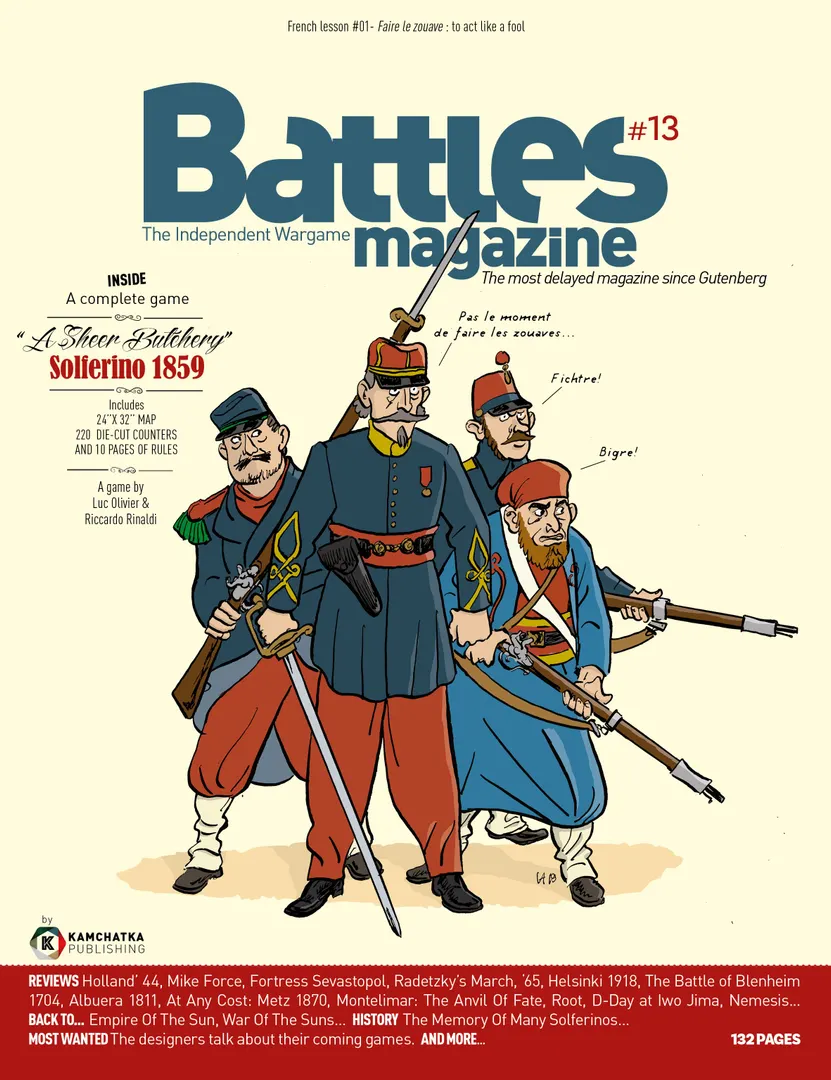
A Sheer Butchery: Solferino 1859
- 2 players
- 180–300 min
- Complexity 2.9/5
- 2019
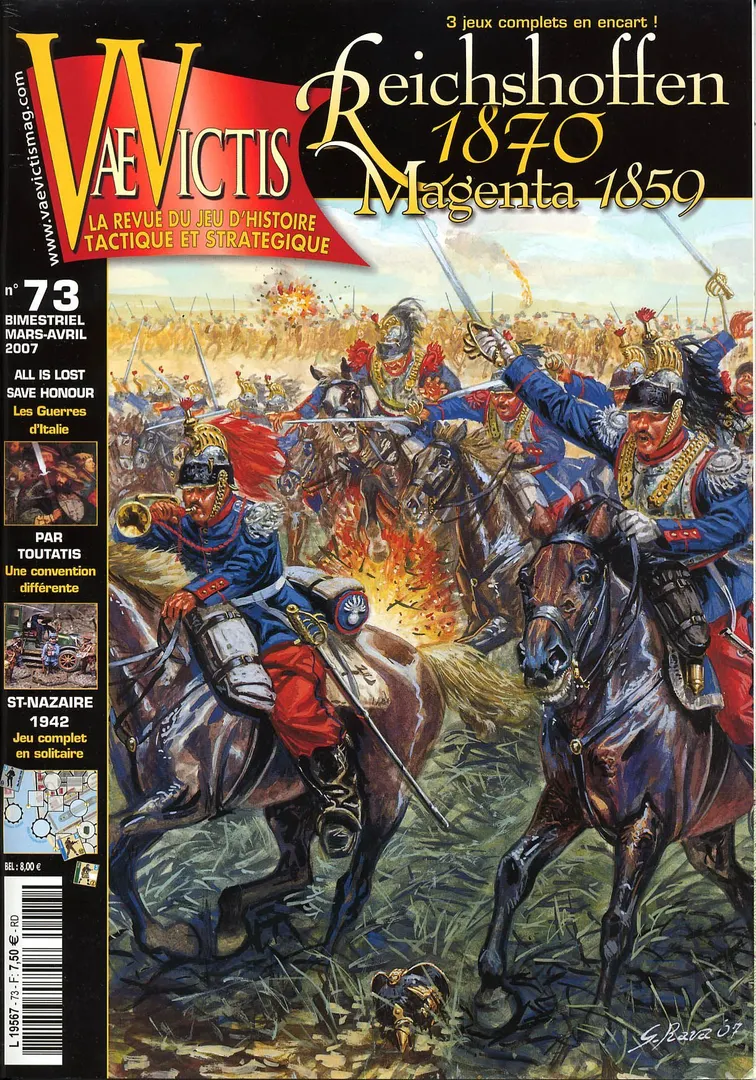
2007
Rules assistance for Magenta 1859
Plain-language explanations of turns, card effects and disputed situations, with official source references and saved question history.
For 2 players
What would you like to know?
Answers come from the official rulebook, with the page to check.
Magenta 1859 is a board game released in 2007 for 2 players and ages 12 and up. It was designed by Philipp Klarmann, Luc Olivier, Riccardo Rinaldi, and Nicolas Zamichiei and its main mechanics are Hexagon Grid.
The Battle of Magenta, June 4, 1859, was the first major clash between France and Austria during the Second Italian War of Independence. Magenta 1859 recreates it using the same rules as Solferino 1859 and Reichshoffen 1870, as well as the same scale (one hour per turn, 600 meters per hex, brigades). Unlike its siblings, the game has almost no special rules. Napoleon III commands the French and, though scarcely comparable to his uncle, well overmatches the Austrians' sluggish and late arriving Count Gyulai. Unfortunately for the French, Napoleon enters far away from the bulk of his forces and takes a long time to get within command range. Until then, formations may move effectively only when their commanders make successful initiative rolls, and the largest French corps suffers from an initiative penalty for the first several hours. (Its commander, General Mac Mahon, moved slowly while waiting for a Sardinian division to come up to cover his open flank. This caution did not, however, prevent him from becoming the hero of the day. The Emperor rewarded him with the title "duc de Magenta".) The battle starts at 10:00 a.m. and lasts 10 turns, with many brigades not arriving until the afternoon. The forces (and the map) are only about half the size of those in Solferino, and the victory conditions are simpler: Each side gets one Victory Point for each hex it holds in the town of Magenta (which has three) plus one for each demoralized enemy corps.
Magenta 1859 supports 2 players according to the catalogue. This is the publisher’s listed player count, so the game is designed for exactly that number of participants. Variants for other group sizes, if any, are described in the rulebook of your edition, so check it before setting up a different configuration.
The catalogue lists Magenta 1859 for ages 12 and up. This is the publisher’s recommendation and reflects reading demands, rule complexity and small components rather than theme alone. Younger players can often join with help from an adult, so check the age guidance on your edition and consider your group’s experience with board games.
Magenta 1859 has a complexity rating of 2.5 out of 5 from BoardGameGeek players, which makes it a medium-light game. The rating reflects how much rules knowledge, planning and decision-making a typical game demands. Expect a longer first teach for heavier games, and use a preparation guide before game night.
Magenta 1859 belongs to these categories: Wargame and Post-Napoleonic. Its main mechanics are Hexagon Grid. Categories describe the theme and setting of a game, while mechanics describe what players actually do on their turns. Each mechanic links to a catalogue hub with similar games, which helps when you want something comparable.
The credited designers of Magenta 1859 are: Philipp Klarmann, Luc Olivier, Riccardo Rinaldi, and Nicolas Zamichiei. These credits come from the published game data and name the people responsible for the game’s design, not its illustrators or publishers. Designer pages on MeepleRules collect other titles by the same designers, which helps when you enjoy a game and want to find similar ones.
The catalogue lists Magenta 1859 as a base game. It can be played on its own with the components in the box and does not require any other title. Expansions, if any exist, add new content or rules on top of it and are listed separately in the catalogue with a link back to this base game.