
- BGG rank
- BGG #8,819
- BGG rating
- 6.0
Ciao, Ciao...
- 2–4 players
- 30 min
- Complexity 1.1/5
- 1997

1981
Rules assistance for Moonstar
Plain-language explanations of turns, card effects and disputed situations, with official source references and saved question history.
What would you like to know?
Answers come from the official rulebook, with the page to check.
Moonstar is a board game released in 1981 for 2–12 players, 30 minutes per game, and ages 12 and up. It was designed by Alex Randolph and its main mechanics are Auction / Bidding, Dice Rolling, and Betting and Bluffing.
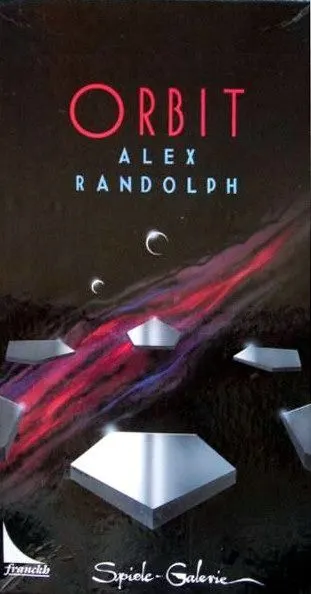



First was published 'Corona' (1974). Moonstar (1981) added planets and variants (variant number 8 is Corona, without sand timer). 'Harun' (1984) is not new game, it is a rethemed copy of Moonstar! 'Orbit' (1993) a new variation including the Corona variations & Harun. Finally, Randolph recycled most of the game into his 'Rasende Roboter' ('Ricochet Robots') (1999) , although the course mechanism and the objective were completely changed. Quite possibly the first "German" game to cross the Atlantic... About the game (from the back of the box) Moonstar is a game unlike any other game for any number of people. All the action is governed by dice, yet there is no luck involved. The dice simply establish the situation. It is up to the players to act upon it. A game with endless variety. Playable by any number of people, from one to a hundred, Moonstar combines numbers calculations, memory, and quick-thinking into a fast-playing, action-packed, exciting contest of pure skill. The board represents the twelve constellations (stars) of the Zodiac and the playing pieces represent moons and planets. Each game consists of a number of rounds of play. In each round, the board and playing pieces are first setup by one of the players. Then the dice are thrown. A one-minute auction period begins. Each player may bid any number of times in the auction or not at all. Each bid, however, must be higher than the previous one. When the one-minute runs out, the highest bidder plays that round. The play of the round also lasts one minute. A player plays a round by placing one die on each moon on the, board and then moving that moon (and die) a number of stars equal to the number of the die. The die is then removed and the moon may not be moved again. This procedure is followed for each moon. The player must move each moon before the time runs out, or those moons which have not been moved may not move. The player's score is then totaled to see if he has made his bid, by scoring a number of points for each moon, depending on which stars and planets they have landed on, If a player makes his bid, he scores a number of points equal to his bid. If he fails, he scores nothing. Rounds are setup and played in this manner until one player has scored enough points to win. But this is only the beginning. Moonstar is actually twelve games in one. Game One is simply the Basic Game. Games Two-Twelve each change one or more parts of Game One, or add something to it. They introduce things like challenging bids, side bets, more moons, more dice, different planet values, no planets. and advanced scoring methods. Includes: 16" x 16" gameboard 15 moon pieces 21 planet pieces 1 minute sand timer 11 6-sided dice rulebook Re-implements: Corona Re-implemented by: Orbit Ricochet Robots
Moonstar supports 2–12 players according to the catalogue. This range comes from the publisher’s listed player count, so the game can be set up for any group size within it. Some setups, rules and scoring details may still vary by player count, so check your edition’s rulebook for the exact configuration.
The listed playing time for Moonstar is 30 minutes. This is the publisher’s estimate for a full game. The actual duration depends on the group, the player count and familiarity with the rules: first sessions usually run longer, while experienced groups often finish faster. Setup and teaching time are not included in this estimate.
The catalogue lists Moonstar for ages 12 and up. This is the publisher’s recommendation and reflects reading demands, rule complexity and small components rather than theme alone. Younger players can often join with help from an adult, so check the age guidance on your edition and consider your group’s experience with board games.
Moonstar has a complexity rating of 1.6 out of 5 from BoardGameGeek players, which makes it a light game. The rating reflects how much rules knowledge, planning and decision-making a typical game demands. Expect a longer first teach for heavier games, and use a preparation guide before game night.
Moonstar belongs to these categories: Dice and Abstract Strategy. Its main mechanics are Auction / Bidding, Dice Rolling, and Betting and Bluffing. Categories describe the theme and setting of a game, while mechanics describe what players actually do on their turns. Each mechanic links to a catalogue hub with similar games, which helps when you want something comparable.
The credited designers of Moonstar are: Alex Randolph. These credits come from the published game data and name the people responsible for the game’s design, not its illustrators or publishers. Designer pages on MeepleRules collect other titles by the same designers, which helps when you enjoy a game and want to find similar ones.
The catalogue lists Moonstar as a base game. It can be played on its own with the components in the box and does not require any other title. Expansions, if any exist, add new content or rules on top of it and are listed separately in the catalogue with a link back to this base game.