
- BGG rating
- 6.9
MUNERA: Ars Dimicandi
- Complexity 3.0/5
- 2011
2010
Rules assistance for MUNERA: Familia Gladiatoria
Plain-language explanations of turns, card effects and disputed situations, with official source references and saved question history.
For 2 players
What would you like to know?
Answers come from the official rulebook, with the page to check.
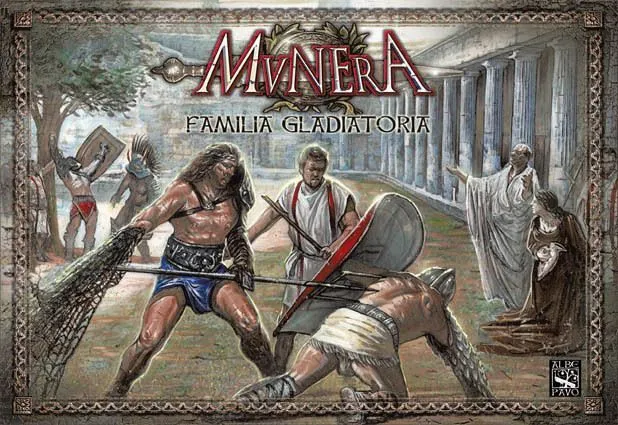
MUNERA: Familia Gladiatoria is a board game released in 2010 for 2–4 players, 90 minutes per game, and ages 10 and up. It was designed by Matteo Santus and its main mechanics are Trading, Auction / Bidding, and Dice Rolling.




MUNERA: Familia Gladiatoria is a boardgame for 2-4 players in which you will play the role of a lanista, an ancient world entrepreneur who has decided to invest his wealth in the constitution of a Gymnasium of Gladiators with the aim of making it the most glorious of the Empire. You will recruit trainers, armourers, medics and even prostitutes. You will train free men, slaves, criminals and war prisoners to become gladiators and you will bring them to fight in the arenas throughout Italy. You will manage not only the duels, but the whole life of your gladiators: lead your champions to glory! Unwinding of a game In the first round, after a short preparation, the Players take their Gladiators to the arenas for brief introductory Shows: they approach the first challenges of their champions and place their bets on life or death of duelists. After this initial stage, the game takes on its regular sequence. In the first phase, called Forum phase, Players will play aggressive auction for what the market has to offer them: athletes for training and professionals for Gymansium’s management. In the second phase, called Munus phase, the Players play the Spectacles, trying to participate with their best Gladiators. Not all spectacles are equal: some have more money gain, others provide more glory. The Players need to make the best choices! During the Spectacles, you will fight the duels of Gladiators. Just like a lanista of two thousand years ago, you will manage many duels and you will place bets and tampering to obtain money. Duel by duel, your Gladiators will grow and become stronger and more popular. Which Gym will be able to prevail and become the most glorious of the ancient world? Familia Gladiatoria is the first in a series of games that aim to recreate the whole cruel and multiform world of Imperial Rome spectacles. The MUNERA series will allow you to live not only the training of Gladiators and their challenges, but also the hunts in the arena and the chariots in the Circus Maximus.
MUNERA: Familia Gladiatoria supports 2–4 players according to the catalogue. This range comes from the publisher’s listed player count, so the game can be set up for any group size within it. Some setups, rules and scoring details may still vary by player count, so check your edition’s rulebook for the exact configuration.
The listed playing time for MUNERA: Familia Gladiatoria is 90 minutes. This is the publisher’s estimate for a full game. The actual duration depends on the group, the player count and familiarity with the rules: first sessions usually run longer, while experienced groups often finish faster. Setup and teaching time are not included in this estimate.
The catalogue lists MUNERA: Familia Gladiatoria for ages 10 and up. This is the publisher’s recommendation and reflects reading demands, rule complexity and small components rather than theme alone. Younger players can often join with help from an adult, so check the age guidance on your edition and consider your group’s experience with board games.
MUNERA: Familia Gladiatoria has a complexity rating of 3.0 out of 5 from BoardGameGeek players, which makes it a medium-weight game. The rating reflects how much rules knowledge, planning and decision-making a typical game demands. Expect a longer first teach for heavier games, and use a preparation guide before game night.
MUNERA: Familia Gladiatoria belongs to these categories: Fighting, Economic, and Ancient. Its main mechanics are Trading, Auction / Bidding, and Dice Rolling. Categories describe the theme and setting of a game, while mechanics describe what players actually do on their turns. Each mechanic links to a catalogue hub with similar games, which helps when you want something comparable.
The credited designers of MUNERA: Familia Gladiatoria are: Matteo Santus. These credits come from the published game data and name the people responsible for the game’s design, not its illustrators or publishers. Designer pages on MeepleRules collect other titles by the same designers, which helps when you enjoy a game and want to find similar ones.
The catalogue lists MUNERA: Familia Gladiatoria as a base game. It can be played on its own with the components in the box and does not require any other title. Expansions, if any exist, add new content or rules on top of it and are listed separately in the catalogue with a link back to this base game.