
- BGG rating
- 8.0
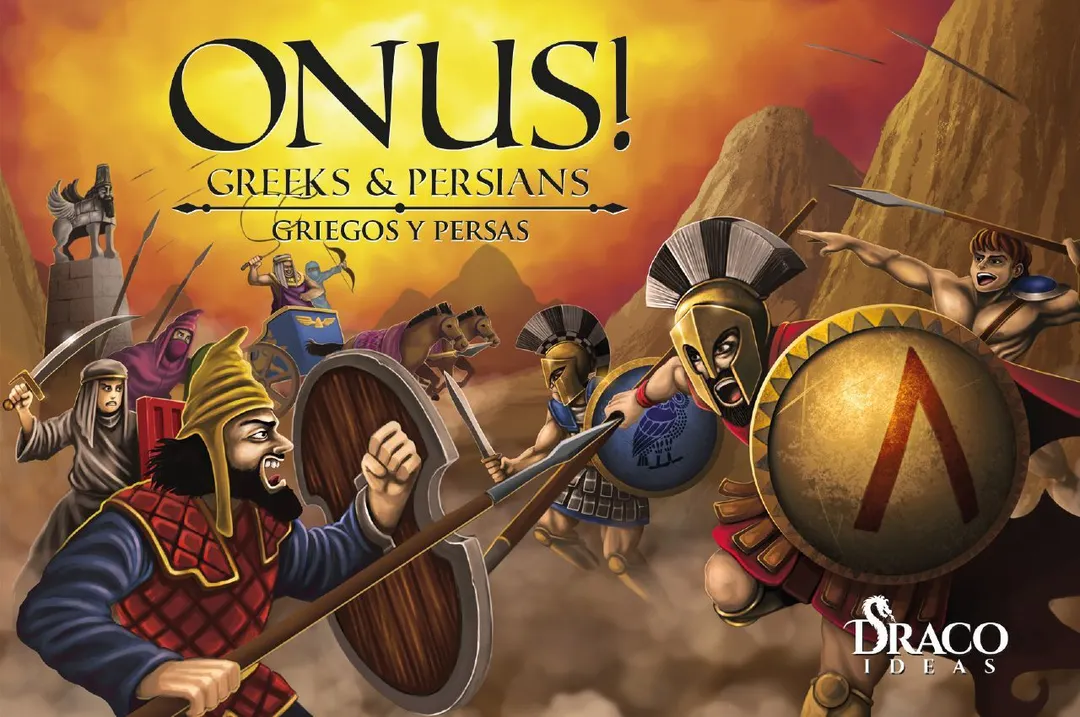
ONUS! Greeks & Persians
- 1–4 players
- 30–120 min
- Complexity 3.5/5
- 2016
2014
Rules assistance for ONUS! Rome Vs Carthage
Plain-language explanations of turns, card effects and disputed situations, with official source references and saved question history.
For 1 player
What would you like to know?
Answers come from the official rulebook, with the page to check.
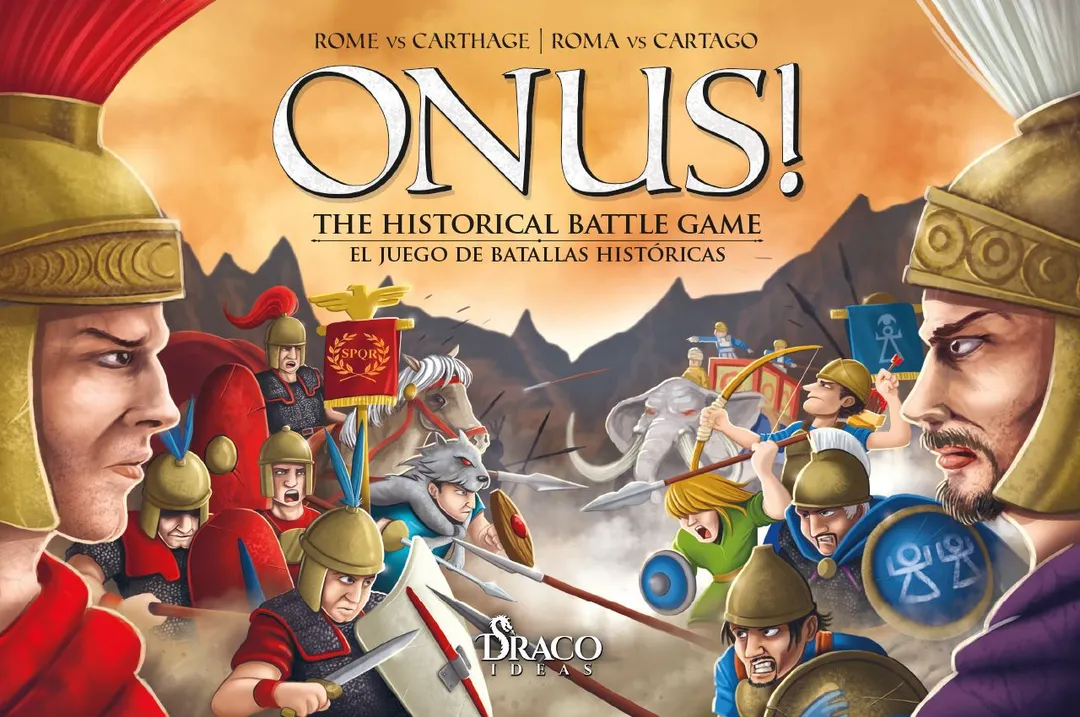
ONUS! Rome Vs Carthage is a board game released in 2014 for 1–4 players, 60 minutes per game, and ages 12 and up. It was designed by Luis Álvaro Hernández and Alvar Sanz and its main mechanics are Dice Rolling, Simultaneous Action Selection, and Open Drafting.


Have you ever dreamed of commanding a powerful army? Have you ever imagined leading troops, which included elephants over the Pyrenees and the Alps to try to conquer Rome? Have you enjoyed a good historical novel dated on the old Republic of Rome, and you would like to travel to that time? ONUS! Rome Vs Carthage is a war game similar to miniatures games in which both sides fight an ancient battle. The game is mainly based on the II Punic war, although battles from III to I B.C centuries can be also simulated. The game concept combines both, orders and events cards, that makes each game different and each combat becomes unpredictable and thrilling. ONUS! can be played anywhere but to get the best gaming experience we do recommend a game area as large as possible, i.e. 3.2 x 2.9 feet (100 x 90 cm). Units are represented by cards which have been scaled around a Centuria (also known as Century) or to a Maniple (also known as Manipulus), representing formations from 80 to 100 men for Infantry units, 20 cavalrymen for Cavalry units or 6 Elephants. Units have their own set of traits to represent permanent attributes of the unit, like Melee Combat, Range Attack, Defensive capacity, Morale and Life, and Movement capacity. This set of traits gets bonuses and penalties depending on the ongoing situation and combat engagements. Units also have their unique set of skills to represent specific abilities they can perform: from defensive formations to extremely effective techniques to attack enemies. Some of these skills need to be activated, meaning only one of them can be used in an engagement, while others are inherent to the units. Leadership is represented in the game by the figure of the General. A General’s token represent his HQ and its own escort. In addition to the leadership benefit, a General grants bonuses to nearby units, boosting the morale of the troops and providing additional benefits when they are engaged with the enemy in those bloody encounters. Both, Hannibal and Scipio, two well-known Generals are included in the game with their unique set of bonuses! Also, Heroes, Veterans and Elite units take part in Onus! ONUS! Rome Vs Carthage is played in turns, composed by six different phases each: 1. Activation of Units: in this phase, the active player can play any number of Order cards from his hand, stating what units are going to be used during the turn. 2. Movement and Charges: in this phase, the active player may move all those units activated in the previous phase. Those units finishing their movement in contact with enemy units, may Charge against them. 3. Range Attack: those active units able to carry out Ranged Attacks and which haven’t moved or executed a Reduced Movement may shoot enemies within its maximum range. Also, special units like Skirmirsher have this skill, thus they may want to use this ability. 4. Skirmishers: units having these specific skill can harass enemy units, provided they haven't spent all their movement points. 5. Combat: All engagements are resolved in this phase, being the active player the one choosing the order of combats. 6. Flee Movement: units fleeing continue their movement if Morale checks fail.
ONUS! Rome Vs Carthage supports 1–4 players according to the catalogue. This range comes from the publisher’s listed player count, so the game can be set up for any group size within it. Some setups, rules and scoring details may still vary by player count, so check your edition’s rulebook for the exact configuration.
The listed playing time for ONUS! Rome Vs Carthage is 60 minutes. This is the publisher’s estimate for a full game. The actual duration depends on the group, the player count and familiarity with the rules: first sessions usually run longer, while experienced groups often finish faster. Setup and teaching time are not included in this estimate.
The catalogue lists ONUS! Rome Vs Carthage for ages 12 and up. This is the publisher’s recommendation and reflects reading demands, rule complexity and small components rather than theme alone. Younger players can often join with help from an adult, so check the age guidance on your edition and consider your group’s experience with board games.
ONUS! Rome Vs Carthage has a complexity rating of 2.8 out of 5 from BoardGameGeek players, which makes it a medium-light game. The rating reflects how much rules knowledge, planning and decision-making a typical game demands. Expect a longer first teach for heavier games, and use a preparation guide before game night.
ONUS! Rome Vs Carthage belongs to these categories: Wargame, Miniatures, and Ancient. Its main mechanics are Dice Rolling, Simultaneous Action Selection, and Open Drafting. Categories describe the theme and setting of a game, while mechanics describe what players actually do on their turns. Each mechanic links to a catalogue hub with similar games, which helps when you want something comparable.
The credited designers of ONUS! Rome Vs Carthage are: Luis Álvaro Hernández and Alvar Sanz. These credits come from the published game data and name the people responsible for the game’s design, not its illustrators or publishers. Designer pages on MeepleRules collect other titles by the same designers, which helps when you enjoy a game and want to find similar ones.
The catalogue lists ONUS! Rome Vs Carthage as a base game. It can be played on its own with the components in the box and does not require any other title. Expansions, if any exist, add new content or rules on top of it and are listed separately in the catalogue with a link back to this base game.