- BGG rating
- 7.3
Rules assistance for Pampero: Project Verne
Plain-language explanations of turns, card effects and disputed situations, with official source references and saved question history.
- 2–4 players
- 50–150 min
- 14+

Rules assistant for Pampero: Project Verne
What would you like to know?
Answers come from the official rulebook, with the page to check.
Pampero: Project Verne is an expansion for Pampero released in 2026 for 2–4 players, 50–150 minutes per game, and ages 14 and up. It was designed by Julián Pombo and its main mechanics are Hand Management, Set Collection, and Income.
About the game
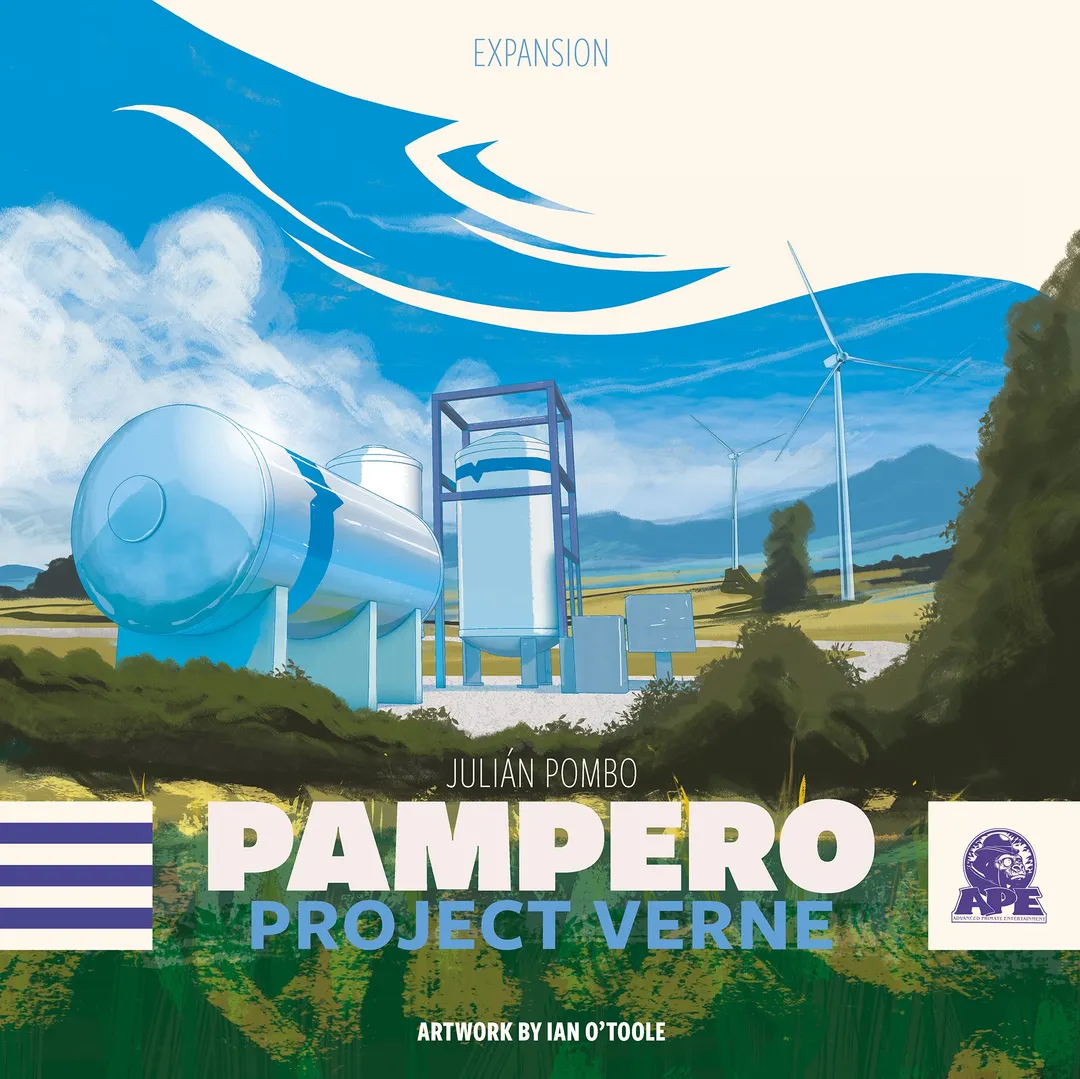
Uruguay did not rest on its laurels after trailblazing the country's conversion to renewable wind and solar energy. Now they're working to convert the transportation and heavy industry sectors to renewable hydrogen energy! Code-named Project Verne, this effort will once again set a new clean energy standard for the world! The Project Verne expansion to Pampero includes several new ways to play. Use some or all of the rules and components, including: CO2 - An abundance of cards and tiles to support the introduction of CO2 into the game. Gain CO2 tokens when building wind farms and use those tokens to help pay for electrical towers. Tokens can also be spent after 1st and 2nd scoring for various bonuses. H2 - Used together with the CO2 rules and components, H2 provides numerous rules and components to support production of H2 fuel containers that can be delivered to local markets or exported via tanker ships. Innovations and Freelancers - Hundreds of cards, wooden tokens, tiles, and other components! New bonus actions can be combined to explore different strategies and create powerful combos. Low-Tech Towers - Tiles are not added to the tower bonus board during setup. Instead, new electrical tower bonus tiles are placed beside the board at the start of the game. Players take the board's pre-printed bonus, then add the new low-tech tower tiles. These new tiles remain on the board and provide a permanent bonus like the pre-printed bonuses. Events - Event tiles are added to the board under the first and second scoring and provide new effects after scoring. Lots, lots more! —description from the publisher
Questions and answers
Pampero: Project Verne supports 2–4 players according to the catalogue. This range comes from the publisher’s listed player count, so the game can be set up for any group size within it. Some setups, rules and scoring details may still vary by player count, so check your edition’s rulebook for the exact configuration.
The listed playing time for Pampero: Project Verne is 50–150 minutes. This is the publisher’s estimate for a full game. The actual duration depends on the group, the player count and familiarity with the rules: first sessions usually run longer, while experienced groups often finish faster. Setup and teaching time are not included in this estimate.
The catalogue lists Pampero: Project Verne for ages 14 and up. This is the publisher’s recommendation and reflects reading demands, rule complexity and small components rather than theme alone. Younger players can often join with help from an adult, so check the age guidance on your edition and consider your group’s experience with board games.
Pampero: Project Verne belongs to these categories: Card Game, Economic, and Expansion for Base-game. Its main mechanics are Hand Management, Set Collection, and Income. Categories describe the theme and setting of a game, while mechanics describe what players actually do on their turns. Each mechanic links to a catalogue hub with similar games, which helps when you want something comparable.
The credited designers of Pampero: Project Verne are: Julián Pombo. These credits come from the published game data and name the people responsible for the game’s design, not its illustrators or publishers. Designer pages on MeepleRules collect other titles by the same designers, which helps when you enjoy a game and want to find similar ones.
The catalogue lists Pampero: Project Verne as an expansion for Pampero. Expansions add new content, rules or scenarios to the base game and usually cannot be played on their own, so you need Pampero to use it. Check that your edition of Pampero is compatible, as some expansions were revised between editions.