
- BGG rank
- BGG #3,024
- BGG rating
- 6.5
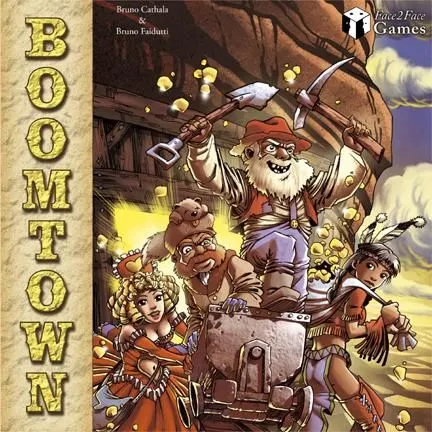
Boomtown
- 3–5 players
- 30 min
- Complexity 1.7/5
- 2004
2019
Rules assistance for Pappy Winchester
Plain-language explanations of turns, card effects and disputed situations, with official source references and saved question history.
For 3 players
What would you like to know?
Answers come from the official rulebook, with the page to check.
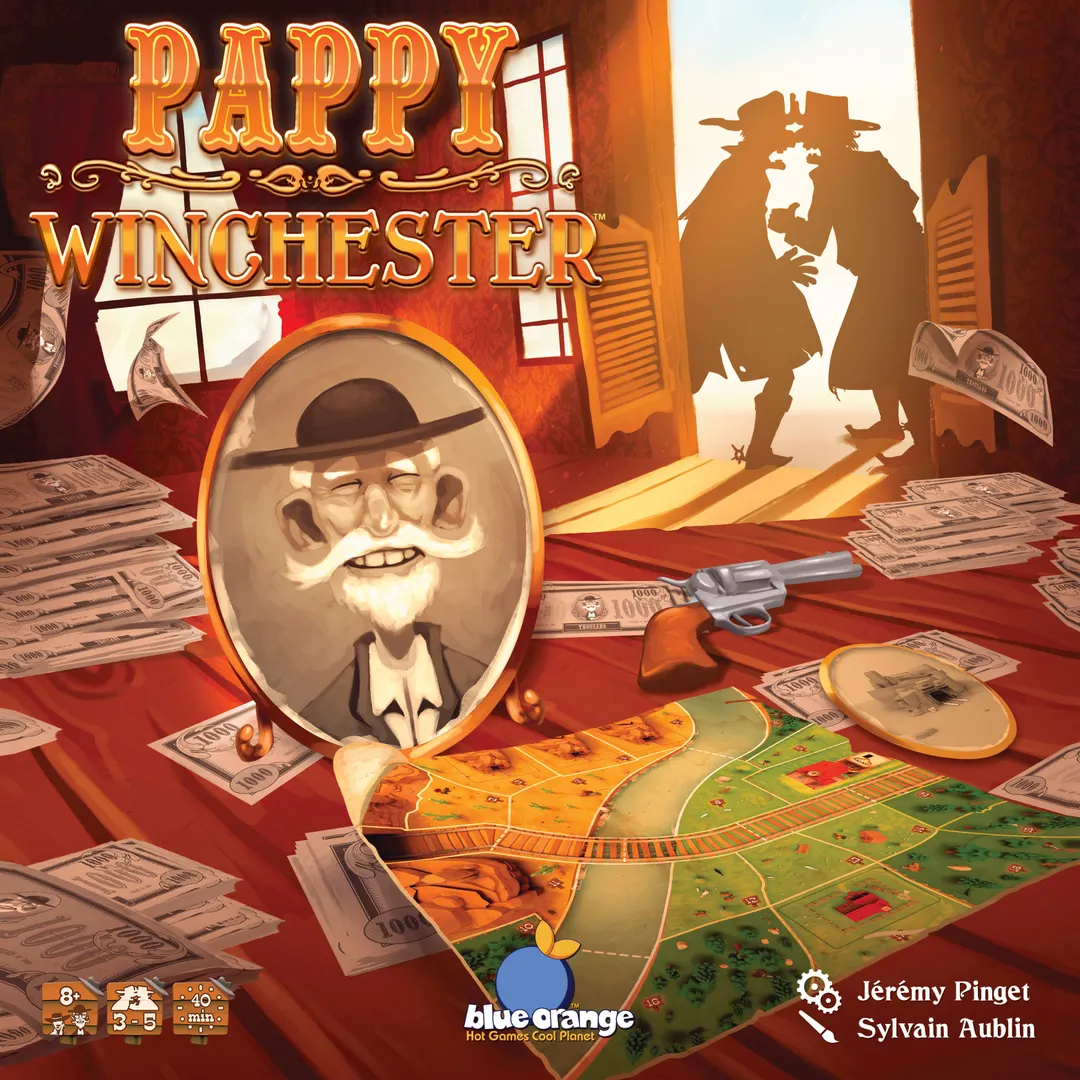
Pappy Winchester is a board game released in 2019 for 3–5 players, 40 minutes per game, and ages 8 and up. It was designed by Jérémy Pinget and its main mechanics are Set Collection and Auction / Bidding.







Pappy Winchester has kicked the bucket! Poor thing, he was the king of swindlers and everyone knows he was filthy rich! His final wish was that his descendants would share his fortune and the plots of his ranch, with the richest becoming the new head of the family. After all, for him the most important thing was that his money stayed in the family! Pappy thought of everything and left an outline of his belongings. In Pappy Winchester, you and the other heirs are now assembled around this map to divvy up Pappy's possessions... The game board features 19 plots of land, divided into seven desert plots, six prairie plots, and six forest plots, with train tracks and a river running crossways through the land, and a saloon set apart from everything else. To set up play, give each player $8,000 and two secret objective cards, then place a bonus token face down on each plot of land. On a turn, the active player draws a plot token at random, then players hold an auction for that plot, with the winner marking it with one of their tokens, then revealing the bonus token and carrying out its effects. This token might let you look at the face-down mine or ranch cards to determine the value of those plots; move the train or boat along the tracks or river, with players owning properties adjacent to this vehicle's location earning money; or collect funds from the saloon. The winner of the auction then divides their bid as equally as possible among all other players, with any remainder being placed on the saloon. Each player starts the game with a duel token, and when a player is involved in an auction that's down to them and someone else, they can decide to sped that token. If they do, a third player shuffles two duel cards — one showing a gun being fired, and the other not — then each bidder takes one of them, with the player holding the firing gun winning the auction. Five piles of banknotes are laid out at the start of play, with a different shared objective card placed on each pile. If the completion of an auction allows a player to meet one or more of the objectives, such as owning one of each type of land or having three plots that don't touch the river, then that player claims the banknotes under that card. After the 19th auction, players reveal their secret objectives, earning money for how well they've met those goals, and whoever owns the most plots of land receives $5,000. Whoever now holds the most money wins! —description from the publisher
Pappy Winchester supports 3–5 players according to the catalogue. This range comes from the publisher’s listed player count, so the game can be set up for any group size within it. Some setups, rules and scoring details may still vary by player count, so check your edition’s rulebook for the exact configuration.
The listed playing time for Pappy Winchester is 40 minutes. This is the publisher’s estimate for a full game. The actual duration depends on the group, the player count and familiarity with the rules: first sessions usually run longer, while experienced groups often finish faster. Setup and teaching time are not included in this estimate.
The catalogue lists Pappy Winchester for ages 8 and up. This is the publisher’s recommendation and reflects reading demands, rule complexity and small components rather than theme alone. Younger players can often join with help from an adult, so check the age guidance on your edition and consider your group’s experience with board games.
Pappy Winchester has a complexity rating of 1.6 out of 5 from BoardGameGeek players, which makes it a light game. The rating reflects how much rules knowledge, planning and decision-making a typical game demands. Expect a longer first teach for heavier games, and use a preparation guide before game night.
Pappy Winchester belongs to these categories: Bluffing and American West. Its main mechanics are Set Collection and Auction / Bidding. Categories describe the theme and setting of a game, while mechanics describe what players actually do on their turns. Each mechanic links to a catalogue hub with similar games, which helps when you want something comparable.
The credited designers of Pappy Winchester are: Jérémy Pinget. These credits come from the published game data and name the people responsible for the game’s design, not its illustrators or publishers. Designer pages on MeepleRules collect other titles by the same designers, which helps when you enjoy a game and want to find similar ones.
The catalogue lists Pappy Winchester as a base game. It can be played on its own with the components in the box and does not require any other title. Expansions, if any exist, add new content or rules on top of it and are listed separately in the catalogue with a link back to this base game.