- BGG rank
- BGG #9,918
- BGG rating
- 6.1
Rage
1995
Rules assistance for Rage
Plain-language explanations of turns, card effects and disputed situations, with official source references and saved question history.
- 2–6 players
- 45 min
- 12+
- Complexity 2.4/5

For 2 players
Rules assistant for Rage
What would you like to know?
Answers come from the official rulebook, with the page to check.
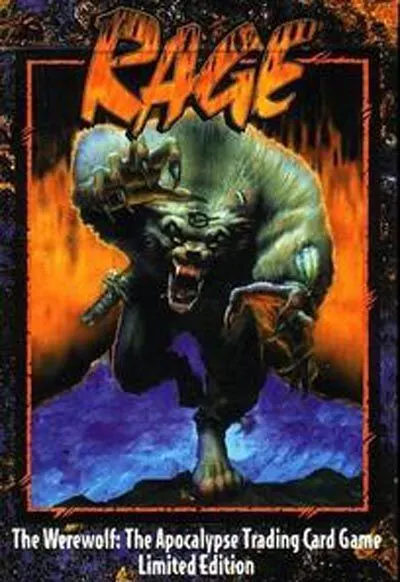
Rage is a board game released in 1995 for 2–6 players, 45 minutes per game, and ages 12 and up. It was designed by Mike Tinney and Steve Wieck.
About the game
Publisher Blurb These are the last days. Gaia is dying. The Apocalypse is here. Will you fall defending her or die a cowards death? Will your pack live in legend as the ones who saved the world, or those who betrayed it? Is today a good day to die? Take control of a pack of Garou, savage werewolves, as they battle the forces of the Wyrm in defense of Mother Earth, Gaia. Call upon ancient spirit pacts, mystical abilities, and the tools of the modern world to destroy the forces of corruption that threaton to plunge the world into eternal darkness and decay. But not every Garou agrees how best to save Gaia. Is it best done through force? Through renewing the traditions and spirit pacts of old? Through mystical means? Or should the Garou just adapt to the new age and help Gaia change to fit into the new world? Or sell out and play a pack of Wyrm creatures hell bent on seeing that the Wyrm is the final victor in the coming Apocalypse. But not even the forces of the Wyrm can agree on their methods. Should they concentrate on corrupting humans and Garou to do the Wyrm's bidding? Should they fight the Garou claw to claw? Or should they win the war by destroying every last thing the Garou love and cherish? Gameplay Each player has two decks. One deck is his "Sept" hand. This is composed of allies, equipment, fetishes, events, victims, gifts, quests, and several other card types depending on which expansions you are using. The other deck is a combat deck showing special maneuvers which are used when two characters are engaged in combat. Play begins with each player laying out his pack (collection of Character cards). These are all the characters the player will have for that game. The game ends when one pack achieves the same number of Renown as they had starting Renown. Typically, players start with a 20 Renown pack (each character has a Renown) and thus the game ends when someone has 20 renown in their victory pile. Play is simultaneous, with all players taking actions at the same time - conflicts are generally resolved based on the renown of the character taking an action; well known characters go first. The game is split into several phases: Redraw - draw your Sept hand back to 5 cards Regeneration - heal characters that have been hurt Resource - play most cards like gifts, equipment etc. Umbra - play special umbra cards and actions Moot - play special cards which may change rules. These must be voted on by all players. Combat - resolve any fights. Each round a player designates one of his characters as Alpha. The Alpha becomes the primary actor for that round. During the combat round, Alphas may: 1) Attack another Alpha 2) Attack a victim 3) Attack an enemy 4) Challenge an ally or a non-Alpha character 5) Attack a territory 6) Do nothing. Combat is resolved using a separate deck which allows special maneuvers. Renown (victory points) are earned by defeating rival characters and enemies. Some packs may reverse the rules and gain victory by defeating victims. Renown can also be earned from moots and quests.
Designers
Publishers
- White Wolf Publishing, Inc.
Questions and answers
Rage supports 2–6 players according to the catalogue. This range comes from the publisher’s listed player count, so the game can be set up for any group size within it. Some setups, rules and scoring details may still vary by player count, so check your edition’s rulebook for the exact configuration.
The listed playing time for Rage is 45 minutes. This is the publisher’s estimate for a full game. The actual duration depends on the group, the player count and familiarity with the rules: first sessions usually run longer, while experienced groups often finish faster. Setup and teaching time are not included in this estimate.
The catalogue lists Rage for ages 12 and up. This is the publisher’s recommendation and reflects reading demands, rule complexity and small components rather than theme alone. Younger players can often join with help from an adult, so check the age guidance on your edition and consider your group’s experience with board games.
Rage has a complexity rating of 2.4 out of 5 from BoardGameGeek players, which makes it a medium-light game. The rating reflects how much rules knowledge, planning and decision-making a typical game demands. Expect a longer first teach for heavier games, and use a preparation guide before game night.
Rage belongs to these categories: Card Game, Fighting, and Horror. Categories describe the theme, setting and style of a game rather than its rules. Filter the catalogue by the same category to find similar games when you enjoyed Rage and want something comparable for your next game night.
The credited designers of Rage are: Mike Tinney and Steve Wieck. These credits come from the published game data and name the people responsible for the game’s design, not its illustrators or publishers. Designer pages on MeepleRules collect other titles by the same designers, which helps when you enjoy a game and want to find similar ones.
The catalogue lists Rage as a base game. It can be played on its own with the components in the box and does not require any other title. Expansions, if any exist, add new content or rules on top of it and are listed separately in the catalogue with a link back to this base game.