
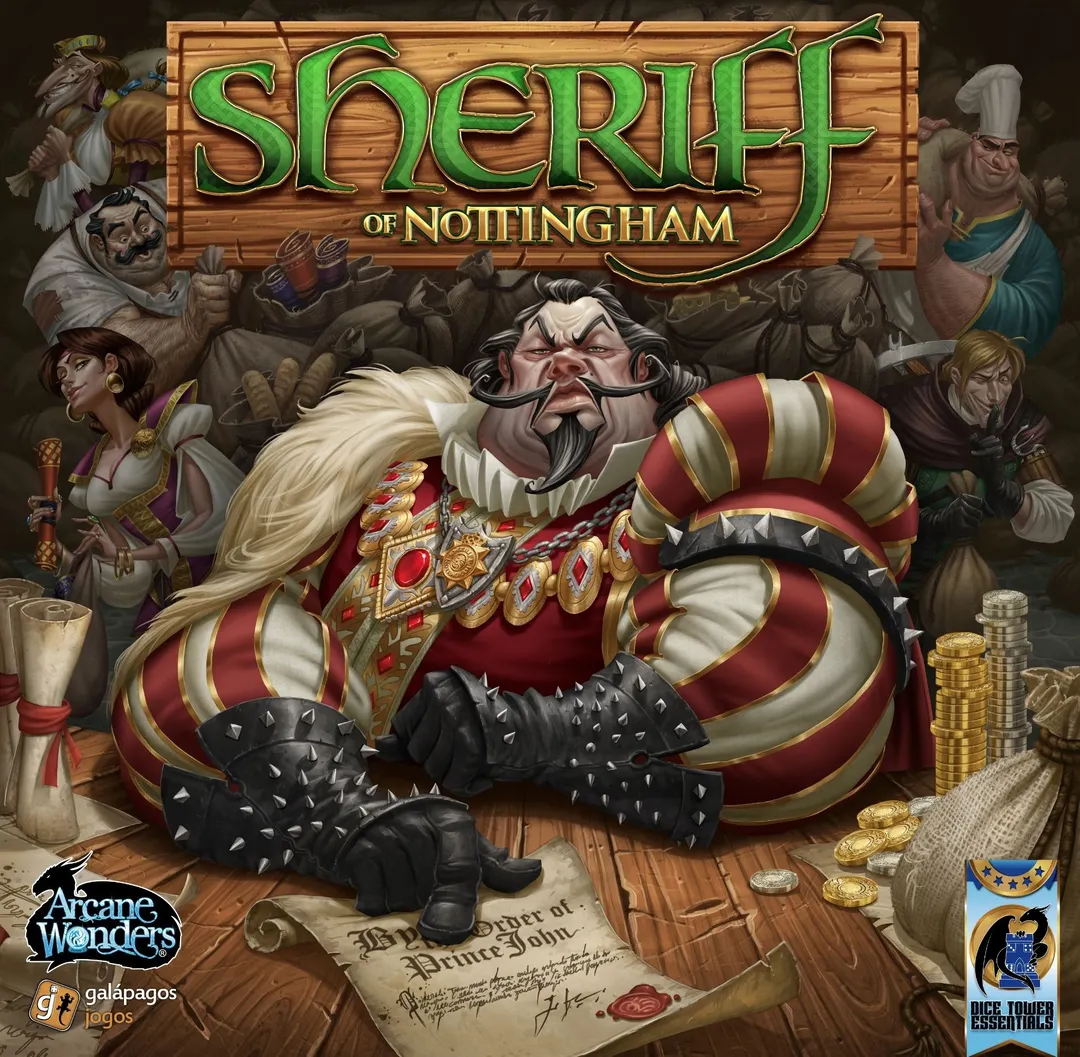
- BGG rank
- BGG #623
- BGG rating
- 7.0
Sheriff of Nottingham
- 3–5 players
- 60 min
- Complexity 1.7/5
- 2014
1920
Rules assistance for Riichi Mahjong
Plain-language explanations of turns, card effects and disputed situations, with official source references and saved question history.
For 3 players
What would you like to know?
Answers come from the official rulebook, with the page to check.
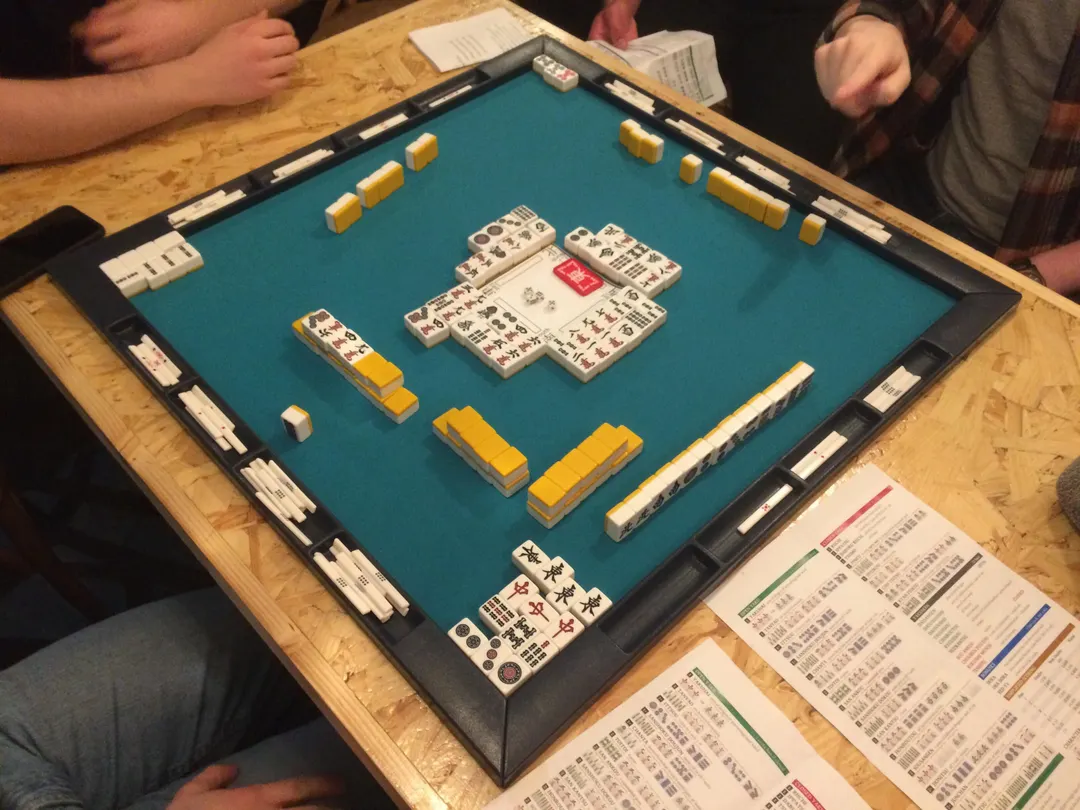
Riichi Mahjong is a board game released in 1920 for 3–4 players, 60–120 minutes per game, and ages 8 and up. Its main mechanics are Hand Management, Set Collection, and Betting and Bluffing.





Japanese Mahjong, especially called Riichi Mahjong (リーチ・マージャン), is a very specific remake from Japan of the traditional Chinese Mahjong. It is as close and yet far from Chinese Mahjong as Shôgi (Japanese Chess) can be the same and yet different from original Chess. Mahjong was brought to Japan in 1904, but the Riichi form that is used in modern times probably originated from the 1920s. Today, the worldwide famous Mahjong Association officially recognized the complete rules of Riichi Mahjong for Tournaments. The main differences are : 1) The 1-Yaku minimum: In order to win a hand, it can only be validated when your hand has at least one of the Yaku (specific hand combinations) in it. 2) Dora: A specific bonus tiles are indicated by the flipped tile from the dead wall and providing other possible Han bonus. 3) Riichi: When a player is Tenpai (one tile away from having a Mahjong hand, valid or not), he can bet a 1000 points chip to add one Yaku to his hand (thus validating a possible invalid hand). Winning with a Riichi hand allows access to the hidden ura-dora, which is an added dora indicator located underneath the revealed dora tile. 4) Abortive draws: Specific conditions, which ends a hand without winning prior to the drawing of all tiles, aside from the dead wall. 5) Scoring system: Much more complex than in Chinese Mahjong, it is based on hand combinations (Yaku) providing multipliers (Han) that combine with some other circumstantial points like the type of tiles in the hand (Fu) for any 4 han or less. The combination of Han and Fu correspond to a chart (and even an equation) to finally produce the hand's scoring points (Ten). Some other minor elements in the Riichi Mahjong differ from the original Mahjong but are not important enough to be fully mentioned, like the Red 5 tiles (a non-official variant sometimes used which gives bonus like the Dora) or the validation of some Yaku (when the hand must be kept hidden or not, depending on the Japanese region where the game is played).
Riichi Mahjong supports 3–4 players according to the catalogue. This range comes from the publisher’s listed player count, so the game can be set up for any group size within it. Some setups, rules and scoring details may still vary by player count, so check your edition’s rulebook for the exact configuration.
The listed playing time for Riichi Mahjong is 60–120 minutes. This is the publisher’s estimate for a full game. The actual duration depends on the group, the player count and familiarity with the rules: first sessions usually run longer, while experienced groups often finish faster. Setup and teaching time are not included in this estimate.
The catalogue lists Riichi Mahjong for ages 8 and up. This is the publisher’s recommendation and reflects reading demands, rule complexity and small components rather than theme alone. Younger players can often join with help from an adult, so check the age guidance on your edition and consider your group’s experience with board games.
Riichi Mahjong has a complexity rating of 3.6 out of 5 from BoardGameGeek players, which makes it a medium-weight game. The rating reflects how much rules knowledge, planning and decision-making a typical game demands. Expect a longer first teach for heavier games, and use a preparation guide before game night.
Riichi Mahjong belongs to these categories: Abstract Strategy. Its main mechanics are Hand Management, Set Collection, and Betting and Bluffing. Categories describe the theme and setting of a game, while mechanics describe what players actually do on their turns. Each mechanic links to a catalogue hub with similar games, which helps when you want something comparable.
The catalogue lists Riichi Mahjong as a base game. It can be played on its own with the components in the box and does not require any other title. Expansions, if any exist, add new content or rules on top of it and are listed separately in the catalogue with a link back to this base game.