- BGG rank
- BGG #17,686
- BGG rating
- 7.5
Sepoy Mutiny: The Great Indian Rebellion (1857-58)
2019
Rules assistance for Sepoy Mutiny: The Great Indian Rebellion (1857-58)
Plain-language explanations of turns, card effects and disputed situations, with official source references and saved question history.
- 2 players
- Complexity 2.8/5

For 2 players
Rules assistant for Sepoy Mutiny: The Great Indian Rebellion (1857-58)
What would you like to know?
Answers come from the official rulebook, with the page to check.
Sepoy Mutiny: The Great Indian Rebellion (1857-58) is a board game released in 2019 for 2 players. It was designed by Joseph Miranda and its main mechanics are Dice Rolling, Grid Movement, and Hexagon Grid.
About the game
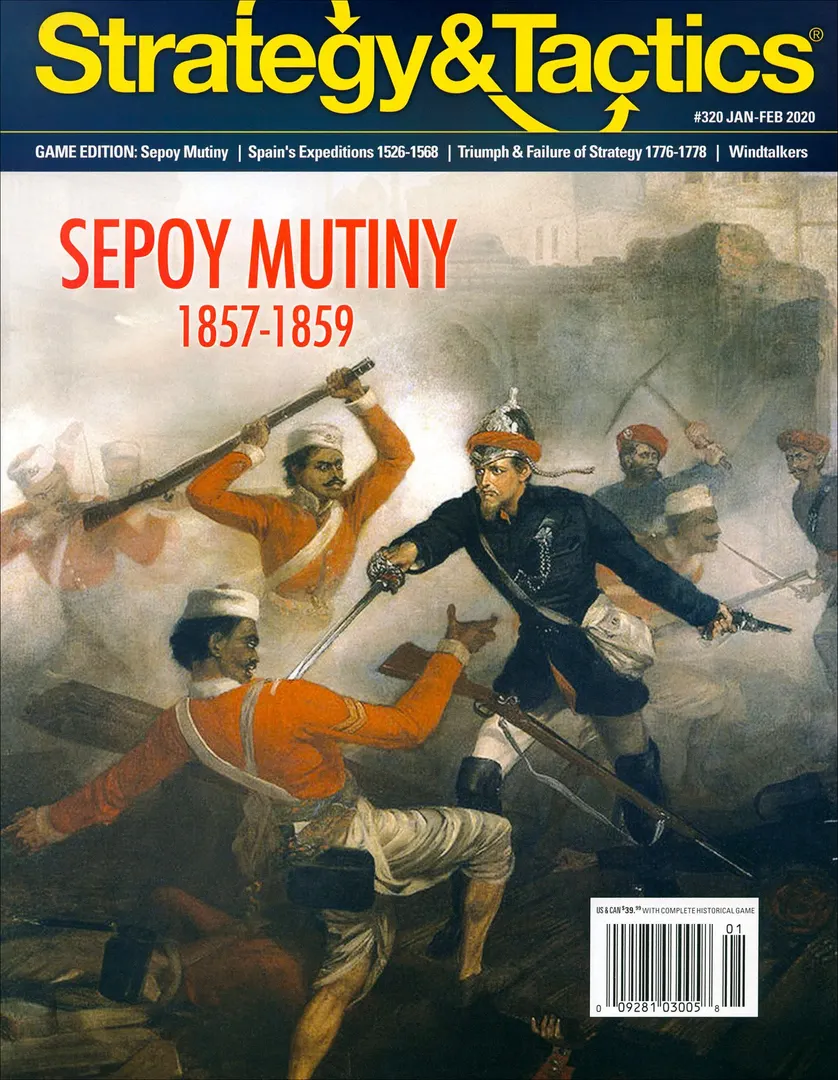
Sepoy Mutiny: The Great Indian Rebellion (1857-58) is a two-player wargame simulating the rebellion of Sepoy troops in the British Indian Empire in 1857-58. One player represents the British command, and the other the leadership of the Rebels. Both sides are trying to gain control of India. The game system is based on the one originally presented in our earlier S&T games: They Died with Their Boots On, Volumes 1 & 2 (S&T 236 & 242). It uses an interactive sequence of play in which command, rebellions and events are randomly generated. The British Empire player controls British Regular, Punjab (including Sikh), Loyal Sepoy, Auxiliary and Nepalese forces. The Rebels initially control no forces but will gain them from Sepoy and Rebel Badmashes units which mutiny. Both players can also mobilize various Princely State forces. Each turn represents roughly two months of time. Each hexagon is about 40 miles across. Each unit represents anywhere from 2000 to 10,000 troops. Leaders represent major commanders, their staffs, and guard troops. Components: One 22" x 34" map & 176 counters Magazine: Strategy & Tactics #320
Categories
Designers
Publishers
- Decision Games (I)
Questions and answers
Sepoy Mutiny: The Great Indian Rebellion (1857-58) supports 2 players according to the catalogue. This is the publisher’s listed player count, so the game is designed for exactly that number of participants. Variants for other group sizes, if any, are described in the rulebook of your edition, so check it before setting up a different configuration.
Sepoy Mutiny: The Great Indian Rebellion (1857-58) has a complexity rating of 2.8 out of 5 from BoardGameGeek players, which makes it a medium-light game. The rating reflects how much rules knowledge, planning and decision-making a typical game demands. Expect a longer first teach for heavier games, and use a preparation guide before game night.
Sepoy Mutiny: The Great Indian Rebellion (1857-58) belongs to these categories: Wargame and Post-Napoleonic. Its main mechanics are Dice Rolling, Grid Movement, and Hexagon Grid. Categories describe the theme and setting of a game, while mechanics describe what players actually do on their turns. Each mechanic links to a catalogue hub with similar games, which helps when you want something comparable.
The credited designers of Sepoy Mutiny: The Great Indian Rebellion (1857-58) are: Joseph Miranda. These credits come from the published game data and name the people responsible for the game’s design, not its illustrators or publishers. Designer pages on MeepleRules collect other titles by the same designers, which helps when you enjoy a game and want to find similar ones.
The catalogue lists Sepoy Mutiny: The Great Indian Rebellion (1857-58) as a base game. It can be played on its own with the components in the box and does not require any other title. Expansions, if any exist, add new content or rules on top of it and are listed separately in the catalogue with a link back to this base game.