
- BGG rank
- BGG #9,089
- BGG rating
- 6.5
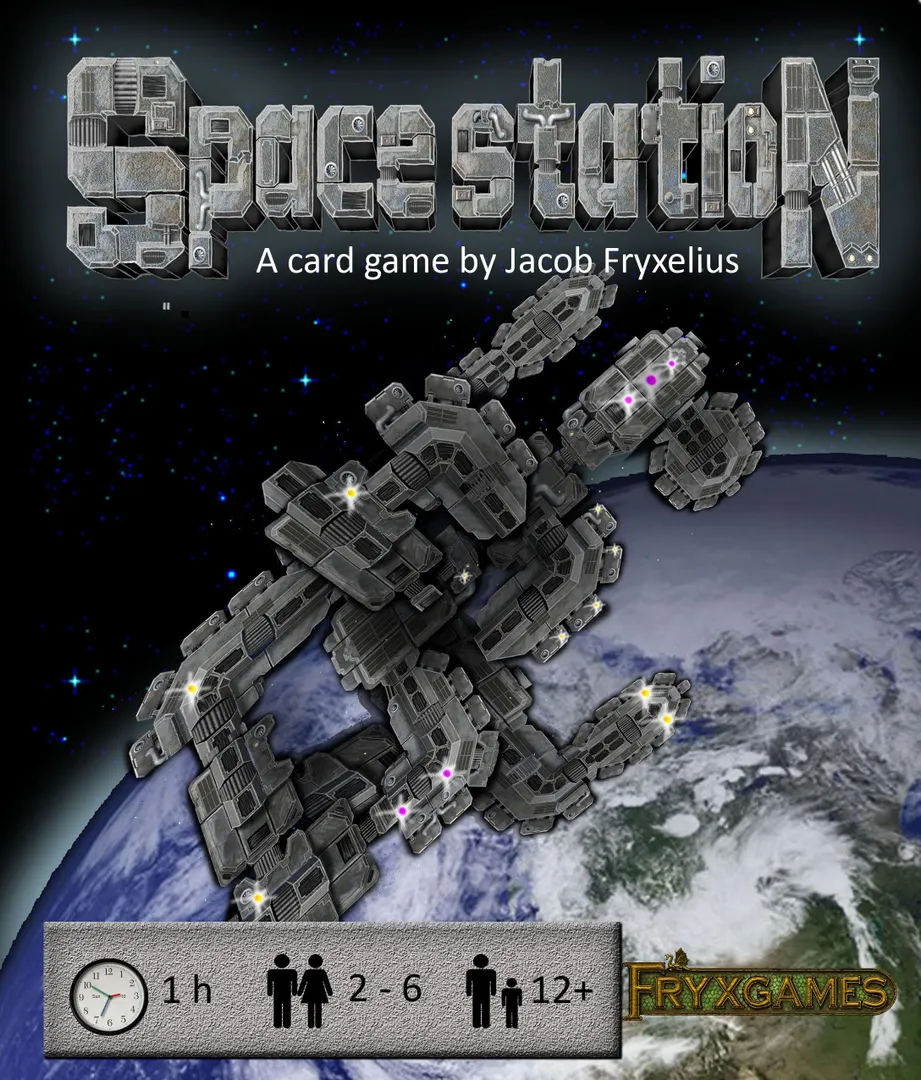
Space Station
- 2–6 players
- 60 min
- Complexity 2.2/5
- 2011
2021
Rules assistance for Star Scrappers: Orbital
Plain-language explanations of turns, card effects and disputed situations, with official source references and saved question history.
For 1 player
What would you like to know?
Answers come from the official rulebook, with the page to check.
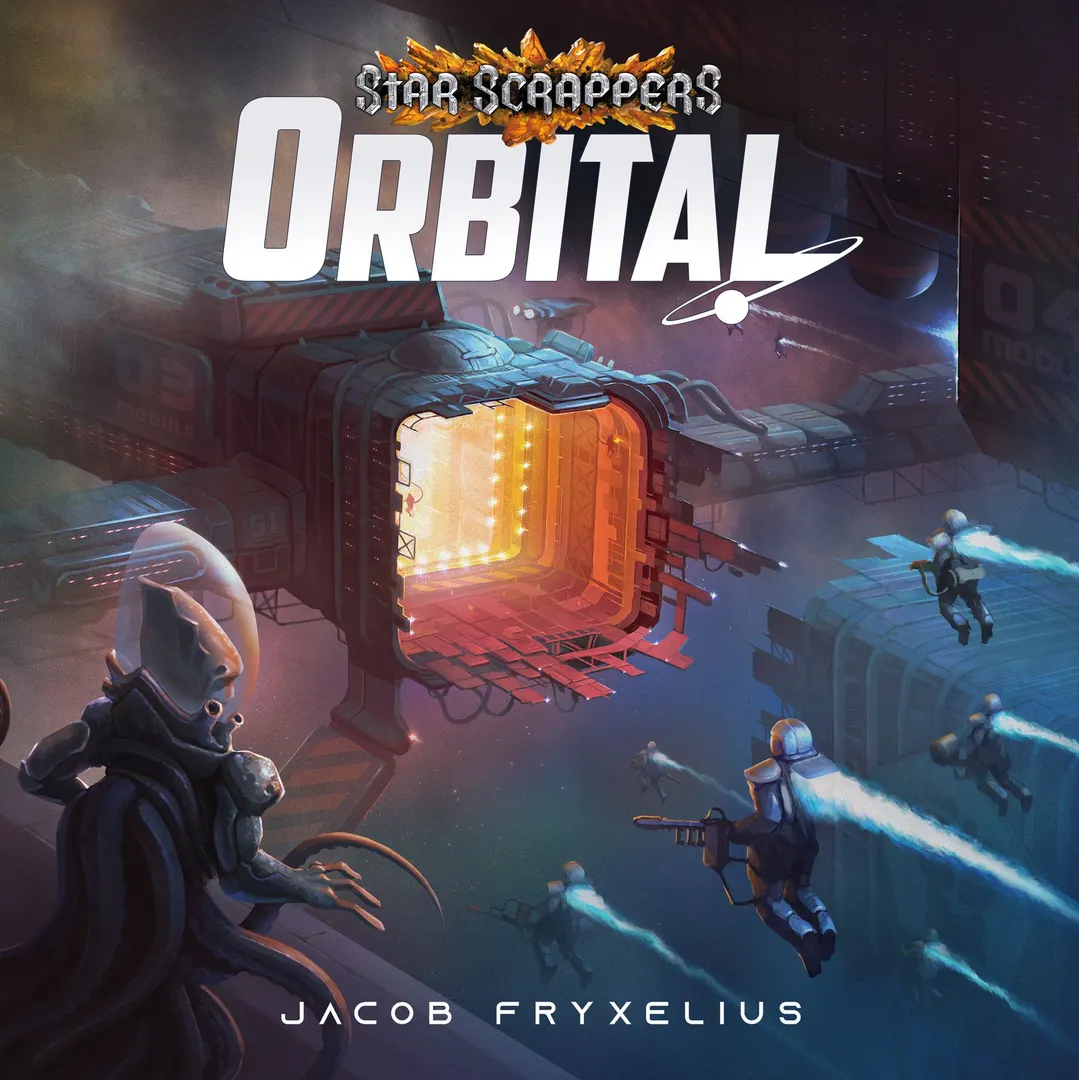
Star Scrappers: Orbital is a board game released in 2021 for 1–5 players, 30–90 minutes per game, and ages 10 and up. It was designed by Jacob Fryxelius and its main mechanics are Hand Management, Pattern Building, and Worker Placement.
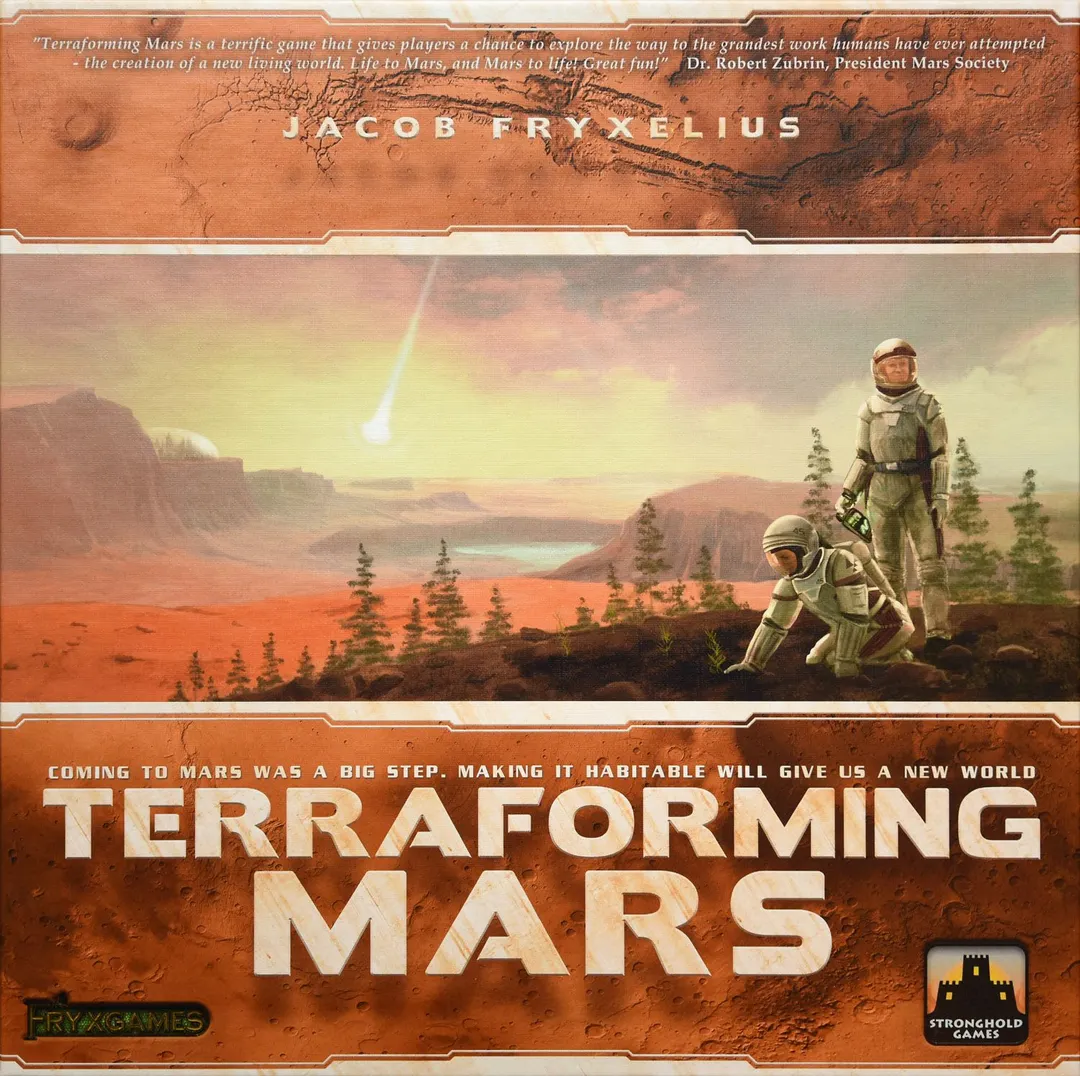



Star Scrappers: Orbital by Jacob Fryxelius, the designer of Terraforming Mars, is based on his Space Station card game, which has been mechanically streamlined, updated and re-themed to fit the Star Scrappers universe - a space western setting created and developed by Hexy Studio. You start your space station (Orbital) with a core module tile on the table, then over five years (rounds) you expand it by paying and placing new module cards. Each year you start with a five card hand, crew tokens and new money, with the amount of crew and money determined by the structure of your orbital. You use money primarily to pay for new modules, and the crew gives you special effects on many of your modules. During the year, the players take turns doing actions such as building, using module actions, playing event cards, repairing or passing. When everyone passes, the year ends and victory points are awarded: there are six kinds (colors) of modules and for each kind, the player(s) with the most modules of that kind is awarded a victory point. At the end of the fifth year, the player with most victory point wins. Background story: Welcome to the Star Scrappers universe! Have a seat and get comfortable in the commander chair on a Space Station - one of many that are being constructed in the asteroid belt called the Sybil Cloud. Deposits of Hexis - the most desired mineral in the entire Galaxy - have been discovered there, attracting numerous daredevils willing to extract the precious crystals. Miners have to live somewhere, so you and your corporation are here to provide them with accommodation and, naturally, to get rich! Terrons: Terrons, the space station builders, are descendants of the humans who came to this galaxy a long time ago. Over a thousand years, united in the Interstellar Terron Federation, they have colonized many corners of the universe. The democratic system of the Terron society has encouraged the creation of many independent structures, such as corporations, commercial consortiums and mercenary guilds. By making contact with different alien species, they have caused their civilization to flourish and their influence to spread. At the base of their success lies ambition. Ambition that knows no bounds. This trait of character drives Terrons ever forward, to conquer new territories, to discover the unknown, to push the frontier of the Federation another step further. Their military forces are well-known across the Central Sector, as they strike fear in the hearts of alien beings inhabiting the Galaxy. They became famous during the two Hy’Dran Wars, proving unshaken and well-trained. Even now, in times of peace, the Terron fleet remains ready to defend their territories. And their businesses. Other inhabitants of the Galaxy: In the distant future, countless alien species explore the Galaxy in search of fortune and fame. The last interstellar war with the Hy’Dran Empire ended over fifty years ago and since then peace treaties have been in power. Newly discovered cosmic nations, like the cybernetic Biosses and the expansive Weedlocks, are beginning to influence the fate of the Galaxy, while the inhabitants of ancient planets, such as the mechanical Metanels and the mysterious Minegglers, are once again striving to achieve their goals.
Star Scrappers: Orbital supports 1–5 players according to the catalogue. This range comes from the publisher’s listed player count, so the game can be set up for any group size within it. Some setups, rules and scoring details may still vary by player count, so check your edition’s rulebook for the exact configuration.
The listed playing time for Star Scrappers: Orbital is 30–90 minutes. This is the publisher’s estimate for a full game. The actual duration depends on the group, the player count and familiarity with the rules: first sessions usually run longer, while experienced groups often finish faster. Setup and teaching time are not included in this estimate.
The catalogue lists Star Scrappers: Orbital for ages 10 and up. This is the publisher’s recommendation and reflects reading demands, rule complexity and small components rather than theme alone. Younger players can often join with help from an adult, so check the age guidance on your edition and consider your group’s experience with board games.
Star Scrappers: Orbital has a complexity rating of 2.2 out of 5 from BoardGameGeek players, which makes it a medium-light game. The rating reflects how much rules knowledge, planning and decision-making a typical game demands. Expect a longer first teach for heavier games, and use a preparation guide before game night.
Star Scrappers: Orbital belongs to these categories: Card Game, Science Fiction, and Space Exploration. Its main mechanics are Hand Management, Pattern Building, and Worker Placement. Categories describe the theme and setting of a game, while mechanics describe what players actually do on their turns. Each mechanic links to a catalogue hub with similar games, which helps when you want something comparable.
The credited designers of Star Scrappers: Orbital are: Jacob Fryxelius. These credits come from the published game data and name the people responsible for the game’s design, not its illustrators or publishers. Designer pages on MeepleRules collect other titles by the same designers, which helps when you enjoy a game and want to find similar ones.
The catalogue lists Star Scrappers: Orbital as a base game. It can be played on its own with the components in the box and does not require any other title. Expansions, if any exist, add new content or rules on top of it and are listed separately in the catalogue with a link back to this base game.