
- BGG rating
- 7.3
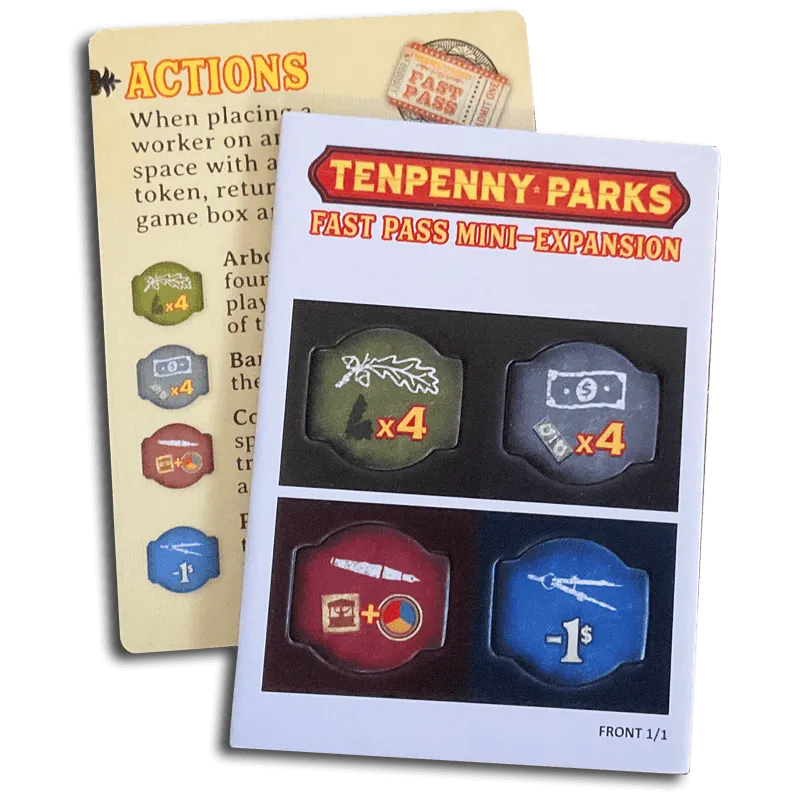
Tenpenny Parks: Fast Pass Mini Expansion
- 1–4 players
- 45–75 min
- Complexity 1.0/5
- 2023
2022
Rules assistance for Tenpenny Parks
Plain-language explanations of turns, card effects and disputed situations, with official source references and saved question history.
For 1 player
What would you like to know?
Answers come from the official rulebook, with the page to check.
Tenpenny Parks is a board game released in 2022 for 1–4 players, 45–75 minutes per game, and ages 10 and up. It was designed by Nate Linhart and its main mechanics are Set Collection, Income, and Tile Placement.
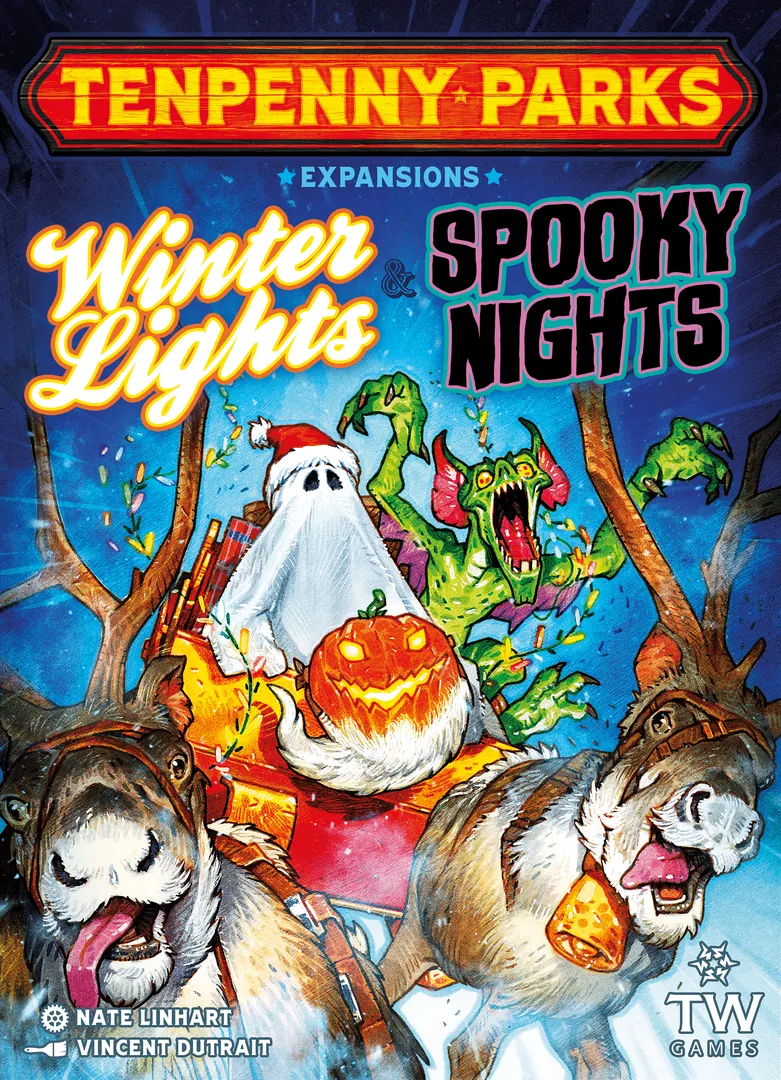
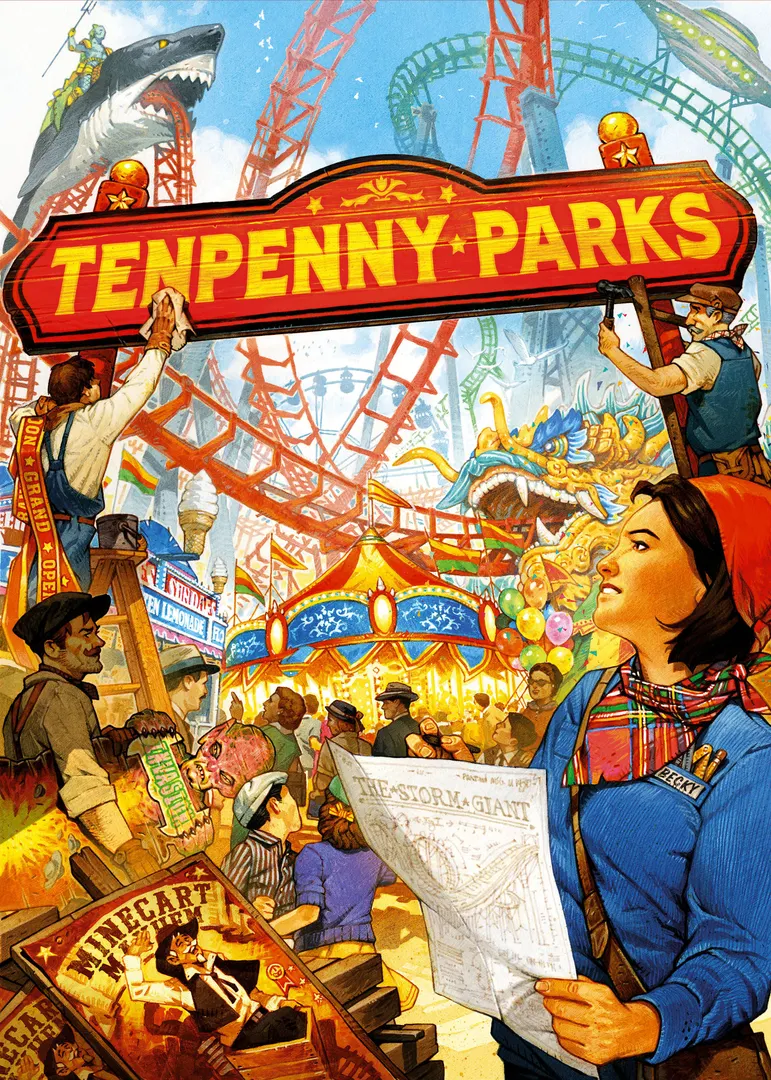
At dawn, the trumpets sound, Mayor Tenpenny’s shovel breaks ground, and the race is on! You have five months to transform the humble town of Fairview into the home of the world’s greatest theme parks. Gather your team of bankers, realtors, contractors, builders, and arborists. Construct rides through the stone age, the American old west, the age of fantasy, the cosmos of space, and the depths of the sea. Inspire thrill, awe, and joy in your guests to earn their tickets, for whoever attracts the most visitors at the end of the race will be awarded Fairview’s Golden Key! Tenpenny Parks is a worker placement and polyomino tile game where you'll compete for Visiting People (VP) by building the best theme park full of rides, treats, and greenery. Over the course of five rounds (months) you'll race to construct the most enticing park by assigning your workers to purchase improvements, clear land, and add to your funds. Race up the emotion tracks to earn crucial rewards like an extra worker, money, or the first player marker for the next round. Before each round, one player gets to rotate the carousel, altering the prices of the attractions in the market. Cleverly arrange the pricing to benefit yourself and give your opponents some tough choices! Place a worker on a carousel space to purchase an available attraction. Don't overspend- be sure to save a little cash at the end of the round to spend on advertising your new attractions to attract more visitors. Place your newly acquired attractions and concessions on your player board. Placing them over certain areas of your board could earn extra benefits, but those lovely trees on your grounds can sure get in the way! Will you assign a worker to cut some down, or try to build around them? Plan your placements carefully, because these tiles cannot share an edge! After all, your visitors need space to stroll freely through your park, and they enjoy a break in the shade of a tree. After five months, tally up your VP earned from your attractions, secret individual goals, emotion tracks, and other bonuses. The player with the most VP tokens wins! —description from the publisher
Tenpenny Parks supports 1–4 players according to the catalogue. This range comes from the publisher’s listed player count, so the game can be set up for any group size within it. Some setups, rules and scoring details may still vary by player count, so check your edition’s rulebook for the exact configuration.
The listed playing time for Tenpenny Parks is 45–75 minutes. This is the publisher’s estimate for a full game. The actual duration depends on the group, the player count and familiarity with the rules: first sessions usually run longer, while experienced groups often finish faster. Setup and teaching time are not included in this estimate.
The catalogue lists Tenpenny Parks for ages 10 and up. This is the publisher’s recommendation and reflects reading demands, rule complexity and small components rather than theme alone. Younger players can often join with help from an adult, so check the age guidance on your edition and consider your group’s experience with board games.
Tenpenny Parks has a complexity rating of 2.2 out of 5 from BoardGameGeek players, which makes it a medium-light game. The rating reflects how much rules knowledge, planning and decision-making a typical game demands. Expect a longer first teach for heavier games, and use a preparation guide before game night.
Tenpenny Parks belongs to these categories: City Building. Its main mechanics are Set Collection, Income, and Tile Placement. Categories describe the theme and setting of a game, while mechanics describe what players actually do on their turns. Each mechanic links to a catalogue hub with similar games, which helps when you want something comparable.
The credited designers of Tenpenny Parks are: Nate Linhart. These credits come from the published game data and name the people responsible for the game’s design, not its illustrators or publishers. Designer pages on MeepleRules collect other titles by the same designers, which helps when you enjoy a game and want to find similar ones.
The catalogue lists Tenpenny Parks as a base game. It can be played on its own with the components in the box and does not require any other title. Expansions, if any exist, add new content or rules on top of it and are listed separately in the catalogue with a link back to this base game.