
- BGG rank
- BGG #26
- BGG rating
- 8.2
A Feast for Odin
- 1–4 players
- 30–120 min
- Complexity 3.9/5
- 2016
2016
Rules assistance for The King's Abbey
Plain-language explanations of turns, card effects and disputed situations, with official source references and saved question history.
For 1 player
What would you like to know?
Answers come from the official rulebook, with the page to check.
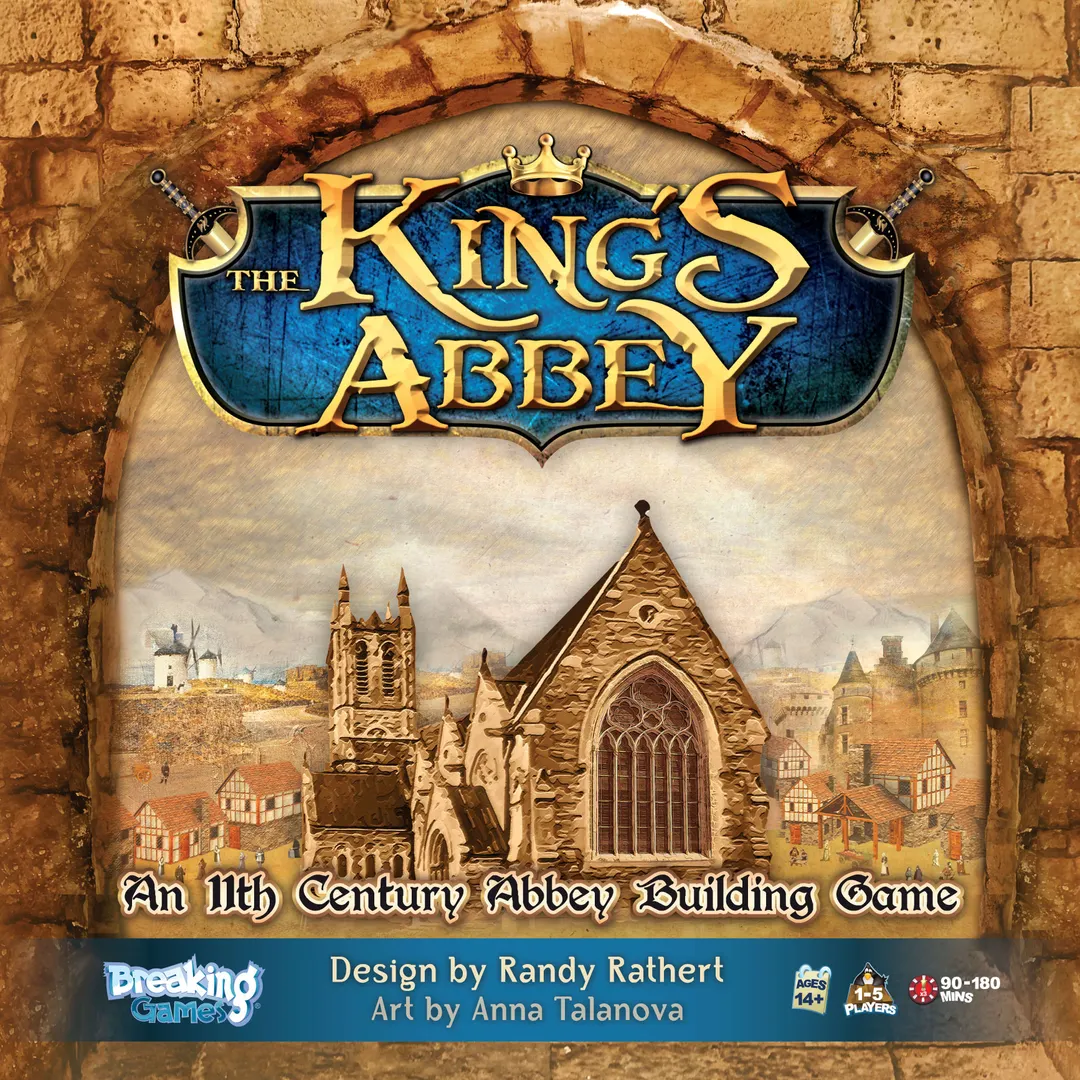
The King's Abbey is a board game released in 2016 for 1–5 players, 90–180 minutes per game, and ages 14 and up. It was designed by Randy Rathert and its main mechanics are Dice Rolling and Worker Placement.
In AD 1096, hope fills the air like a bird's song after a long winter, the seeming endless road of the Dark Ages may soon come to an end. For years now, warlords have roamed the land, every surface is covered with filth, and disease has ripped through towns like great tornadoes. King Sivolc has dreamed that building a great gothic structure is the answer to leave this Dark Age behind forever. But for the last decade, there has been a massive decline in the building activity, and hardly any great cultural achievements have been made. Recently, while on one of his crusades, King Sivolc met a master architect named Elias. Elias told the King about his devotion to the mortar arts and how he longed to build a structure so great that people would travel hundreds of miles just to gaze at it. This meeting created a spark that ignited the King’s dream with a fire that would burn away even the darkest of days forever. King Sivolc looks on from his castle and watches with great expectation as his dream becomes a reality. With Elias’ help, he has hired some of the greatest architects and monks in the land to complete this task. He waits patiently for this great abbey to be raised from the earth, filled with people, changing the course of history forever! The King's Abbey is a worker placement/resource management game in which each player has their own player board that represents the abbey they have been tasked to build. Players take charge of monks that are represented by ten dice as they go out and gather resources, go on crusades, construct buildings, train clergy, bring in peasants, and defend their abbey against the darkness. Each player does this by rolling their dice and then assigning each die (monk) to different places on their player board, resource boards, and crusade cards. The places on the player boards will bring in peasants and train clergy. The places on the resource boards will give them wood, grain, stone, and sand for building the various parts of their individual abbeys. Each player receives prestige (victory points) for completing crusades and constructing various things in their abbey such as towers and different kinds of buildings. The game proceeds over a total of seven rounds where the "darkness" becomes greater each round. The darkness represents things like depression, famine, raiders attacking, and other things that the Dark Ages brought with it. You fight the darkness by keeping the defenses of your abbey strong. Players are trying to have the most prestige than any other player by the end of the seventh round. After seven rounds, players add up all prestige earned. Whoever has the most prestige wins the game!
The King's Abbey supports 1–5 players according to the catalogue. This range comes from the publisher’s listed player count, so the game can be set up for any group size within it. Some setups, rules and scoring details may still vary by player count, so check your edition’s rulebook for the exact configuration.
The listed playing time for The King's Abbey is 90–180 minutes. This is the publisher’s estimate for a full game. The actual duration depends on the group, the player count and familiarity with the rules: first sessions usually run longer, while experienced groups often finish faster. Setup and teaching time are not included in this estimate.
The catalogue lists The King's Abbey for ages 14 and up. This is the publisher’s recommendation and reflects reading demands, rule complexity and small components rather than theme alone. Younger players can often join with help from an adult, so check the age guidance on your edition and consider your group’s experience with board games.
The King's Abbey has a complexity rating of 3.3 out of 5 from BoardGameGeek players, which makes it a medium-weight game. The rating reflects how much rules knowledge, planning and decision-making a typical game demands. Expect a longer first teach for heavier games, and use a preparation guide before game night.
The King's Abbey belongs to these categories: Medieval. Its main mechanics are Dice Rolling and Worker Placement. Categories describe the theme and setting of a game, while mechanics describe what players actually do on their turns. Each mechanic links to a catalogue hub with similar games, which helps when you want something comparable.
The credited designers of The King's Abbey are: Randy Rathert. These credits come from the published game data and name the people responsible for the game’s design, not its illustrators or publishers. Designer pages on MeepleRules collect other titles by the same designers, which helps when you enjoy a game and want to find similar ones.
The catalogue lists The King's Abbey as a base game. It can be played on its own with the components in the box and does not require any other title. Expansions, if any exist, add new content or rules on top of it and are listed separately in the catalogue with a link back to this base game.