- BGG rating
- 7.3
Lord of the Rings: Friends & Foes
- 2–5 players
- 90 min
- Complexity 2.7/5
- 2001
2000
Rules assistance for The Lord of the Rings
Plain-language explanations of turns, card effects and disputed situations, with official source references and saved question history.
For 2 players
What would you like to know?
Answers come from the official rulebook, with the page to check.
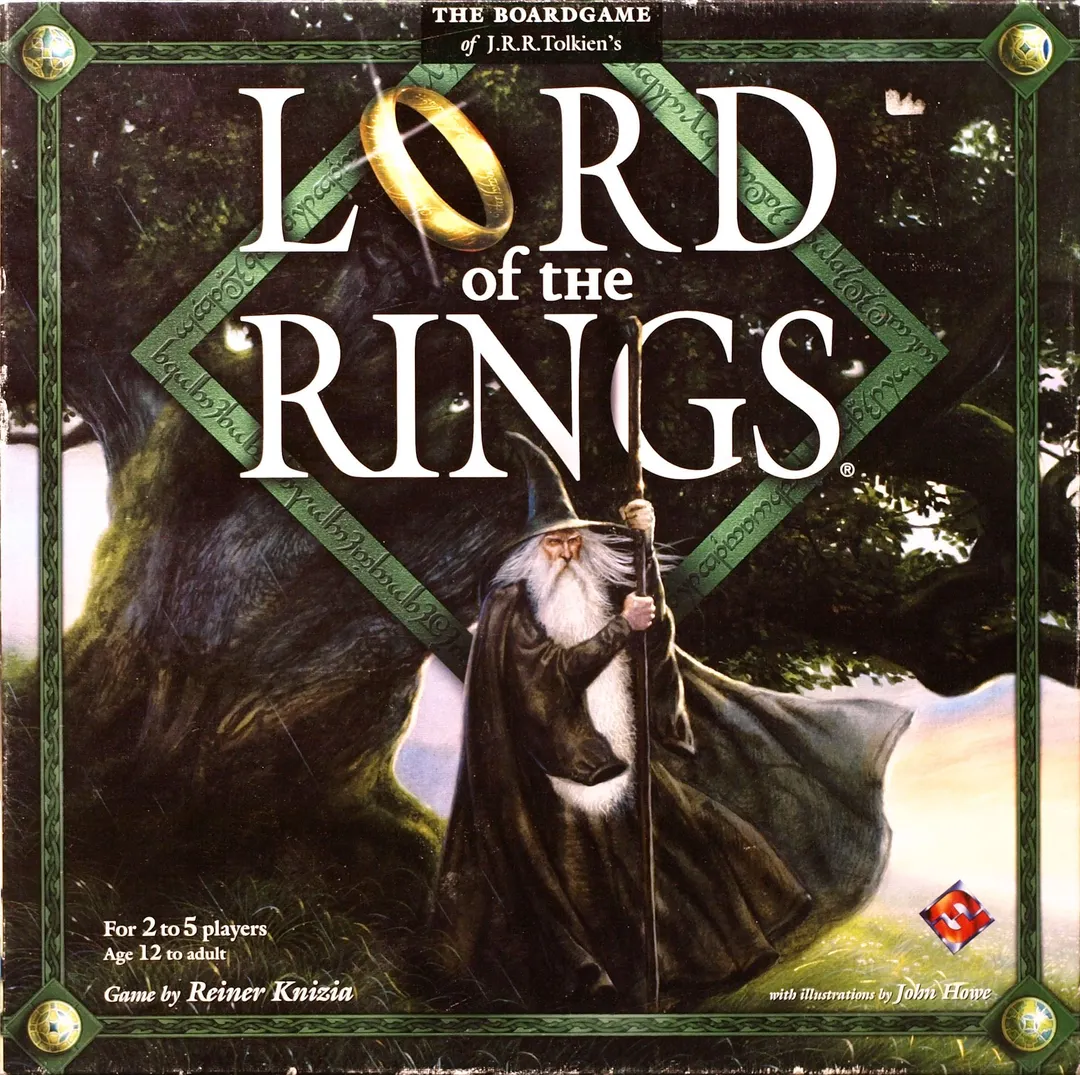
The Lord of the Rings is a board game released in 2000 for 2–5 players, 60–90 minutes per game, and ages 12 and up. It was designed by Reiner Knizia and its main mechanics are Variable Player Powers, Hand Management, and Set Collection.
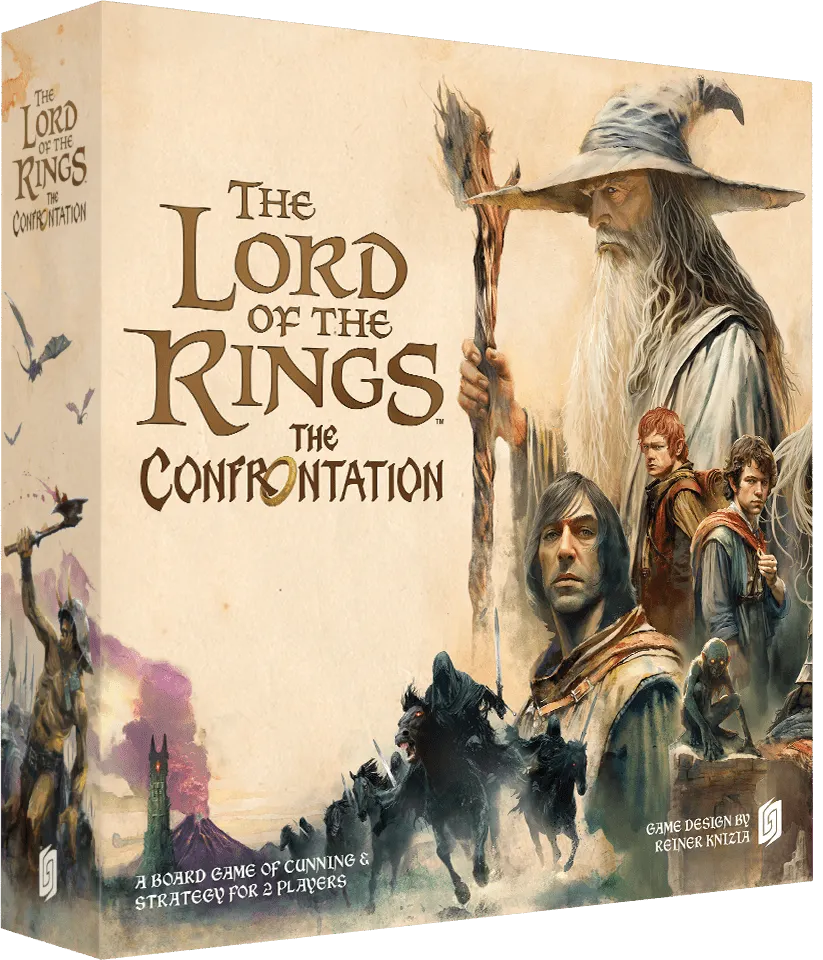
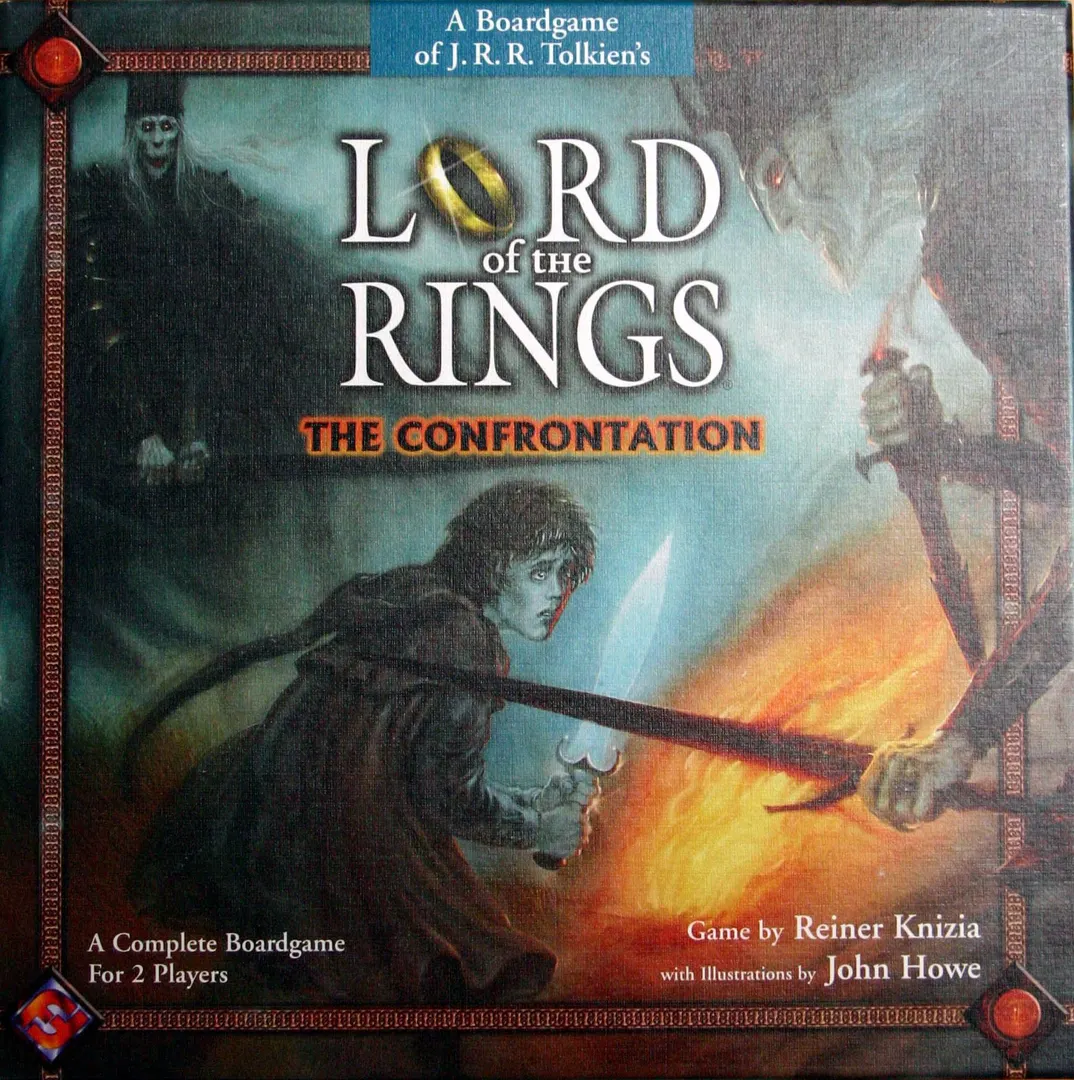


The Lord of the Rings is a co-operative game in which the object is to destroy the Ring while surviving the corrupting influence of Sauron. Each player plays one of the Hobbits in the fellowship, each of which has a unique power. Over the course of the game, you make your way across four conflict game boards, representing some of the most memorable conflicts from the entire trilogy: Moria, Helm's Deep, Shelob's Lair, and Mordor. Each conflict board tests your small Fellowship to the utmost as you must play your quest cards to advance along multiple tracks. These tracks represent fighting, hiding, traveling, and friendship, and by playing quest cards from your hand with matching symbols, you can keep moving forward and push closer to victory. The master game board indicates both the physical progress of the fellowship across Middle Earth and the corrupting influence of Sauron on the hobbits. If you're able to slip past your foes, you can hope to escape with minimal corruption, healing your hurts at safe havens along your path, such as the forest kingdom of Lothlórien. By playing your cards right and advancing quickly, you can collect powerful runes, unlock legendary cards to aid your journey, or find life tokens to help stave off corruption — not to mention advancing quickly through the conflicts. As you travel, the One Ring can be a crucial tool in your journey, allowing you to hide from sight, but repeated use will draw the attention of Sauron and corrupt the heart of the Ring-bearer. Your journey leads you deeper into the darkness with each passing conflict, and safe havens become few and far between. You must carefully watch the corruption track because if the Sauron miniature ever meets a Hobbit, that player is eliminated — and if the Ring-bearer is eliminated, all players lose as Sauron reclaims the power of the One Ring. To win, throw the One Ring into the volcanic fires of Mount Doom. This game should not be confused with Reiner Knizia's children's game (Lord of the Rings) with the same title, or with his very different two-player Lord of the Rings: The Confrontation. Lord of the Rings - Limited Edition A special edition limited to 500 copies in the English language and 250 in German published by Sophisticated Games and Kosmos in November 2001. The Limited Edition has a silver 22 carat gold plated ring, pewter Hobbit playing pieces, and a signed and numbered John Howe print. Box signed by Reiner Knizia.
The Lord of the Rings supports 2–5 players according to the catalogue. This range comes from the publisher’s listed player count, so the game can be set up for any group size within it. Some setups, rules and scoring details may still vary by player count, so check your edition’s rulebook for the exact configuration.
The listed playing time for The Lord of the Rings is 60–90 minutes. This is the publisher’s estimate for a full game. The actual duration depends on the group, the player count and familiarity with the rules: first sessions usually run longer, while experienced groups often finish faster. Setup and teaching time are not included in this estimate.
The catalogue lists The Lord of the Rings for ages 12 and up. This is the publisher’s recommendation and reflects reading demands, rule complexity and small components rather than theme alone. Younger players can often join with help from an adult, so check the age guidance on your edition and consider your group’s experience with board games.
The Lord of the Rings has a complexity rating of 2.5 out of 5 from BoardGameGeek players, which makes it a medium-light game. The rating reflects how much rules knowledge, planning and decision-making a typical game demands. Expect a longer first teach for heavier games, and use a preparation guide before game night.
The Lord of the Rings belongs to these categories: Fantasy, Adventure, and Novel-based. Its main mechanics are Variable Player Powers, Hand Management, and Set Collection. Categories describe the theme and setting of a game, while mechanics describe what players actually do on their turns. Each mechanic links to a catalogue hub with similar games, which helps when you want something comparable.
The credited designers of The Lord of the Rings are: Reiner Knizia. These credits come from the published game data and name the people responsible for the game’s design, not its illustrators or publishers. Designer pages on MeepleRules collect other titles by the same designers, which helps when you enjoy a game and want to find similar ones.
The catalogue lists The Lord of the Rings as a base game. It can be played on its own with the components in the box and does not require any other title. Expansions, if any exist, add new content or rules on top of it and are listed separately in the catalogue with a link back to this base game.