
- BGG rank
- BGG #4,820
- BGG rating
- 7.0
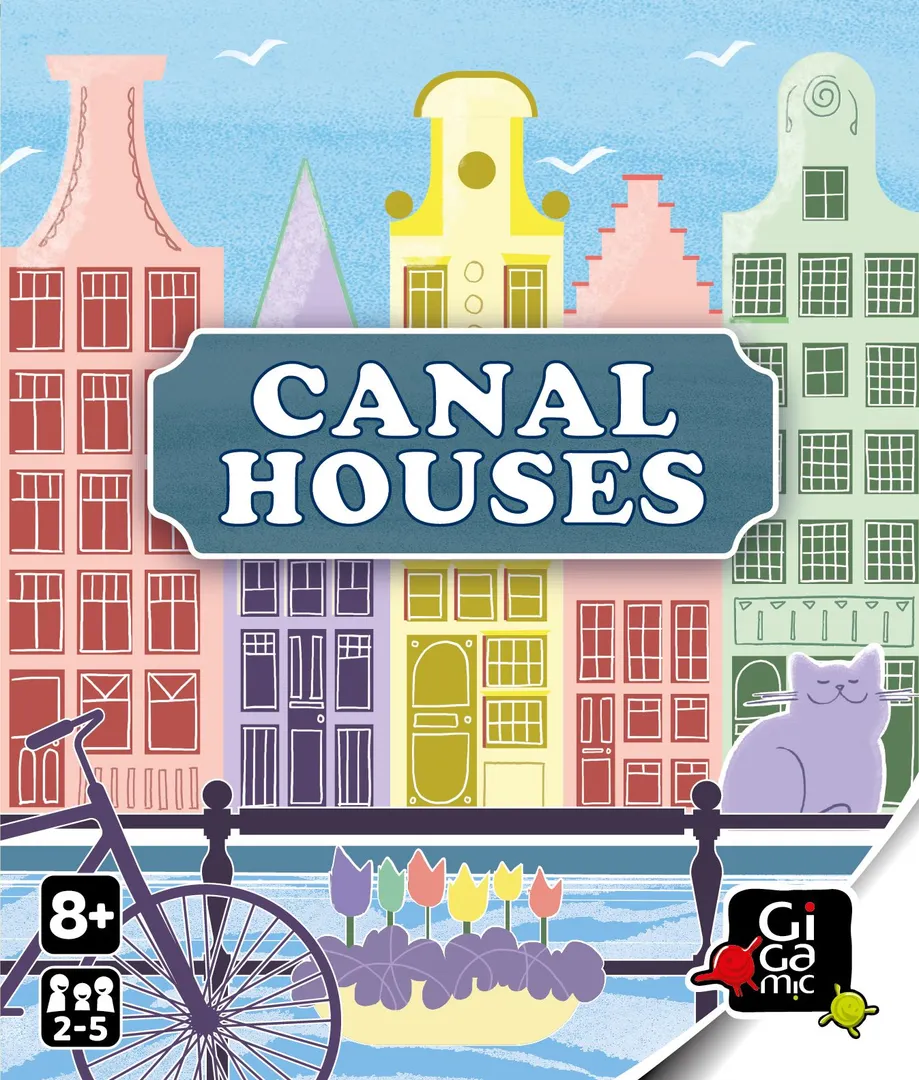
Canal Houses
- 2–5 players
- 20 min
- Complexity 1.3/5
- 2024
2022
Rules assistance for Thera
Plain-language explanations of turns, card effects and disputed situations, with official source references and saved question history.
For 1 player
What would you like to know?
Answers come from the official rulebook, with the page to check.
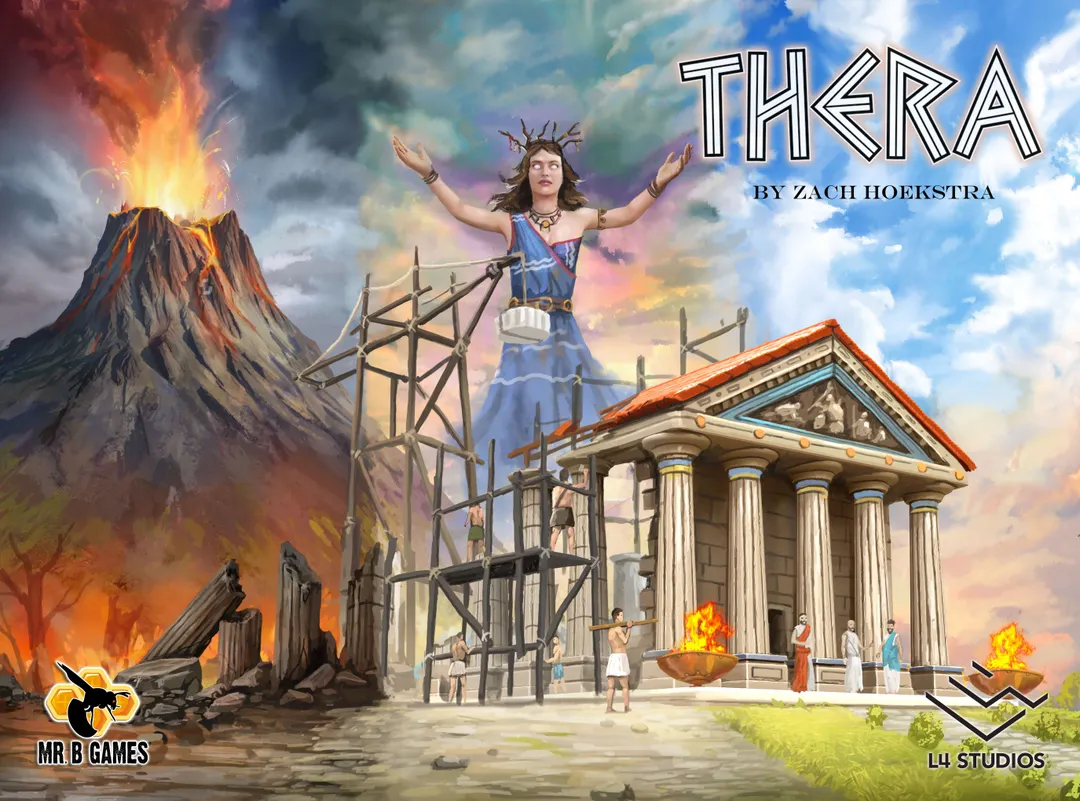
Thera is a board game released in 2022 for 1–4 players, 60–120 minutes per game, and ages 10 and up. It was designed by Zach Hoekstra and its main mechanics are Tile Placement, Simultaneous Action Selection, and Rondel.


In 1646 BC, the island of Thera (present day Santorini) was the site of a volcanic eruption one hundred times more powerful than Pompeii. This eruption coincided with the decline of the Minoan civilization and the rise of the Mycenaean civilization. Due to Thera's strategic location, the Mycanaean wanax (king) has decided that it is time to rebuild Thera and has tasked you, one of his koreters (governors) with this responsibility. The koreter who best rebuilds Thera to its prior glory will be victorious. In the role-selection and resource-management game Thera, each player has a map of the island where they will engage in trade, clear ash, generate resources, move those resources to building sites across the island, and construct economic and luxury buildings. On a player's turn, they select one of five roles from the rondel. Every player can benefit from this role, and the one who chose it gets benefits that scale with the amount of favor on the role. Favor accumulates on roles over the course of the game and is redistributed every time a role is chosen. Here's an overview of the five roles: The Priestess prays for rain, bringing the life-giving resource to the island. The Worker consumes that water and produces resources. The Planner moves those resources around Thera so that they can be used for construction or trade. The Builder uses those resources to construct buildings on undeveloped sites across the island. The Trader buys and sells resources at the port. Players earn points by constructing buildings. You must get the needed resources to the desired building site, then acquire the building plans (which are available to all from a common building tableau). Should you build another quarry (a resource-generating building), or are you worried one of your competitors will take that temple (a luxury building) that aligns with your strategy? Time is of the essence in Thera, so efficient planning and resource management are important in winning the day. —description from the publisher
Thera supports 1–4 players according to the catalogue. This range comes from the publisher’s listed player count, so the game can be set up for any group size within it. Some setups, rules and scoring details may still vary by player count, so check your edition’s rulebook for the exact configuration.
The listed playing time for Thera is 60–120 minutes. This is the publisher’s estimate for a full game. The actual duration depends on the group, the player count and familiarity with the rules: first sessions usually run longer, while experienced groups often finish faster. Setup and teaching time are not included in this estimate.
The catalogue lists Thera for ages 10 and up. This is the publisher’s recommendation and reflects reading demands, rule complexity and small components rather than theme alone. Younger players can often join with help from an adult, so check the age guidance on your edition and consider your group’s experience with board games.
Thera has a complexity rating of 2.7 out of 5 from BoardGameGeek players, which makes it a medium-light game. The rating reflects how much rules knowledge, planning and decision-making a typical game demands. Expect a longer first teach for heavier games, and use a preparation guide before game night.
Thera belongs to these categories: Territory Building, Ancient, and Civilization. Its main mechanics are Tile Placement, Simultaneous Action Selection, and Rondel. Categories describe the theme and setting of a game, while mechanics describe what players actually do on their turns. Each mechanic links to a catalogue hub with similar games, which helps when you want something comparable.
The credited designers of Thera are: Zach Hoekstra. These credits come from the published game data and name the people responsible for the game’s design, not its illustrators or publishers. Designer pages on MeepleRules collect other titles by the same designers, which helps when you enjoy a game and want to find similar ones.
The catalogue lists Thera as a base game. It can be played on its own with the components in the box and does not require any other title. Expansions, if any exist, add new content or rules on top of it and are listed separately in the catalogue with a link back to this base game.