- BGG rating
- 7.2
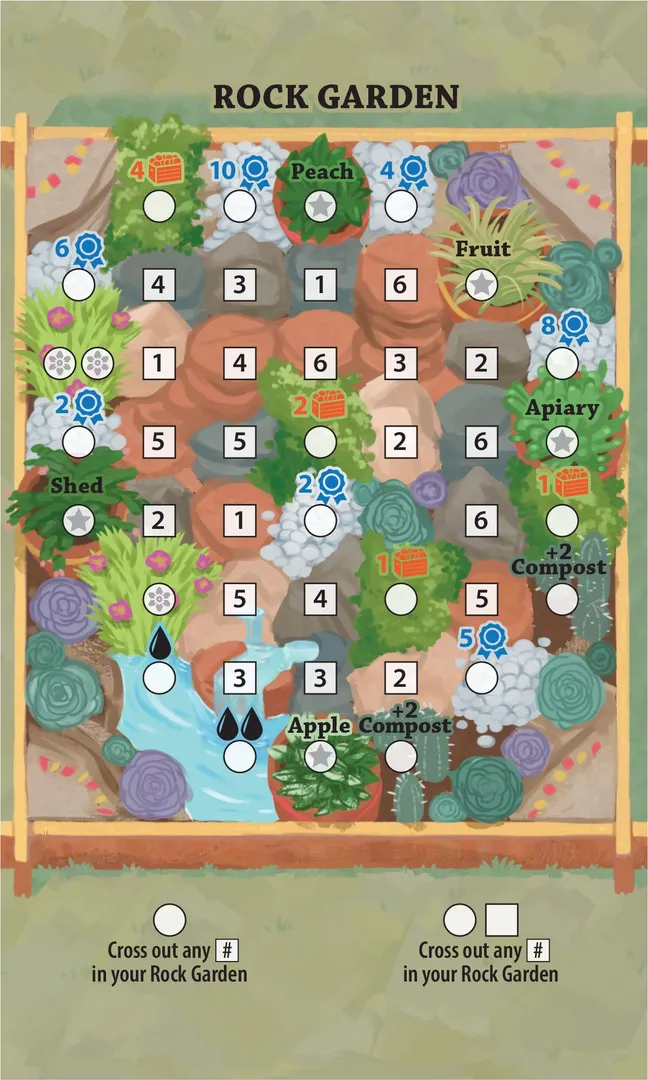
Three Sisters: Rock Garden Expansion
- 1–4 players
- 30–60 min
- Complexity 3.0/5
- 2022
2022
Rules assistance for Three Sisters
Plain-language explanations of turns, card effects and disputed situations, with official source references and saved question history.
For 1 player
What would you like to know?
Answers come from the official rulebook, with the page to check.
Three Sisters is a board game released in 2022 for 1–4 players, 30–60 minutes per game, and ages 14 and up. It was designed by Ben Pinchback and Matt Riddle and its main mechanics are Dice Rolling, Paper-and-Pencil, and Solo / Solitaire Game.





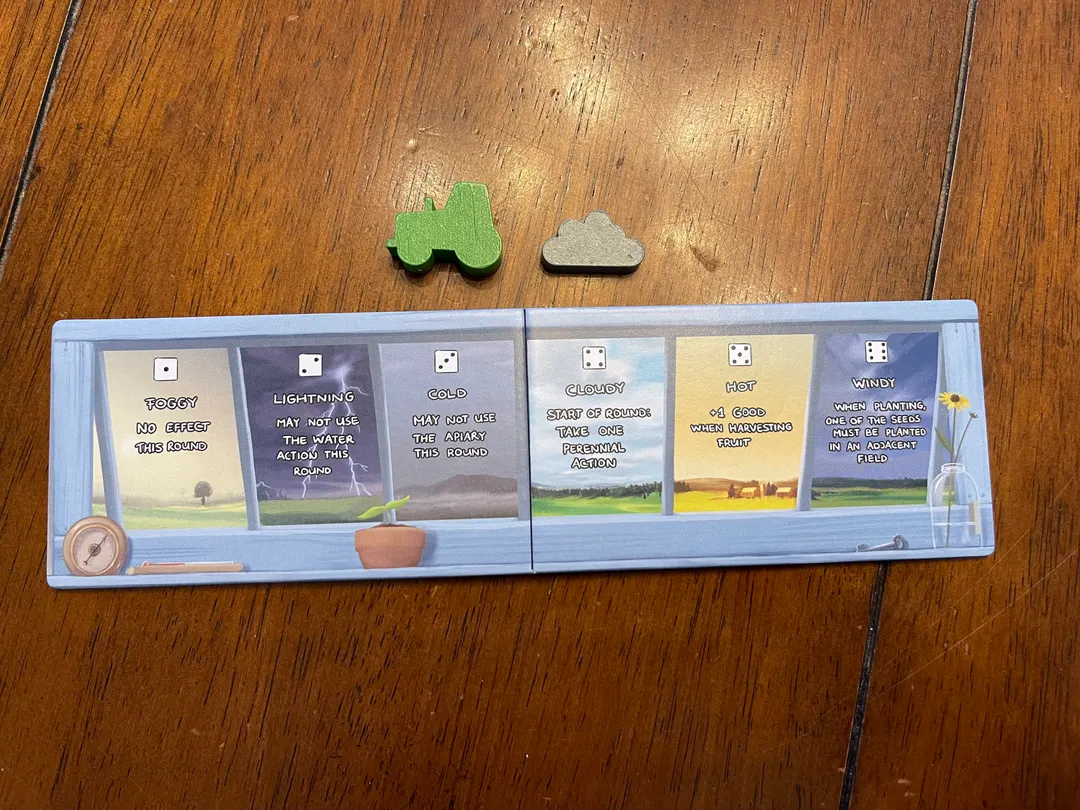
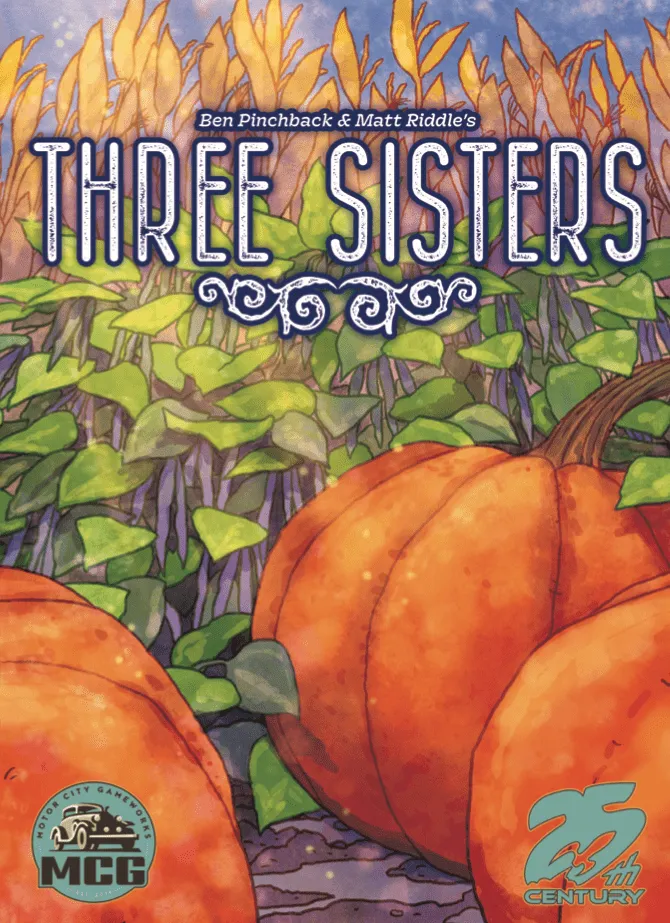
Three Sisters is a strategic roll-and-write game about backyard farming. Three Sisters is named after an indigenous agricultural technique still widely used today in which three different crops — pumpkins, corn, and beans — are planted close together. Corn provides a lattice for beans to climb, the beans bring nitrogen from the air into the soil, and the squash provides a natural mulch ground cover to reduce weeds and keep pests away. In the game, you have your own player sheet with multiple areas: the garden, which is divided into six numbered zones, each containing the three crop types; the apiary; compost; perennials; goods; fruit; and the shed, which is filled with tools that have special abilities. All the crops, fruits, flowers, and hives are represented by tracks that you will mark off as you acquire these items. Many of the tracks are interconnected with other elements in the game, giving you bonuses along the way. A common feature of these tracks are circles that represent a harvest, which generates goods; get enough goods, and you unlock bonus actions. Advancing on all of these tracks offers various amounts of points, advancements, and bonuses. The game lasts eight rounds. Each round, roll dice based on the number of players, group them by number, then place them on an action space of the circular action wheel, starting with the current position of the farmer; the farmer moves each round, which means that dice showing 1s, 2s, etc. will end up on different spaces each round. Once the dice have been placed, each player drafts one die and uses it as described below. Once everyone has drafted a die, all players get to use the lowest-valued die remaining on the action wheel. A die lets you do two things, which you can do in either order: Plant or water the numbered zone matching the value of the die. Take the action of the space from which you removed the die. To plant, you mark the bottom space of two empty crop tracks. (Note that you can't plant beans until the corn adjacent to the beans is tall enough to support them.) To water, you mark one space in all the crop tracks that already have at least one mark in them. As for the actions on the action wheel, you can: Plant or water again in the same numbered zone. Gain one compost (which lets you adjust die values) and four goods (which will get you bonuses at the farmer's market). Mark off the hive track, which can bring you points, goods, or bonus actions. Mark one of the four fruit tracks. Each fruit is worth different points and different amounts of goods and has different track lengths and circle positions. Visit the farmer's market, which gives you points and bonuses based on the number of goods you've collected. Mark one of the fifteen tool tracks in your shed. As soon as you complete a track, you gain that power or end-game scoring opportunity. Perennials don't have a direct action associated with them and are marked off only through actions in other areas, with the various perennials giving different bonuses as you mark them. At the end of the round, all players receive a bonus action, either rain that waters all numbered zones in your garden, a trip to the shed, or a visit to the farmer's market. After eight rounds, you score points for harvested crops, perennials, the apiary, fruit, and some shed items. Whoever has the most points wins. Three Sisters has a solo mode in which you try to top your own score against an "opponent" that drafts dice and blocks areas of your sheet.
Three Sisters supports 1–4 players according to the catalogue. This range comes from the publisher’s listed player count, so the game can be set up for any group size within it. Some setups, rules and scoring details may still vary by player count, so check your edition’s rulebook for the exact configuration.
The listed playing time for Three Sisters is 30–60 minutes. This is the publisher’s estimate for a full game. The actual duration depends on the group, the player count and familiarity with the rules: first sessions usually run longer, while experienced groups often finish faster. Setup and teaching time are not included in this estimate.
The catalogue lists Three Sisters for ages 14 and up. This is the publisher’s recommendation and reflects reading demands, rule complexity and small components rather than theme alone. Younger players can often join with help from an adult, so check the age guidance on your edition and consider your group’s experience with board games.
Three Sisters has a complexity rating of 2.6 out of 5 from BoardGameGeek players, which makes it a medium-light game. The rating reflects how much rules knowledge, planning and decision-making a typical game demands. Expect a longer first teach for heavier games, and use a preparation guide before game night.
Three Sisters belongs to these categories: Dice and Farming. Its main mechanics are Dice Rolling, Paper-and-Pencil, and Solo / Solitaire Game. Categories describe the theme and setting of a game, while mechanics describe what players actually do on their turns. Each mechanic links to a catalogue hub with similar games, which helps when you want something comparable.
The credited designers of Three Sisters are: Ben Pinchback and Matt Riddle. These credits come from the published game data and name the people responsible for the game’s design, not its illustrators or publishers. Designer pages on MeepleRules collect other titles by the same designers, which helps when you enjoy a game and want to find similar ones.
The catalogue lists Three Sisters as a base game. It can be played on its own with the components in the box and does not require any other title. Expansions, if any exist, add new content or rules on top of it and are listed separately in the catalogue with a link back to this base game.