- BGG rank
- BGG #3,200
- BGG rating
- 6.9
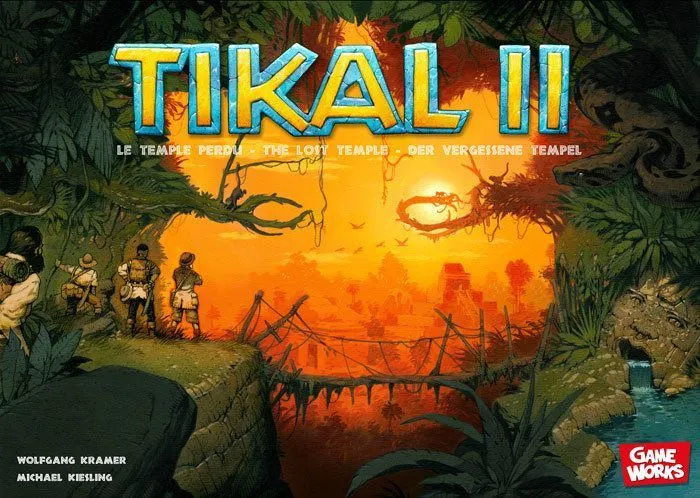
Tikal II: The Lost Temple
2010
Rules assistance for Tikal II: The Lost Temple
Plain-language explanations of turns, card effects and disputed situations, with official source references and saved question history.
- 2–4 players
- 60–120 min
- 12+
- Complexity 2.6/5

For 2 players
Rules assistant for Tikal II: The Lost Temple
What would you like to know?
Answers come from the official rulebook, with the page to check.
Tikal II: The Lost Temple is a board game released in 2010 for 2–4 players, 60–120 minutes per game, and ages 12 and up. It was designed by Wolfgang Kramer and Michael Kiesling and its main mechanics are Hand Management, Set Collection, and Modular Board.
About the game
From the Publisher: Tikal was discovered and explored during a very successful expedition led by Profs. Kramer and Kiesling. A decade later, a scroll is found that hints of a lost temple near the first site. This rumor rekindles their passion for Tikal and the two scientists start to discuss the prospect of another expedition to Central America. In the midst of their planning they encounter Profs. Braff and Pauchon at an international archaeology conference in Geneva, who want to know the truth about the enticing rumour. Later that day, sitting in front of a roaring fire after a fine meal finished off with Cuban cigars and a few brandies, the two Swiss scientists listen enthralled by the unfolding plans of their German colleagues. To a man they clamour their unanimous assent and it is decided to join forces and go back to Tikal. Appointments are made, patrons are found, equipment is assembled, notes are compared, and then they are off. An uneventful journey takes them to Guatemala, and then on to the old site. Not too long after, they discover that there is indeed an undisturbed temple in an adjacent valley. As it belonged to a long-forgotten king, the temple promises many surprises and much, much gold. And so the adventure begins... Tikal II: The Lost Temple is a sequel to 1999 Spiel des Jahres winner Tikal, from world-famous duo Kramer-Kiesling. Actions points have given way to two actions per turn : 1) move part of your expedition around the board to choose an action tile, and then 2) move your head scientist within the temple to explore new rooms and find gold. There are many ways to score. Collecting and delivering treasures is one, and having the majority in some rooms or exploring the main temple as well as an outer secret chamber, are others. Tikal II calls for careful planning, as your scientist can't move freely within the temple without specific items, and tension, as the actions around the board grow scarce. A game consists of two rounds, each concluded by a scoring. In the end, the player with the most gold is declared winner.
Categories
Designers
Publishers
- Asterion Press
- GameWorks SàRL
Questions and answers
Tikal II: The Lost Temple supports 2–4 players according to the catalogue. This range comes from the publisher’s listed player count, so the game can be set up for any group size within it. Some setups, rules and scoring details may still vary by player count, so check your edition’s rulebook for the exact configuration.
The listed playing time for Tikal II: The Lost Temple is 60–120 minutes. This is the publisher’s estimate for a full game. The actual duration depends on the group, the player count and familiarity with the rules: first sessions usually run longer, while experienced groups often finish faster. Setup and teaching time are not included in this estimate.
The catalogue lists Tikal II: The Lost Temple for ages 12 and up. This is the publisher’s recommendation and reflects reading demands, rule complexity and small components rather than theme alone. Younger players can often join with help from an adult, so check the age guidance on your edition and consider your group’s experience with board games.
Tikal II: The Lost Temple has a complexity rating of 2.6 out of 5 from BoardGameGeek players, which makes it a medium-light game. The rating reflects how much rules knowledge, planning and decision-making a typical game demands. Expect a longer first teach for heavier games, and use a preparation guide before game night.
Tikal II: The Lost Temple belongs to these categories: Exploration and Adventure. Its main mechanics are Hand Management, Set Collection, and Modular Board. Categories describe the theme and setting of a game, while mechanics describe what players actually do on their turns. Each mechanic links to a catalogue hub with similar games, which helps when you want something comparable.
The credited designers of Tikal II: The Lost Temple are: Wolfgang Kramer and Michael Kiesling. These credits come from the published game data and name the people responsible for the game’s design, not its illustrators or publishers. Designer pages on MeepleRules collect other titles by the same designers, which helps when you enjoy a game and want to find similar ones.
The catalogue lists Tikal II: The Lost Temple as a base game. It can be played on its own with the components in the box and does not require any other title. Expansions, if any exist, add new content or rules on top of it and are listed separately in the catalogue with a link back to this base game.