
- BGG rank
- BGG #3,403
- BGG rating
- 6.8
Tao Long: The Way of the Dragon
- 2 players
- 10–30 min
- Complexity 2.7/5
- 2017

Rules assistance for Toğızqumalaq
Plain-language explanations of turns, card effects and disputed situations, with official source references and saved question history.
For 2 players
What would you like to know?
Answers come from the official rulebook, with the page to check.
Toğızqumalaq is a board game for 2 players and 20 minutes per game. Its main mechanics are Mancala.




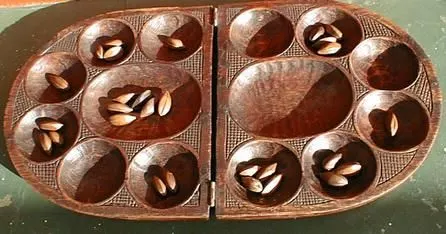



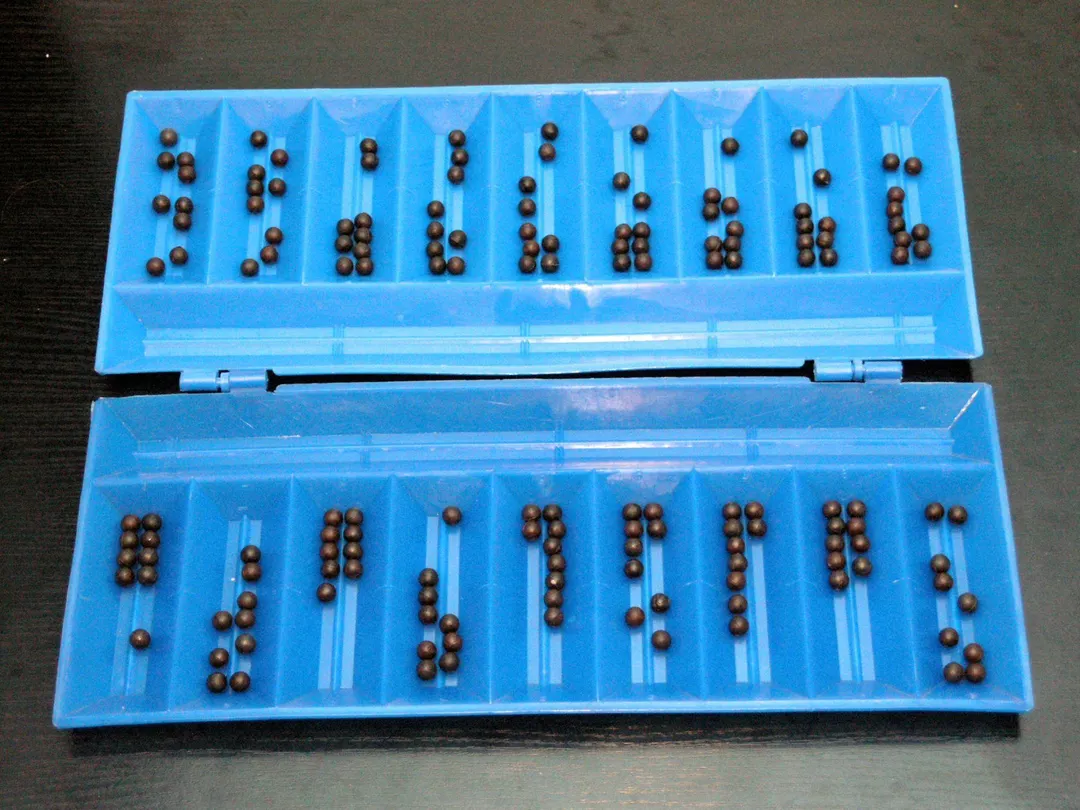
A game of the mancala family. Тоғызқұмалақ (toğızqumalaq, sometimes spelled toghyzqumalaq or togyzqumalaq or toguz kumalak, "nine balls") is the Kazakh name of a mancala game also known as toguz korgool in Kyrgyz. It is played traditionally in Kazakhstan, Kyrgyzstan, Tajikistan, Uzbekistan, Turkmenistan, parts of Russia (Altay, Khakassia, Tuva), Western Mongolia and in China in regions close to the aforementioned countries. There are regular toğızqumalaq championships held in Kazakhstan, Kyrgyzstan and Russia. The first western tournament was in August 2006 at the Mindsports Olympiad (MSO) in London, England. It was won by Aidos Seitzhanov from Kazakhstan. Rules: Toğızqumalaq is played board made of two rows of nine holes, plus two kazans ("boilers"), either in the middle of the board or one at each end of it. The players own the kazan at their right, if at the ends, or the one on the other half of their board, if in the middle. As captures are made by pairs, the holes are usually made in a way so it is evident whether the contents are odd or even. To begin the game, there must be nine balls per hole, except the kazans, which are empty. That is, 162 balls are needed. On his turn, a player takes all the balls of a hole on his side of the board, and distribute them anticlockwise, one per hole, on the following holes, starting from the very same hole he has taken them. If the movement is done from a hole containing just a single ball, it is moved to the next hole, leaving the starting hole empty. If the last ball falls into a hole on the opponent's side… …and this hole afterward contains an even number of balls, these are captured and stored on the player's kazan. …and this hole afterward contains precisely three balls, the hole becomes your тұздық, tuzdyq (or түз үй according to Maksat Shotayev, tüz üy, i.e. "sacred place" in Kazakh; or tuz in Kyrgyz which means "salt"), and it is marked as such. ** Each player can only make one tuzdyq in a game. A tuzdyq cannot be made on the opponent's last hole (ninth, the one on his right). A tuzdyq cannot be made if it is symmetrical to the opponent's one (if the opponent has his tuzdyq in our first hole, we can not make ours on his first hole). In the cases a tuzdyq cannot be done, we can finish a movement there, but the hole simply does not become a tuzdyq. A movement cannot begin from a tuzdyq. The balls that fall into a tuzdyq are captured by its owner. If it is overcharged, we can take the balls and store them in the kazan. The game ends when a player cannot move on his turn, because all the holes on his side (except a possible tuzdyq) are empty. When the game is over, the player who still has balls on his side (except in a possible tuzdyq) gets them and adds them to his kazan. Both players add the contents of their tuzdyq (the one on their opponent's side) to their kazan. The winner is the player with more balls in his kazan at the end of the game. If both players have captured 81 balls, the game is a draw.
Toğızqumalaq supports 2 players according to the catalogue. This is the publisher’s listed player count, so the game is designed for exactly that number of participants. Variants for other group sizes, if any, are described in the rulebook of your edition, so check it before setting up a different configuration.
The listed playing time for Toğızqumalaq is 20 minutes. This is the publisher’s estimate for a full game. The actual duration depends on the group, the player count and familiarity with the rules: first sessions usually run longer, while experienced groups often finish faster. Setup and teaching time are not included in this estimate.
Toğızqumalaq has a complexity rating of 3.8 out of 5 from BoardGameGeek players, which makes it a heavy game. The rating reflects how much rules knowledge, planning and decision-making a typical game demands. Expect a longer first teach for heavier games, and use a preparation guide before game night.
Toğızqumalaq belongs to these categories: Abstract Strategy. Its main mechanics are Mancala. Categories describe the theme and setting of a game, while mechanics describe what players actually do on their turns. Each mechanic links to a catalogue hub with similar games, which helps when you want something comparable.
The catalogue lists Toğızqumalaq as a base game. It can be played on its own with the components in the box and does not require any other title. Expansions, if any exist, add new content or rules on top of it and are listed separately in the catalogue with a link back to this base game.